New Senate class includes experienced lawmakers, ex-governor
Published in News & Features
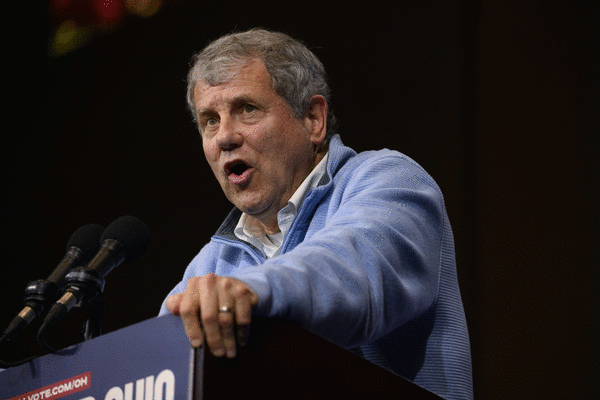
WASHINGTON — The new Democratic majority in the Senate will feature a number of top recruits with significant government experience both on and off Capitol Hill.
None is more familiar than Sen.-elect Sherrod Brown, who unseated appointed Sen. Jon Husted just two years after losing Ohio’s other Senate seat to Republican Sen. Bernie Moreno.
Having prevailed in a special election, Brown is expected to be seated before the end of the year.
Brown, who rose to be the Banking, Housing and Urban Affairs chairman during his first stint in the Senate, does not reclaim seniority under Democratic caucus rules but will surely have influence above and beyond that of a typical newly-elected senator.
Speaking to supporters after his victory Tuesday night, he said he would make it a priority to ban members of Congress from trading stocks — one of the popular campaign messages of Republicans and Democrats alike in 2026.
“We will fight to end these tariffs,” Brown said of his other priorities. “We will end this war. We will fight to lower your costs, and increase your paychecks and open up paths to the middle class.”
Brown will be joined in the Senate by several first-timers with outsize profiles and experience, led by Sen.-elect Roy Cooper, D-N.C.
“I am determined that no matter the challenges that confront me, I will be an independent voice ready to work with anyone to do what’s right for this amazing state that has given me so much,” Cooper said in his victory speech.
With his history of winning statewide elections, Cooper was a top recruit for Democrats and expected Majority Leader Charles E. Schumer, D-N.Y., with Republican incumbent Sen. Thom Tillis opting to retire at the end of the current term.
Cooper’s the only former governor in the Senate freshman class, though he is not alone among the newcomers with significant public sector experience, being joined by several House members.
New Hampshire Democratic Rep. Chris Pappas will be the first openly gay man to serve in the Senate, blocking the comeback bid of former Sen. John E. Sununu.
Illinois and Minnesota are sending their Democratic lieutenant governors, with Sen.-elect Juliana Stratton set to succeed Minority Whip Richard J. Durbin and Minnesota voters choosing Sen.-elect Peggy Flanagan as the successor for retiring Sen. Tina Smith.
Minnesota’s other Senate seat will be filled by an appointee after Sen. Amy Klobuchar, D-Minn., won the state’s governor’s race on Tuesday.
“The American people have now entrusted Democrats to fight for them and to put a stop to the most corrupt administration in our nation’s history, and with this new majority, we are ready to turn the page,” Stratton said in a statement. “With a new majority in the Senate, Democrats are prepared to stand up to the Trump administration while fighting to lower costs, protect our rights and democracy, and deliver progress for the American people.”
GOP House members moving across the Rotunda
The smaller Senate Republican Conference picks up new members from a number of particularly red states, with Rep. Barry Moore winning the open seat contest to succeed Sen. Tommy Tuberville, who was elected governor on Tuesday.
Rep. Julia Letlow, R-La., who had defeated Sen. Bill Cassidy in the primary, prevailed in the general election and will move over to the Senate. Also heading to the Senate is the at-large congresswoman from Wyoming, Republican Rep. Harriet Hageman.
“We are about to engage in a battle for the future of this nation, and as we all recognize, the looming fight with the left is about much more than just policy differences. It’s about the very survival of this country as it has been and as we know it,” Hageman posted on social media after her victory.
Rep. Andy Barr, R-Ky., won the Senate seat being vacated by the retirement of longtime Senate Republican Leader Mitch McConnell.
Another House member crossing the Capitol is Republican Rep. Kevin Hern, who won comfortably in Oklahoma. While his contest was not a special election, Hern is also likely to be seated early, after the state attorney general released an opinion last week that he can take over for appointed Sen. Alan Armstrong as soon as the results of the election are certified.
The unusual scenario came about because Homeland Security Secretary Markwayne Mullin vacated the Senate seat earlier this year to fill the spot in the president’s Cabinet.
Hern, speaking with reporters before polls closed on election night, highlighted a relatively straightforward set of legislative priorities, including government funding legislation, the annual defense authorization, a surface transportation bill and the farm bill.
“The Senate hasn’t really done anything since last July, and that’s one of the reasons I think the Senate’s in trouble right now. They really haven’t passed any bills over there,” Hern said.
©2026 CQ-Roll Call, Inc., All Rights Reserved. Visit cqrollcall.com. Distributed by Tribune Content Agency, LLC.





Comments