CIA is looking for regime insiders in Cuba who want to break away from communism
Published in News & Features
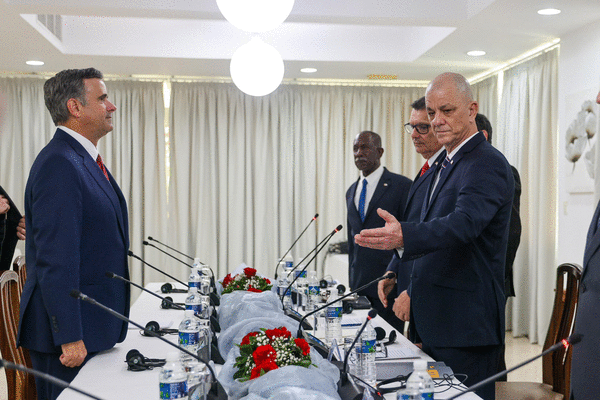
As hope that a mass revolt that could help topple the Cuban government fades away, the Trump administration is carefully watching the dynamics in Havana, looking for insiders willing to break away from the communist regime to push for changes on the island.
During the weekend, the administration made the strategy public: In a rare social media post, the CIA published a Spanish-language guide on how to contact the agency and safely pass information. The CIA post on X quoted an earlier message that Secretary of State Marco Rubio had posted Friday.
“To those who seek to create positive change in Cuba — now is the time,” Rubio said. “The disappointment of failed promises, corruption and the privileged lives of only a few; seize this opportunity to create the change you desire through a discrete partnership with the CIA.”
On Saturday, the U.S. Southern Command chimed in, reposting the CIA publication and adding a message signed by Southcom Commander Gen. Francis L. Donovan: “Cuba’s future belongs to those who act. Seize the moment and build the change you want to see. No more broken promises, rampant corruption, or tolerating an elite class living in luxury while the citizens are ignored. Now is the time.”
The messages followed news over the summer that the intelligence agency had created a new task force focused on Cuba, an escalation in the Trump administration campaign for regime change on the communist-run island.
The Trump administration and Rubio, in particular, have made Cuba a foreign policy priority. The administration has put unprecedented pressure on the Cuban government, cutting off oil supplies and imposing sanctions on a string of Cuban companies, military-owned entities and officials. Fearing the effect of secondary sanctions, several foreign companies have also fled the country.
Cuban leaders appeared unmoved, however. They have announced some economic reforms that economists and U.S. officials believe are not enough to transform Cuba into a market economy. And they have drawn a red line on political changes.
Some U.S. officials and members of Congress believed that mass demonstrations on the island could spark a revolt that could lead to U.S. intervention. Cubans have protested the constant blackouts and their poor living conditions throughout the year, but the protests have remained contained, and the government crackdown that usually follows has deterred many from joining in.
U.S. officials said talks with Cuban officials continue. Still, the Cuban government has yet to address the Trump administration’s demands, including releasing all political prisoners and shutting down Russian and Chinese espionage on the U.S. that uses the island’s territory.
Talks with Raúl Castro’s grandson, Raúl Guillermo Rodríguez Castro, have also fizzled out after internal backlash over his luxury lifestyle and U.S. doubts that he is powerful enough to deliver the economic and political changes the administration wants to see on the island.
But U.S. officials believe the sanctions campaign has made inequality more apparent on the island, showing how a small elite of government officials and regime insiders can insulate themselves — with food, gas and solar panels — from the ongoing humanitarian crisis ravaging the island.
As the Trump administration cuts the revenue strings helping sustain the island’s vast security and military apparatus, U.S. officials believe discontent among middle ranks in the military, the government and the party will grow, a situation the administration – and the CIA – is seeking to benefit from in its efforts to push for changes in Cuba.
Former CIA officials have pointed out Cuba’s longtime espionage efforts against the United States and the benefits in turning the tables and recruiting Cubans to spy on their own government instead, or help find Cuban moles currently working in the U.S. government.
The CIA’s “invitation also puts a question inside Cuban headquarters that no security chief can comfortably dismiss: Who among us has already answered? Even suspicion can consume time and manpower,” wrote Rick de la Torre, a former CIA chief of station in Latin America, in an opinion piece in Fox.
From Bay of Pigs to Havana Syndrome
Both praise and criticism of the CIA’s outreach to Cubans appeared quickly in responses to Rubio’s publication on social media.
“As the only Cuban-born member of Congress, I am eternally grateful for your leadership,” U.S. Rep. Carlos Giménez, a Cuban-American Republican from Miami, said in a reply to Rubio’s post on X. “The regime in Havana must be relegated to the ash heap of history & I know that day is closer than ever!”
But the CIA has a controversial record in Cuba, which a former Democratic congresswoman from Miami, Debbie Mucarsel-Powell, recalled in a message urging Rubio to remember his “own history.”
“In 1961, the CIA-backed Bay of Pigs invasion failed, Cuban exiles paid the price, and Castro emerged stronger, consolidating the very dictatorship the operation was meant to overthrow,” Mucarsel-Powell said. “65 years later, you are invoking the CIA again? I’ve met Cubans who were part of that operation and they’ve told me that they will never forget the pain, the abandonment and the suffering that came after that failed operation.”
After the Bay of Pigs failed, the CIA tried to kill Fidel Castro. A Senate special committee confirmed in 1975 that the agency took part in at least eight assassination plots between 1960 and 1965. These included poison pills passed to Mafia figures and schemes involving a booby-trapped seashell, a poisoned pen and a contaminated diving suit.
Cuba was also beating the agency at its own game. When Cuban intelligence officer Florentino Aspillaga defected in Vienna in 1987, he told the CIA that almost every agent it had recruited in Cuba since the early 1960s was secretly working for Castro. Estimates of the number of double agents ranged from 38 to four dozen.
At times the CIA succeeded. It recruited two Interior Ministry cryptographers — Rolando Sarraff Trujillo and José Cohen — who passed along codes that helped the U.S. intelligence community decipher Havana’s messages to its spies, eventually leading to the arrest of U.S. Defense Intelligence Agency analyst Ana Belen Montes in 2001. The codes also helped dismantle a large spy ring, the Wasp network, in South Florida in 1998. Cohen escaped to the United States in 1994; Sarraff was arrested in 1995 and spent nearly 20 years in a Cuban prison before being freed in a 2014 prisoner swap.
The CIA’s most recent retreat from Havana followed the Obama administration’s thaw in relations. Starting in 2016, U.S. diplomats and undercover CIA officers in Havana reported dizziness and severe headaches, a set of symptoms that became known as “Havana Syndrome.” A declassified State Department review confirms the agency closed its Havana station in September 2017. The New York Times reported in August that the Biden administration reopened the station in late 2024.
Cuban officials have dismissed the CIA’s outreach to Cubans as a sign of “desperation.”
“Now the U.S. is resorting to public recruitment for the CIA. There must be a great deal of desperation or poverty within the agency’s ranks if it has to hawk its job offers like toothpaste,” Deputy Foreign Minister Carlos Fernández de Cossío said.
Without mentioning the CIA or Rubio, Cuban leader Miguel Díaz-Canel also rejected the latest U.S. effort.
“The U.S. government makes it clear that it has not abandoned its ambitions of domination over Cuba,” he said on X. “It is worth remembering that we Cubans achieved our true independence on January 1, 1959, and we are determined to defend it.”
_____
©2026 Miami Herald. Visit at miamiherald.com. Distributed by Tribune Content Agency, LLC.


Comments