Robert F. Kennedy Jr. announces his Alzheimer's strategy in South Florida
Published in News & Features
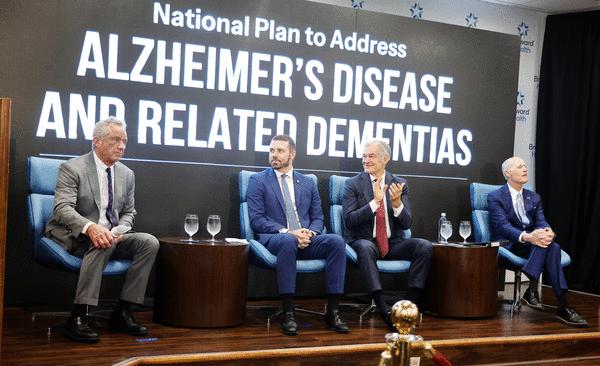
FORT LAUDERDALE, Fla. — U.S. Health and Human Services Secretary Robert F. Kennedy Jr. visited Broward Health Medical Center in Fort Lauderdale Thursday to announce the 2026 update to the National Plan to Address Alzheimer’s Disease and Related Dementias.
Joined by CMS Administrator Dr. Mehmet Oz, Acting FDA Commissioner Dr. Kyle Diamantes, U.S. Sen. Rick Scott, and Broward Health leaders, Kennedy outlined an ambitious national strategy that emphasizes early prevention, root-cause research, and caregiver support to confront a crisis affecting more than 7 million Americans.
He said updates to the national plan set four main priorities: helping Americans confront risk factors, investing in and accelerating new discoveries, improving care coordination, and strengthening caregiver support.
“Across 10 HHS divisions, we’re putting these commitments into action in unprecedented ways through new and some ongoing initiatives,” Kennedy said. “Families facing dementia and Alzheimer’s deserve a chance to live. They deserve more years of health and independence.”
“This is personal for me,” Kennedy said. “Several members of my family have faced Alzheimer’s, including my mother, who passed away last year.”
Acting FDA Commissioner Diamantes also announced the launch of the Neuroscience Advancement and Innovation Nexus: “A new FDA effort that will bring together scientific and regulatory expertise from across our drug, biologic and device centers to advance the development of medical products for diseases and conditions affecting the brain and nervous system.”
Its first initiative, Diamantes said, is an Alzheimer’s Prevention Accelerator focused on developing safe products or treatments to prevent or delay the onset of cognitive decline.
“We need to ask a more ambitious question: What can we do to prevent or delay cognitive decline before it begins?” Diamantes asked. He noted that brain changes begin decades before clinical symptoms appear and highlighted that the FDA has now authorized four blood-based tests to detect Alzheimer’s pathology early.
CMS Administrator Oz said Alzheimer’s has become a financial concern for the federal government.
“The last five years of an Alzheimer’s patient’s life is going to cost the government nearly $375,000. That is about 65% higher than what we spend for people who have heart disease, or people who have cancer,” he said.
Oz said the number of dementia cases is expected to more than double to 14 million people by 2060. “Taxpayers can’t keep up with the spiraling cost of dementia care,” he said.
The government must consider approved drugs and widely used natural products to prevent or treat Alzheimer’s, and invest in research on lifestyle approaches that may help prevent it, he said. He also noted that technology leaders are being brought in to create tools to help.
Sen. Scott highlighted Florida’s place at the epicenter of the dementia crisis, with nearly 600,000 residents living with Alzheimer’s and over 41,000 in Broward County alone. Scott pointed to legislative efforts to support unpaid caregivers, who collectively face billions of dollars in economic and personal strain.
Scott emphasized, “The best thing is to do exactly what the secretary said — if we can prevent this, think of how many lives we change, not just for them, but for their family and caregivers.”
_____
©2026 South Florida Sun-Sentinel. Visit sun-sentinel.com. Distributed by Tribune Content Agency, LLC.





Comments