Last year, her university determined a professor had sexually harassed a student. She wants to know why he still works there
Published in News & Features
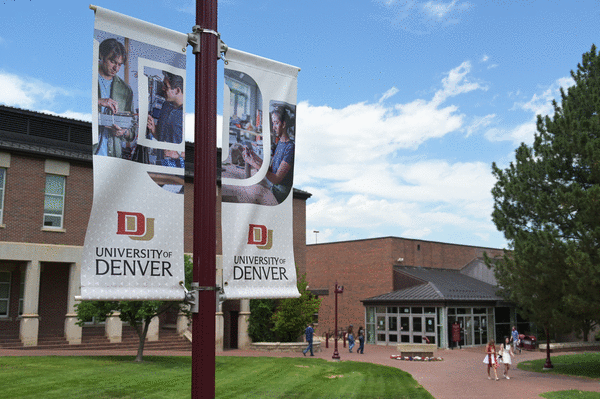
DENVER -- The University of Denver’s civil rights office last year found a tenured philosophy professor responsible for sexually harassing a graduate student and recommended he be terminated. The case against him had spanned more than a year and involved four different investigators.
The now-former DU student, whom The Denver Post is not identifying because she is a victim of sexual misconduct, wants to know why Marco Nathan is still employed by the university after the Office of Civil Rights and Equal Opportunity determined he was “responsible for harassment based on sex in the form of hostile environment harassment,” according to investigation documents she provided to The Post.
DU officials declined an interview for this story. Spokesman Jon Stone noted that while Nathan is still employed by the university, the one-time department chair is now a part-time employee working off-campus who “does not have interactions with students.”
“The University of Denver considers the safety of students a top priority and maintains robust processes for responding to allegations of discrimination or harassment,” Stone said in a statement. “Due to federal privacy laws that apply to student education records, the university is unable to provide details regarding this specific matter.”
Nathan did not respond to multiple requests for comment from The Post. In his appeal of the university’s findings, Nathan denied that his behavior toward his former student was sexual and said she initiated or welcomed their interactions.
DU’s civil rights office upheld its findings earlier this year. “Respondent’s own explanations of his interactions with Complainant are at times sufficiently troubling on their own without even considering Complainant’s recounting of the same incidents,” the office said in its response to Nathan’s appeal.
As national conversations around university sexual assaults make headlines once again in light of the Cornell University gang-rape allegations, survivors and advocates emphasize the role academic institutions play in litigating sensitive and often nuanced cases of sexual misconduct — including sexual harassment — on their campuses.
“In academia, because these fields are small, people have so much influence and people know people, so it becomes so terrifying to report,” said the former student, who waited until she graduated from DU and had been accepted into a Ph.D. program at a different university before reporting her experience to the civil rights office in 2024.
“You never know if a professor you’re trying to report is managing the journals you need to get published in to further your career, if they’re the ones accepting abstracts for conferences you need to present at,” she said. “The power differential is so extreme.”
Truth or dare
The former student shared her experience at DU in interviews with The Post and provided documents from the Title IX investigation by the university’s civil rights office, offering insight into a process that can be slow and shrouded in secrecy. Title IX is the landmark civil rights law enacted in 1972 that prohibits sex-based discrimination, including sexual harassment, from any educational institution that receives federal funding.
She began her time as a graduate student at DU in 2019 when she was 23. Over time, she said she grew close with her academic adviser, Nathan. When campus closed due to the pandemic, she said he invited her to his home for academic meetings, where she got to know his wife and newborn baby.
Nathan’s critiques of her writing and research became harsh and unreasonable, she said. “He made me believe I would not get into a Ph.D. program without his support. He was constantly berating me.”
As the two prepared to present at a 2021 academic conference in Florida, the former student said Nathan offered to split a hotel room with her to save money. She declined, noting that she was, at the time, “deeply religious” and a “prude.”
The former student said Nathan started touching her — poking her midsection, removing the face mask she wore for COVID-19 protection, snatching the hat from her head and, once, placing his hands around her neck and pretending to choke her as a “joke.”
“Those things were happening when he was in a good mood and not yelling at me, so I was like, ‘OK, it’s fine. He’s just joking,'” she said.
When the conference came, the former student said Nathan isolated her from networking with other academics. During one dinner, she said Nathan bought her “a very large drink” and suggested they play truth or dare on the walk back to their hotel. She dared him to walk into the ocean, which he did.
When they returned to the hotel, the former student said Nathan told her to wait in his room while he showered, then, after he finished, he dared her to shower in her bra and underwear.
Nathan told the Title IX investigator that he “jokingly” asked her to shower in his hotel room, according to the documents she provided. But in his appeal, Nathan said that was not true, and that he “at most alluded to this metaphorically.” He said in his appeal that they engaged in “sophomoric silliness,” but he denied anything sexual.
After she turned down the shower, the former student said Nathan asked what she had done sexually. She said he shared vulnerable details about a previous affair and marital troubles.
“Now, I look back at that and think, ‘Girl, you are so stupid,'” she said. “I was so naive.”
The former student said she told Nathan she loved his family, that he should fight for their marriage and that she would pray for him.
Nathan told her she was sweet, she said, and then grabbed her and started rubbing his head over her neck and arms. The former student said she told him “no” multiple times while he asked what was wrong and what was “on her heart.”
She left the room.
The next day, she said Nathan told her they needed to talk about boundaries. He told the student his wife was angry he went to the conference, she said. On the flight back to Colorado, she said Nathan made arrangements to move their seats next to each other.
“It got worse and worse from there,” she said.
Nathan told the student she wasn’t ready to apply for Ph.D. programs, she said. Then, that spring, he informed her that he was done supervising her because she didn’t listen to him, she said. The student switched advisers and graduated from DU in 2022. She applied to and was accepted to a Ph.D. program at a different institution, she said.
“It wasn’t until I… started telling my story to people that I was able to grapple with what happened and realized it was really bad,” she said.
‘Make sure he couldn’t hurt anyone else’
After her current academic adviser and colleagues reassured her that Nathan would not ruin her career, she reported her experience to DU’s Office of Civil Rights and Equal Opportunity in July 2024. The university began the investigation in October of that year, according to the documents provided by the former student.
Kayleigh Baker, vice president of practice excellence and a senior supervising consultant at national Title IX consulting firm TNG Consulting, said Title IX offices spend the bulk of their days overseeing reports alleging sexual harassment or sexual discrimination and carrying out the administrative grievance processes for those complaints.
“No one is coming into the Title IX office on their best day,” said Baker, who consults with schools, universities and organizations on Title IX best practices. “A Title IX office needs to be a place that has some trust on campus and an office that has reasonable levels of transparency and policies that are up to date… We can be transparent, follow our processes, and at the end, it is almost a guarantee that someone is going to think we got the wrong outcome.”
Last November, the civil rights office found Nathan responsible for sexual harassment, according to the documents. DU’s Title IX policies state this kind of harassment is “unwelcome conduct, based on the totality of the circumstances, that is subjectively and objectively offensive, and is so severe or pervasive that it limits or denies a person’s ability to participate in or benefit from the university’s education program or activity.”
In 2020, while the former student was under Nathan’s advisement, a student-driven movement was underway at DU to address what students described as a culture of sexual misconduct on campus. A social media account sharing DU students’ stories of sexual harassment and assault caught the attention of DU leadership, including Chancellor Jeremy Haefner, who vowed to address the issue.
One of the young women behind that social media account, Grace Wankelman, graduated from DU in 2022. This month, Wankelman helped organize a national day of action to stop sexual violence “from the frat house to the White House” in Washington, D.C.
“While I had a really positive experience with Chancellor Haefner, it sometimes seems like the admin of DU and admin of universities more broadly just blow in whatever direction the winds of political pressure are pushing them to blow,” Wankelman said. “What I’m noticing at DU and more broadly is the lack of courage to stand up to that, and that’s where it can be really frustrating.”
In January, Nathan appealed the university’s findings, according to the documents. The university upheld the original findings in February, closing the investigation.
The former student said the Title IX investigation process was long, frustrating and among the most difficult experiences she’s endured. She said at least four different people acted as investigators on her case.
“Occasionally, due to issues such as the selection and engagement of an appropriate outside investigator or staffing changes beyond the university’s control, investigations can take longer than anticipated,” DU’s Stone said in a statement. “While we aim to reach findings promptly and avoid delays, the completeness and accuracy of the investigations are paramount.”
DU’s Office of Civil Rights and Equal Opportunity received 487 reports last academic year. The office manages a wide range of civil rights complaints, including employee age discrimination, accessibility and equal pay, Stone said.
Fifty-five cases were investigated and resolved last academic year, Stone said. Eighteen remain in the investigative process. Eight are still pending. The remaining 406 cases were dismissed, Stone said, “primarily because there was no response to inquiries from investigators or because the reporting party did not want to proceed.”
Historically, tenure has protected university professors’ academic freedom and made firing them a slow and difficult process, though it can be done “for cause” — generally some type of personal or professional misconduct.
In the past four years, DU has initiated the for-cause termination processes for eight faculty members, five of whom were tenured, DU media relations specialist Jason Gruenauer said in an email. He would not say how many of those termination processes were still underway or how many faculty members were fired.
But, Gruenauer noted, “in almost all cases, individuals recommended for termination are no longer employed at the university.”
As of Friday, Nathan was listed as a professor on DU’s website. His personal website says he is a “tenured full professor of philosophy of science at the University of Denver” and that he served as a department chair from 2020 to 2025.
“I really only did this to make sure he couldn’t hurt anyone else,” the former DU student said. “I hope that my story could help someone know that this happens and they’re not alone and help DU reflect on how they managed this and do better.”
©2026 MediaNews Group, Inc. Visit at denverpost.com. Distributed by Tribune Content Agency, LLC.






Comments