Haiti prime minister urges dignity for migrants as his country grapples with deportees
Published in News & Features
Haiti Prime Minister Alix Didier Fils-Aimé on Friday thanked countries that have welcomed Haitians, using his address at the United Nations General Assembly to ask that they be treated with dignity and that their rights be upheld.
“Behind statistics and debates there are women, children and men who carry with them a history, talents, hopes, and sometimes the burden of exile,” Fils-Aimé told world leaders gathered in New York at the 81st U.N. General Assembly. “Respect for dignity and fundamental rights of all migrants must be upheld, no matter their situation. No circumstance can justify trampling their dignity under foot. The protection of a border and respect for human dignity are not incompatible.”
Fils-Aimé’s rare public appeal on behalf of migrants are among his most direct public comments yet on migration and come as Haiti grapples with a growing influx of nationals being forcibly returned from the neighboring Dominican Republic and the United States.
Nearly 200,000 Haitians were forcefully returned during the first eight months of this year, a 10% increase over the same period last year, according to the United Nations.
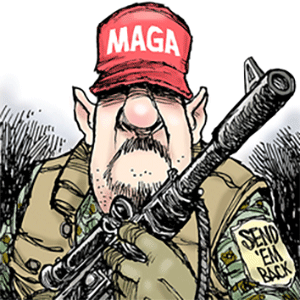
The Trump administration is accelerating deportations of Haitians after the Supreme Court over the summer cleared the way for the termination of Temporary Protected Status, the humanitarian program that had sheltered more than 300,000 Haitians in the U.S. Deportation flights have increased from once a month to once a week, with the latest flight landing on Thursday.
The Bahamas and Turks and Caicos have also stepped up enforcement against Haitians who amid a worsening humanitarian crisis and gang violence are increasingly taking to the high seas.
“For generations, Haitians settled abroad have contributed to the societies that welcomed them,” Fils-Aimé said. “From this rostrum, I wish to express my thanks to the countries that have opened their doors and have encouraged their integration.”
In his address, he invoked Haiti’s own history as a nation born out of a successful slave revolt that became a founding member of the U.N. 80 years ago, and that once offered refuge to those fleeing slavery and racial and religious persecution.
“Haiti was a land of welcome, refuge and hope, and we are working to make sure it becomes that again,” Fils-Aimé said. “We want it to be a country where one can rest there, return and live, and build one’s future and dignity.”
Fils-Aimé’s appearance at the U.N. was his first since becoming the sole head of Haiti’s transition in February following the end of the mandate of the controversial nine-member Transitional Presidential Council. During his address, he stressed his commitment to holding elections — Haitians last went to the ballot box in 2016 — and addressing the ongoing crisis of gang violence. He also reiterated support for the U.N.-authorized Gang Suppression Force, and trade over aid.
Haiti doesn’t need a savior, he said, but is rather looking for partners.
“We call upon the world not to save it, but to stand side by side with it while it takes its own destiny into its own hands,” Fils-Aimé said, adding that too often people, including Haitians, are being asked to “bear the weight of crises that they did not create.”
Fils-Aimé acknowledged that his Caribbean nation’s ongoing gang crisis has resulted in an exodus of thousands of Haitians.
“The response to this crisis in Haiti will mean re-establishing security, stability and economic recovery. These are the three priorities of my government,” he said.
And while the Haitian crisis is complex, “it is not insurmountable,” he added, calling on nations to live up to their commitments to the Gang Suppression Force and for the Security Council to reauthorized its mandate next week.
“It is regrettable that the force that was supposed to temporarily support these efforts, that this force is not yet fully operational and still hasn’t reached on the ground the planned force of 5,500 members,” he said.
Resources and equipment are needed, the Haitian leader said, for the new force to be effective.
“We are at a watershed moment. The time is not a time for any half measures or partially honored commitments, or a too tepid response, given the scale of the threat, massacres, bereaved families, women that have fallen victim to despicable violence, children deprived of their innocence, and communities chased away from their homes need to compel us to act,” Fils-Aimé said.
Armed gangs have killed thousands of Haitians this year, and were responsible for a massacre in the hills above Port-au-Prince in the community of Kenscoff.
The losses compel “us to ensure that justice is done,” he said.
“Haiti will also never forget the sacrifice” he added. “Through their courage, they have written with their blood as ink a page in the book of our struggle for security and peace.”
Fils-Aimé also brought up the thorny issues of the illicit trafficking in weapons and ammunition, which he described as Haiti’s other security challenge.
“These are weapons that are killing Haitians, that are sowing terror in our neighborhoods, in cutting down innocent lives, and they’re not being produced in Haiti,” he said. “They are arriving here through transnational criminal networks.”
Dismantling the arms traffic is a shared responsibility, and advocacy needs to move beyond Haiti, he said.
“For as long as this traffic prospers, violence will find ways to perpetuate.”
©2026 Miami Herald. Visit miamiherald.com. Distributed by Tribune Content Agency, LLC.





Comments