El Niño could bring waves of starving sea lion pups to California beaches. It's happened before
Published in News & Features
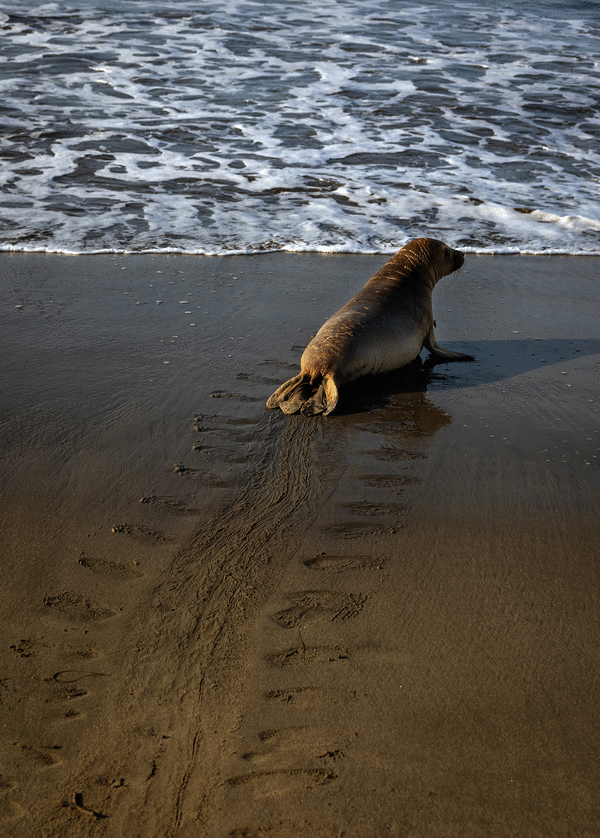
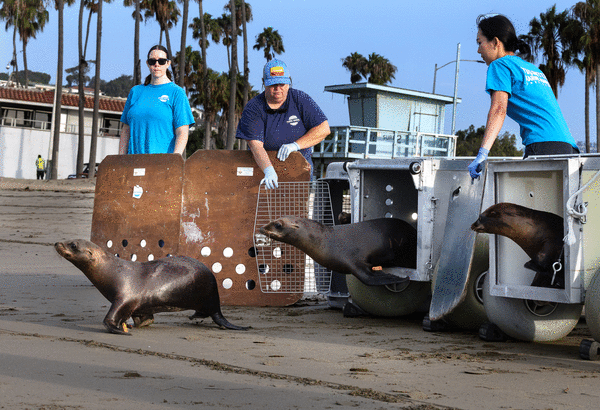
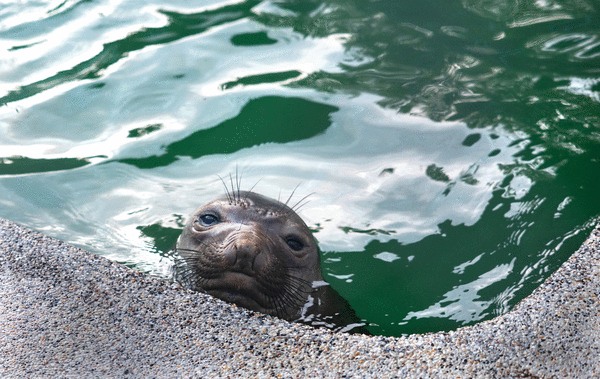
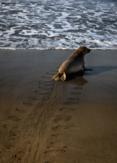
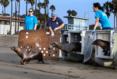
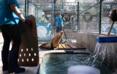
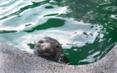
LOS ANGELES — A wrinkled Northern elephant seal named Violet slid out of a crate and onto San Pedro’s Cabrillo Beach on a muggy morning in late August.
The pinniped pup looked around quizzically with large, black eyes before lumbering into the surf with abandon — as only the young can.
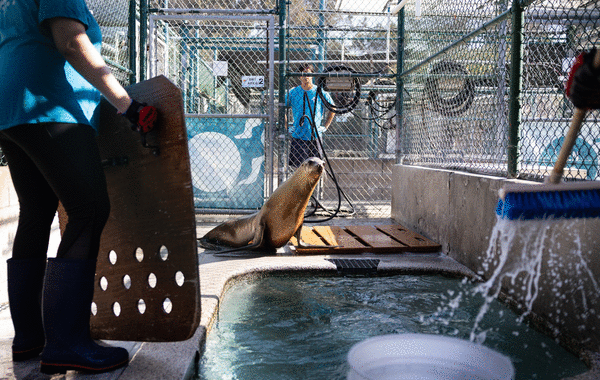
Violet, named for the color of identifying crayon scrawled on her brow, is one of 250 to 500 patients the Marine Mammal Care Center rescues along the Los Angeles County coast every year.
With a powerful El Niño forecast for this winter — on top of an ongoing marine heatwave — center staff fear the months ahead could bring an influx of blubbery patients.
“We can look at the past as the best predictor for the future,” said Dave Bader, chief operations and education officer at the center. “When we’ve seen conditions like this, the major effect for Southern California has been mass stranding of malnourished pups.”
From 2013 to 2016 — a period that included another El Niño event as well as an ocean heatwave known as “ The Blob” — thousands upon thousands of California sea lion pups were found underfed and in distress.
Whether or not a similar mass stranding event occurs this time around depends on how conditions this year affect a phenomenon known as upwelling.
On the West Coast, upwelling occurs when seasonal winds push warm surface water offshore, allowing deep, cold, nutrient-rich water to rise to the surface. This typically happens in the spring and summer and it’s an ideal time for seals, sea lions, seabirds and dolphins to give birth, since food is plentiful.
“You get a bonanza of life,” Bader said.
However, El Niño and marine heatwaves can change the timing or force of the winds, potentially dampening coastal upwelling and reducing the availability of food for sea life along the coast. The consequences are especially dire for young animals.
“Adult animals can usually figure it out,” Bader said. “They can swim further. They can go out to find where the food is. The young animals just don’t have that same physiological capacity, perhaps, or just not the long-term knowledge that a more seasoned adult animal would have. So they end up stranding in droves.”
The impacts might not be apparent until winter, spring or even later, he said.
As marine mammal rehabilitators brace for the grim possibility of mass strandings in Southern California, rescuers on beaches to the north worry about another dynamic.
In recent weeks, dozens of sea lions suffering from domoic acid poisoning have turned up on beaches from Monterey County to Sonoma County. Domoic acid is a toxin produced by algae and typically sickens animals that feed on open-ocean fish.
In those areas, the warm waters of an El Niño event can fuel blooms of the toxic algae.
KQED recently reported that the Marine Mammal Center in Sausalito has treated more than 100 sea lions — above its annual average of 75 to 90 — with most arriving since July. Officials fear those figures could rise dramatically in the coming months, echoing the surge seen between 2013 and 2016.
Caring for a single, distressed marine mammal can take significant time and resources. Violet, the elephant seal pup, was rescued at Palos Verdes Estates in mid-March. Even though she was more than a month old, she weighed only about as much as a newborn, according to the Marine Mammal Care Center in San Pedro.
The following month, her health significantly declined. She became lethargic, dehydrated and disinterested in food. She was seen “squinting with teary eyes” before testing positive for a potentially fatal bacterial infection.
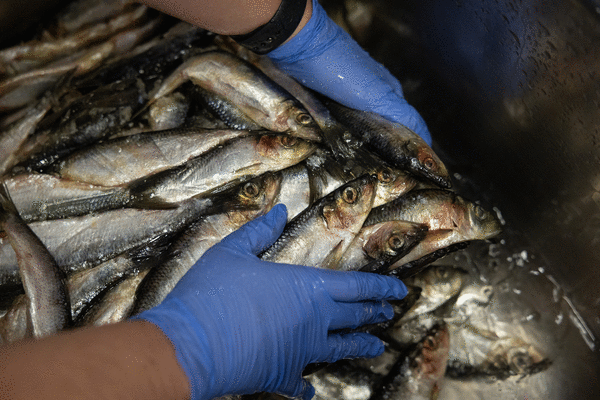
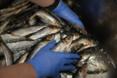
When a seal like Violet won’t eat on its own, caretakers use a tube to feed it. Herring is blended into a gruel and slid “down the hatch” three times a day.
For Violet, that struggle went on for about three months.
On the day of Violet’s release, Claire Phillips, a wildlife rehabilitation technician with the center, recalled the pup’s difficult recovery.
“She took the longest to start eating on her own,” Phillips said. “So it’s kind of a big win for our team to get her out.”
Triumph was in the air. But as Violet disappeared into the waves that morning, she looked vulnerable.
©2026 Los Angeles Times. Visit at latimes.com. Distributed by Tribune Content Agency, LLC.





Comments