Australia's web of Pacific alliances set to expand to Solomons
Published in News & Features
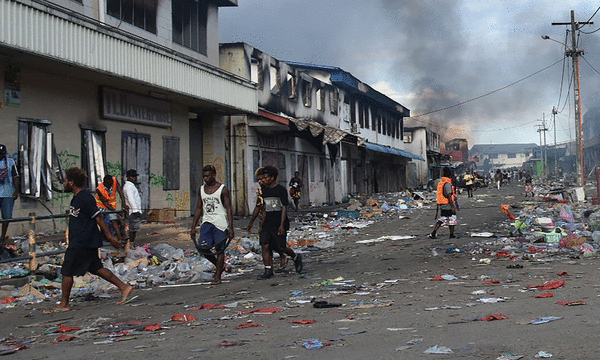
Australia is in the process of finalizing a treaty with another Pacific island nation, with the national broadcaster reporting that Canberra has struck an “in-principle” agreement with the Solomon Islands.
The two nations will work to sign the deal in the coming weeks, Australian Broadcasting Corp. reported, citing unidentified government officials. The news comes after Solomons Prime Minister Matthew Wale saw off a challenge to his leadership from within his Cabinet, with the rival withdrawing over the weekend.
Australia has pledged A$980 million ($708 million) in extra funding for the Solomon Islands’ government, according to a leaked text message from the Australian ambassador that was also reported by the ABC.
Once finalized, the deal would represent a significant diplomatic victory for Prime Minister Anthony Albanese’s government. The Solomon Islands shot to geopolitical prominence in 2022 when then-Prime Minister Manasseh Sogavare signed a security pact with China, provoking alarm in Canberra and Washington.
Albanese was first elected prime minister just weeks after the Solomons-China agreement was revealed, and has worked over the past four years to both reverse that deal and rebuild ties with the archipelago nation. Since Wale came to power in May, he has shifted his government’s diplomatic focus back to Australia and the U.S., breaking with previous administrations’ tilt toward Beijing.
Wale’s first overseas trip was to Canberra in June, with Albanese then reciprocating in July, when he traveled to Honiara and announced the start of the negotiations for the treaty. That meeting came a day after Albanese signed two new deals with Fiji, including a military alliance, which New Zealand has also expressed an interest in joining.
Those talks are all part of a web of security and policing agreements that Australia has established with nations including Papua New Guinea, Tuvalu, Nauru, Indonesia and others as it seeks to limit Chinese influence in the region. Canberra is also strengthening security ties with Japan, including plans to purchase Japanese-made naval vessels.
China’s test of a submarine-launched nuclear-capable ballistic missile in the Pacific region in early July also focused regional leaders’ attention on the risks of growing US-China strategic competition. Australia, Palau, New Zealand and others immediately condemned the test.
While Pacific nations were initially unable to agree on a joint response to China’s move, at the Pacific Islands Forum last week in Palau, all but one of the 18 member nations signed onto a statement calling out the firing of the missile and demanding proper advance notification and transparency.
(Jeremy Diamond contributed to this report.)
©2026 Bloomberg L.P. Visit bloomberg.com. Distributed by Tribune Content Agency, LLC.




Comments