Trump appeals ruling against his IRS audit immunity deal
Published in News & Features
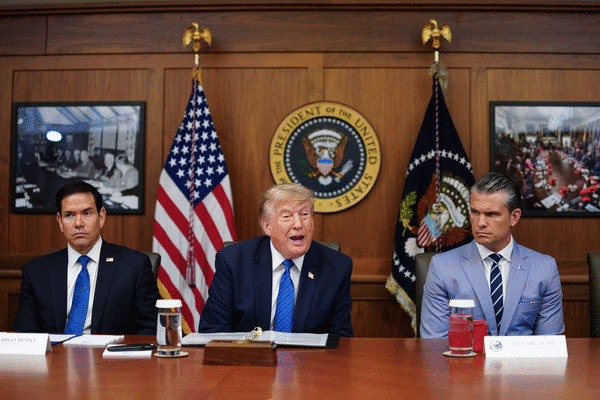
WASHINGTON — President Donald Trump is appealing a court order barring him from attempting to use a sweeping audit-immunity settlement that resolved his $10 billion lawsuit against the Internal Revenue Service.
Trump filed a notice of appeal in federal court in Miami on Friday, the latest twist in a lawsuit he filed in January that made him the first president to sue his own government.
Meanwhile, the controversial settlement continues to be a roadblock to the confirmation of Acting Attorney General Todd Blanche, who signed off on the deal for the government, after key Republican lawmakers said they wouldn’t vote for him unless the immunity provision is narrowed in writing.
Trump, 80, is appealing a July ruling by US District Judge Kathleen Williams, who held that his suit against the IRS was a “bad faith” attempt to manipulate the court. Her ruling barred Trump and his administration from citing its supposed settlement in any future regulatory or judicial proceedings, saying the deal had “no viable basis in law or fact.”
Central to the decision was the judge’s finding that Trump as president had improper control over both sides of the litigation, violating a constitutional requirement that parties in federal litigation be adverse to each other.
Her 56-page decision called into question whether Trump, his family members or business interests will be able to benefit from the controversial settlement, which would immunize them from audits or other federal probes related to past filings.
The settlement also included a now-scrapped $1.8 billion “anti-weaponization” fund, which was dropped amid a bipartisan outcry.
Trump sued the IRS and the U.S. Treasury in January over the unauthorized leak of his tax information to the press in 2019. The Justice Department, which represents the IRS and typically vigorously defends claims against the government, never responded to the suit in court.
“The facts before this court demonstrate there was never adverseness between the parties; there was never a case or controversy; and there was never a question as to who would prevail,” Williams wrote in her decision. “The court expressly finds that plaintiffs acted in bad faith.”
The judge said it was clear that Trump and his administration intended to settle all along, finding that the “matter was brought for an improper purpose — to gain the imprimatur of judicial legitimacy for a ‘settlement’ that had no viable basis in law or fact.”
The Justice Department previously released a statement denying “collusion” between Trump and the government and alleging that “the partisan judge who speculated otherwise has disregarded decades of precedent.”
_____
©2026 Bloomberg L.P. Visit bloomberg.com. Distributed by Tribune Content Agency, LLC.






Comments