Israel, Lebanon reach framework deal aiming to end conflict
Published in News & Features
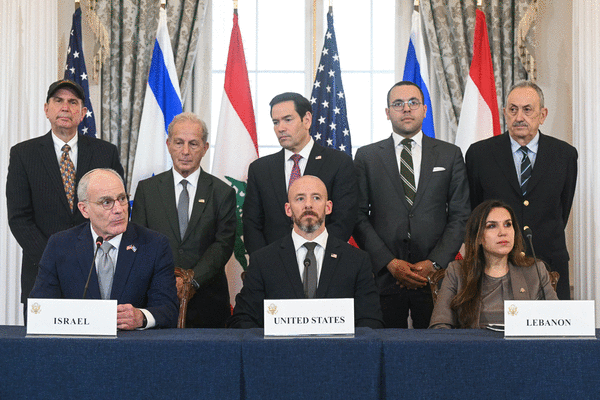
TEL AVIV, Israel — Israel, Lebanon and the United States reached an initial trilateral framework agreement aimed at paving the way for ending the conflict between the two countries and ultimately reaching a peace settlement, a senior Israeli official said Friday.
Israel will maintain a “security zone” along the boundaries of the yellow line, which marks a seized territory that stretches some 10 kilometers (6.2 miles) into Lebanon from the Israeli border. The latest conflict erupted after Iran-backed Hezbollah joined Tehran in retaliating against Israel following its joint attack with the U.S. on the Islamic Republic in late February.
Israeli Prime Minister Benjamin Netanyahu noted the agreement in a brief video statement, saying: “Israel’s continued presence in the security zone in southern Lebanon is a major achievement. We will maintain this presence as long as Hezbollah remains armed and continues to pose a threat to Israel.”
The framework includes the creation of a trilateral coordination group, facilitated by the U.S., to allow for implementation, according to a State Department release.
“For Lebanon, this framework provides a genuine pathway out of a long crisis,” according to the statement. “For Israel, it creates a verifiable path to removing the persistent threat on its northern border.”
Israel has said it needed to maintain control over the buffer zone — and prevent displaced Lebanese from returning there — as long as Hezbollah, which is deemed a terrorist group by the U.S., continues to pose a threat.
The Israeli prime minister argued that the agreement is a severe blow to Iran, which, he said, is attempting to force the Israeli military’s withdrawal from southern Lebanon. “In effect, Israel, Lebanon and the U.S. are sending a clear message to Iran: you have no foothold in Lebanon, neither you nor Hezbollah,” Netanyahu said.
President Donald Trump has been putting pressure on Netanyahu to stop attacking targets in Lebanon as the U.S. leader tries to preserve a fragile ceasefire with Iran. Iran has conditioned its ongoing peace talks with the U.S. on an imminent ceasefire in Lebanon.
To that end, The U.S. has mediated and declared multiple ceasefires in Lebanon in recent months, but most have quickly collapsed. Israel has repeatedly cited Hezbollah’s violations of past ceasefires to justify its continued attacks on the group.
The newly announced deal — which was struck Friday during three-way talks in Washington — faces significant hurdles, most significantly because Hezbollah has rejected the negotiations.
The death toll in Lebanon has surpassed 4,000 and some one million residents on south Lebanon were displaced. On Israel’s side, some three dozen soldiers and several civilians were killed. An unknown number of Israelis abandoned border adjacent communities.
Under the deal negotiated in Washington, Israel agreed to withdraw from two areas that will be taken over by the Lebanese army as pilot zones where it will aim to implement plans to disarm Hezbollah.
The two pilot zones are based on the IDF’s recommendation, said Netanyahu. “One is located south of the Litani River, and the other is north of the Litani in the expanded security zone,” he said.
The Israel Defense Forces will retain full operational freedom throughout the security zone to eliminate threats of any kind, added the senior Israeli official, who was granted anonymity to discuss sensitive negotiations.
_____
With assistance from Michelle Jamrisko.
_____
©2026 Bloomberg L.P. Visit bloomberg.com. Distributed by Tribune Content Agency, LLC.






Comments