Oil, drugs and US relations hang in the balance as Colombians vote for president
Published in News & Features
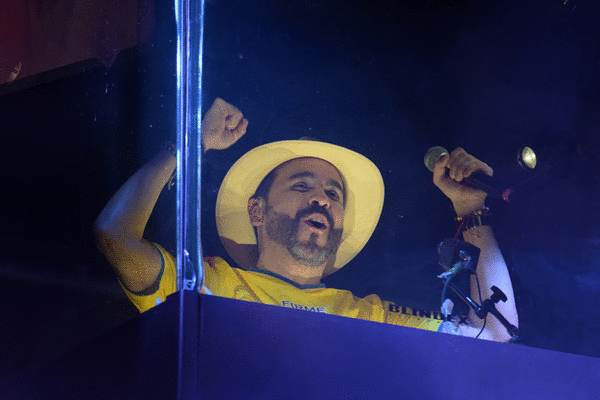
Colombians are voting in one of the most polarized elections in the nation’s history, with the economic model, the war on drugs and relations with the US all hanging in the balance.
Conservative lawyer Abelardo de la Espriella is seeking to extend his lead over leftist Senator Iván Cepeda, after unexpectedly beating him in the first round of voting three weeks ago.
De la Espriella, popular with investors and backed by U.S. President Donald Trump, wants to slash taxes and government spending, build mega prisons, and bomb the camps of cocaine-trafficking militias. He also wants to allow fracking and reopen the nation to new oil exploration.
Cepeda, who has a strong base of support among low- income Colombians and Black and Indigenous voters, says he would increase taxes on the rich, redistribute land to poor farmers and ban fracking. He was one of the architects of the “Total Peace” plan, which De la Espriella wants to halt. This has brought seven drug-trafficking groups to the negotiating table, though has so far failed to produce large demobilizations of fighters.
De la Espriella is a U.S. citizen who says he’s a registered Republican. And Trump has signaled that Colombia’s strained relations with Washington will improve dramatically if he wins.
However, the relationship might sour again if a Democrat takes office in 2029. This week several Democrat lawmakers signed a letter criticizing Trump’s interference in Colombian elections, and referring to De la Espriella as “a candidate with a profoundly troubling record”.
The vote is widely seen as a referendum on the outgoing government of President Gustavo Petro, who is barred by the constitution from seeking a second term. He banned new oil exploration, boosted the minimum wage and workers’ rights, and repeatedly attacked the central bank in overwrought language.
He also has a conflictive relationship with the U.S., which is historically a close ally of Colombia.
Cepeda is the son of a slain communist leader and has spent more than four decades in politics, focusing on human rights and negotiated solutions to Colombia’s armed conflict. De la Espriella built his public profile as a lawyer representing politicians, celebrities and controversial figures, and has never held elected office.
“These are clearly two different visions for the country,” said Patricia Muñoz, a political scientist and professor at Bogotá’s Javeriana University. “They have different priorities, different constituencies and different allies.”
Whoever wins will have to deal with a fiscal deficit of more than 6% of gross domestic product, a security crisis fueled by record cocaine production and a fractured congress.
Polls close at 4 p.m. with results expected early Sunday evening.
_____
©2026 Bloomberg L.P. Visit bloomberg.com. Distributed by Tribune Content Agency, LLC.






Comments