Virginia lawmakers strike a budget deal
Published in News & Features
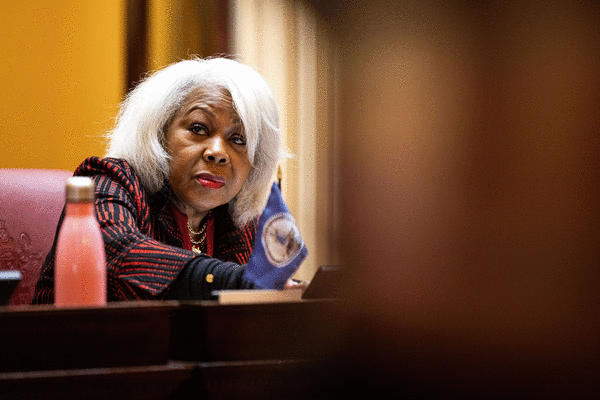
RICHMOND, Va. — With just days to go before the commonwealth’s current budget expires, the Virginia House and Senate reached a $185 billion budget deal that would take effect July 1. The deal includes an energy consumption fee for data centers.
The budget bill is now headed to Gov. Abigail Spanberger’s desk for her signature. Because it took so long to arrive at a compromise, Spanberger will have a short time to decide whether to sign the budget and avoid a state government shutdown.
Data centers
The two chambers have been at odds for months over how to tax data centers. The Senate proposal, championed by Senate Finance and Appropriations Chair Louise Lucas, would have eliminated the state sales and use tax exemption from which data centers currently benefit, generating around $1.6 billion in revenue. The House, whose Finance Committee is chaired by Del. Luke Torian, and Spanberger were reluctant to end existing agreements with the industry.
Instead of eliminating the tax breaks on certain computer equipment, the budget deal establishes an energy consumption fee at a rate of $0.011/kWh of all electricity consumed at each data center. Revenue generated from this fee would be capped at $600 million each year for the next two years. And the fee would only apply for this budget cycle.
Cannabis
The budget also contains a provision that would create a retail cannabis market starting July 1 of next year. Spanberger had previously vetoed legislation that would have set up the market after the General Assembly rejected her amendments. But lawmakers and the governor arrived at a compromise that would grant 350 retail cannabis sales licenses.
Education
The budget deal contains two 4% raises for teachers over the biennium, which spans fiscal 2027 and ’28. The first raise would take effect July 1 of this year. The budget also provides $519 million in grants over the biennium for school construction.
Federal budget cuts
The budget proposal attempts to mitigate the impact of federal cuts to programs such as Medicaid. It reserves $350 million in a Medicaid contingency fund and provides $150 million in premium assistance to people purchasing health insurance on the state’s health insurance exchange who lost access to the premium tax credits that ended at the end of last year.
That funding would go to people making between 138% and 250% of the federal poverty level, or between about $22,000 and $40,000 a year for a single person. According to the legislature’s estimate, that would lower insurance premiums by 70% on average.
“This budget agreement reflects our shared commitment to making Virginia more affordable for families,” money committee chairs Lucas and Torian said in a joint statement.
“At a time when too many households are feeling squeezed by rising costs and economic uncertainty, this conference report makes historic investments to lower costs, strengthen our schools, protect access to healthcare, expand economic opportunity, and maintain the Commonwealth’s strong fiscal foundation.”
©2026 The Virginian-Pilot. Visit pilotonline.com. Distributed by Tribune Content Agency, LLC.






Comments