Current News
/ArcaMax

7 takeaways from an investigation into financial aid at Texas hospitals
Most hospitals offer financial assistance to patients who struggle to afford their bills, often referred to as charity care. But many people are stymied by cumbersome aid applications. Others don’t even know help exists.
Hospitals have the ability to proactively screen patients to see if they’re eligible for aid and, if so, automatically ...Read more

Diageo's toxic spill hits a pristine river in Scottish whisky country
The River Spey in northeastern Scotland is one of the world’s most pristine bodies of water. Stretching across 107 miles, it teems with salmon and trout, supporting communities built on tourism along its shores. Earlier this year, a toxic chemical spill into a critical spawning tributary killed thousands of fish and other wildlife, blighting ...Read more
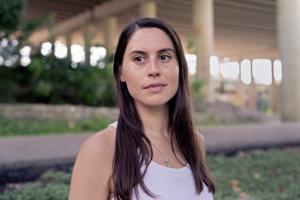
What Texas reveals about the obstacles to getting hospital financial aid
Aimee Carlock needed surgery in August 2025 to treat severe pain and bleeding from her uterus. But first, she needed to come up with $5,500.
Texas Health Resources, one of the state’s largest nonprofit hospital systems, told her it wouldn’t schedule the procedure unless she paid up front, Carlock said. The self-employed house cleaner didn�...Read more

Bolsonaro and Lula in dead heat a day before runoff, poll shows
Flávio Bolsonaro and President Luiz Inácio Lula da Silva were statistically tied in a poll released on the eve of Brazil’s runoff election.
Bolsonaro had 50.5% support to Lula’s 49.5%, according to the BTG Pactual/Nexus poll, a gap within the 2 percentage-point margin of error and little changed from Monday when the right-wing challenger ...Read more
Noah Adams, longtime host of NPR's 'All Things Considered,' dies at 84
Noah Adams, a longtime host of NPR news program “All Things Considered” and a journalist known for his gentle voice and genuine curiosity, has died. He was 84.
Adams died Oct. 16 at his home in Yellow Springs, Ohio, according to NPR. The cause was complications of a benign brain tumor removed eight years ago, his wife and longtime NPR news ...Read more

Targeted in alleged terror plot, Hmong festival proceeds at Mall of America
MINNEAPOLIS — At times on Saturday, the Mall of America bumped with Hmong rap songs. During others, it rang with the jangle of hlab nyiaj, the traditional sash adorned with silver coins. For more than four hours, hundreds gathered for the second annual Hmong Arts Celebration.
A handful of security guards gave the only reminder of a grimmer ...Read more

Torrential rains hit Orange County, send visitors scrambling for cover at Disneyland
LOS ANGELES — After the National Weather Service warned of strong Friday evening thunderstorms and heavy rain in the Inland Empire, Santa Ana Mountains, and Orange County, a brief, powerful storm hit Orange County, forcing visitors to race for cover at Disneyland.
Addison Zegan, 36, a self-proclaimed Disney adult who runs The Disneylanders ...Read more

Bodies turned over to gang-fighting force in Haiti may be missing Salvadorans
The United Nations-authorized gang-fighting force in Haiti is grappling with the possibility that badly burned corpses it received from a humanitarian organization on Saturday afternoon could be that of four Salvadoran soldiers ambushed by armed gangs a week ago.
The remains, wrapped in several layers of garbage bags, were turned over to the ...Read more

Saudi Arabia suggests Riyadh Airport may reopen on Sunday
Saudi Arabia’s main airport was gearing up to reopen as early as Sunday after operations had been disrupted by a spate of attacks by Houthi rebels.
King Khalid International Airport said in a post on X that Terminal 1 will be used for domestic flights and Terminal 2 will be for international flights, but passengers should check with airlines ...Read more

The police officer critically wounded in the West Philly shooting was released from the hospital after two weeks
The police officer who was critically wounded by a gunman in West Philadelphia was released from the hospital on Saturday, two weeks after the shooting that killed his partner.
Officer Hector Rodriguez III, who was shot 12 times during the Oct. 10 gunfire, was released from Penn Presbyterian Medical Center just after 11 a.m. More than a hundred...Read more
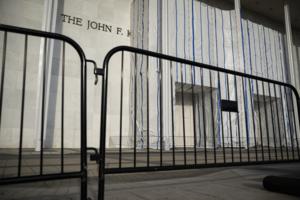
Trump rushes to put imprint on DC -- if lawsuits don't stop him
WASHINGTON — Donald Trump’s effect on the nation’s capital will last far longer than the results of any election — or his presidency — if he has his way.
Lawsuits over a growing number of projects are reaching critical moments as President Donald Trump seeks to start construction on a local golf course and a triumphal arch in ...Read more

Trump proposes eliminating race, ethnicity questions from 2030 census, alarming health, civil rights advocates
CHICAGO — A Trump administration proposal to eliminate questions about race, ethnicity and sexual orientation from the U.S. census could hurt efforts to address inequities in Chicago and across the nation, health and civil rights advocates warn.
The proposal is part of the administration’s broader effort to eliminate diversity, equity and ...Read more

Is the WA 'millionaires tax' really coming for public pensions?
SEATTLE — When you think about the mansion- and yacht-owning millionaire crowd, retired schoolteachers don't typically leap to mind.
Nevertheless, foes of Washington's new high-earner income tax are making a pitch to teachers — and other public-sector workers — contending the so-called millionaires tax" is a threat to their pensions.
In ...Read more

Salvadoran troops land in Haiti aboard Pentagon plane amid crisis over ambushed soldiers
Four planeloads of soldiers from El Salvador landed in Haiti on Friday, days after the Central American nation’s president angrily threatened Haitian gangs that ambushed a group of Salvadoran soldiers over the past weekend who remain missing.
The four flights carrying 350 Salvadoran military landed a day after El Salvador sent 100 special ...Read more

Paris police use tear gas, water cannon to disperse protesters
Police used tear gas and a water cannon to disperse crowds in Paris after tens of thousands of people marched largely peacefully on Saturday to protest the high cost of living and insufficient school funding.
The clashes late in the day mirrored tensions in other French cities, including Lyon and Bordeaux. In Grenoble, close to 400 masked ...Read more

Ukraine says restrictions on Starlink speed have been lifted
Ukraine said limits on the speed of its SpaceX Starlink terminal connections had been lifted in overnight testing, a move that may ease the latest tensions between Kyiv and Washington.
“The Defense Ministry’s monitoring systems are seeing the recovery of Starlink/Starshield speed; the connections are stable,” Defense Minister Yevhenii ...Read more

Trump wants to strip California of coastal protections unless state meets list of demands
LOS ANGELES — In what one environmental law expert described as “a dangerous ultimatum,” the Trump administration said it would strip California of its authority to protect its coastline unless state regulators agreed to more than a dozen “corrective actions” that would benefit close allies of the White House, according to the draft ...Read more

Kim Jong Un visits China for second trip in just over a year
North Korean leader Kim Jong Un visited the Chinese city of Dandong on Saturday, his second visit to China since September 2025 and ahead of a trip to the region by U.S. President Donald Trump next month.
Kim appears to have reached the city via the New Yalu River Bridge, a South Korean government official said, one of two major bridges that ...Read more
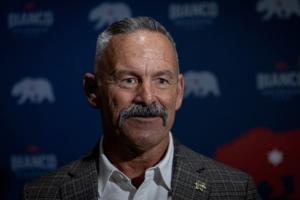
Sheriff Chad Bianco asks Riverside County to foot legal bills over ballot seizure
LOS ANGELES — The saga over Riverside County Sheriff Chad Bianco's seizure of hundreds of thousands of special election ballots has taken another turn, as a dispute looms over who should foot the bill for his legal defense.
Bianco's representative last week filed a claim for damages exceeding $10,000 — arguing that Riverside County should ...Read more
Paris police use tear gas, water cannon to disperse protesters
Police used tear gas and a water cannon to disperse crowds in Paris after tens of thousands of people marched on Saturday to protest the high cost of living and insufficient school funding.
This mirrored tensions in other French cities including Lyon and Bordeaux. In Grenoble, close to 400 masked individuals dressed in black attacked security ...Read more
Popular Stories
- Iran plots, Houthi attacks spur US departure orders in Mideast
- Halloween candy binges can overload your gut microbiome – a gut doctor explains how to minimize spooking your helpful bacteria
- Exceptionally high tides will swamp California, 'likely to get worse before it gets better'
- Trump wants to strip California of coastal protections unless state meets list of demands
- Kim Jong Un visits China for second trip in just over a year
Comics