Trump talks up Iran blockade as Israel-Lebanon truce extended
Published in News & Features
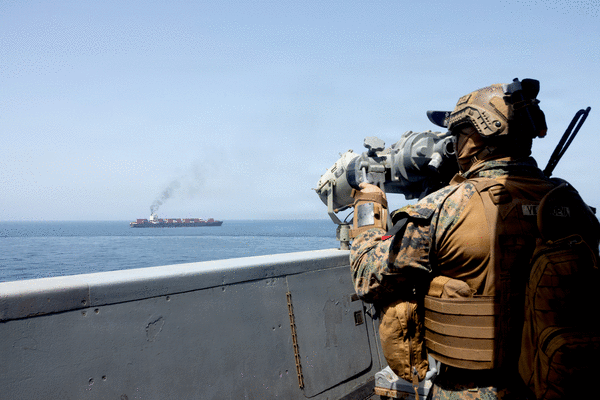
The U.S. increased pressure on Iran with its naval blockade, as it seeks to get Tehran to agree to talks, while Israel and Lebanon are set to extend a ceasefire for three weeks.
President Donald Trump ordered the U.S. Navy to shoot any boat putting mines in the Strait of Hormuz, after the military intercepted two oil supertankers that tried to evade restrictions on traffic to and from Iran’s ports.
The move by Trump, who claimed Iran is laying sea mines in the strait, is part of the White House’s attempt to cut off the country’s oil exports, squeezing it economically and forcing it to make concessions that will help end the war.
“I have all the time in the World, but Iran doesn’t — The clock is ticking!” Trump said in a Truth Social post.
Trump’s allies say the blockade will force Iran to start shutting down crude production — its main source of foreign-exchange earnings — within about two weeks. JPMorgan Chase & Co. analysts have said it may take closer to a month for the U.S. to achieve that goal.
The U.S. naval operation has caused many Iran-linked vessels to turn around rather than go through the Hormuz strait. Still, at least some are making the crossing, according to ship-tracking firms, potentially giving Iran the ability to withstand the restrictions for longer.
A U.S.-sanctioned supertanker laden with Iranian oil appeared to be attempting to cross the Strait of Hormuz on Friday. Otherwise, traffic through the waterway — through which one fifth of the world’s supplies of oil and liquefied natural gas normally flow — remains at a virtual standstill.
That’s increasing concerns that fuel prices will rise even further and lead to a global economic slowdown.
Oil prices climbed for a fifth day on Friday, with Brent trading just above $107 a barrel. The global oil benchmark jumped more than 18% this week, extending gains since the start of the war to 48%. U.S. and Israeli strikes on Iran ignited the conflict in late February.
Some of Trump’s advisors believe his tough, brash messaging on social media and the continuation of the blockade are hindering the chances of a peace deal with Iran, Bloomberg reported on Thursday. Iranian negotiators have said Trump’s posts are aimed at humiliating Tehran’s leaders and making them less inclined to strike a deal, according to several officials with knowledge of the diplomatic efforts to end the war.
Iranian authorities said the strait was reopening for all commercial traffic last Friday. But they quickly reversed their decision when it became clear the U.S. would not suspend its blockade in tandem.
The standoff means there’s no guarantee a return to hostilities will be avoided. The war, which saw Iran strike Israel and Gulf Arab states with thousands of drones and missiles, has already killed more than 5,000 people.
“The U.S. naval blockade of Iran looks less airtight than Washington claims,” Bloomberg Economics analysts Becca Wasser, Chris Kennedy and Dina Esfandiary said in a note. “That risks blunting its impact as a tool of economic pressure and undermining its core objective: forcing Tehran to concede control of the Strait of Hormuz and return to the negotiating table.”
Trump, late on Thursday, said Israel and Lebanon will extend their ceasefire, which was due to end on Sunday, lifting one roadblock to ending the war with Iran.
Trump announced the deal in a social-media post after meeting Israeli and Lebanese envoys at the White House. He said he would host Israeli Prime Minister Benjamin Netanyahu and Lebanon President Joseph Aoun in the near future. Neither leader confirmed that and it would be politically sensitive as the countries don’t formally recognize one another.
Netanyahu and Hezbollah, the Iran-backed militant group in Lebanon that Israel is waging war against, have not commented on the extension. Trump wants to avoid a return to hostilities in the Arab country because Iran has said that’s crucial to striking a broader peace agreement with the U.S.
Israel invaded southern Lebanon and launched airstrikes across the capital Beirut and other areas after Hezbollah, in solidarity with Iran, began firing rockets at the Jewish state in early March. More than 2,000 Lebanese people have been killed in the war and more than one million have been displaced, according to the Lebanese government.
Israel says the attacks and the occupation of swathes of southern Lebanon were necessary to protect its own northern communities. The ceasefire there began on April 16 and has broadly held, though each side has accused the other of violating the agreement with attacks.
The ceasefire does not entail Israel removing troops from Lebanon.
©2026 Bloomberg L.P. Visit bloomberg.com. Distributed by Tribune Content Agency, LLC.



Comments