US and Iran weigh truce extension with Strait of Hormuz still shuttered
Published in News & Features
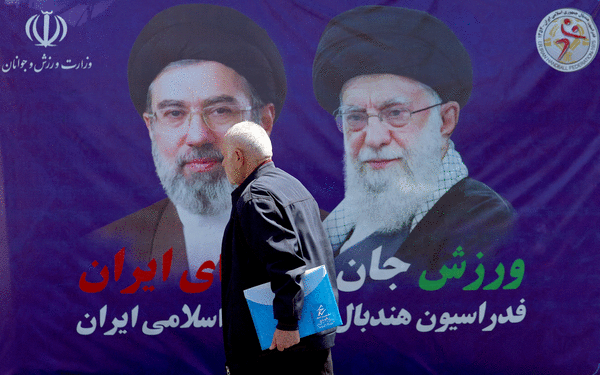
The United States and Iran are considering a two-week ceasefire extension to allow more time to negotiate a peace deal, according to a person familiar with the matter, reducing the prospect of a return to fighting despite an intensifying standoff over the Strait of Hormuz.
Mediators between the warring sides are seeking technical talks to overcome the most contentious issues preventing an agreement that would extend beyond next week, when an initial truce will expire, said the person, who asked not to be identified discussing sensitive matters. Those include the reopening of Hormuz and the future of Iran’s nuclear program.
Tensions remain particularly high over Hormuz, a critical waterway for oil and gas that has been effectively shuttered since the start of the war almost seven weeks ago. The U.S. has set up a naval blockade to cut off Iranian shipments, while Tehran is keeping the strait closed off to other vessels.
The standoff has reduced transit to a trickle, exacerbating an energy supply crisis that threatens a major blow to the world economy.
Fighting between the U.S. and Iran has been on hold since about April 8, shortly after a two-week ceasefire was announced by U.S. President Donald Trump the previous evening. An initial round of peace talks was held in Pakistan last weekend, though participants including U.S. Vice President JD Vance departed without a deal.
Pakistan’s military said a delegation from the country arrived in Iran on Wednesday, with Islamabad continuing to mediate the exchange of messages between the two sides.
Iran sees a prolonging of the U.S. blockade as “a prelude to a breach of the ceasefire,” said Ali Abdollahi, the commander of Iran’s joint military headquarters, according to state TV. Iran’s armed forces “will not permit any exports or imports to continue in the Persian Gulf, the Sea of Oman or the Red Sea” if the blockade continues, he said.
Oil prices remain elevated, though Brent crude pared gains to trade at just over $95 barrel on Wednesday. That’s about 33% higher than before the start of the war. U.S. stocks were near a record high, as optimism around a potential peace deal boosted financial markets.
While Israel joined the U.S. in halting attacks on Iran last week, its military kept up attacks against Tehran-backed Hezbollah in Lebanon, a move that has complicated the broader push for peace.
Talks between Israel and Beirut began Tuesday in Washington to address the parallel conflict, which has killed more than 2,000 people and displaced a million more, according to Lebanese authorities.
Discussions are taking place about a potential ceasefire, Israel’s state-owned Kan News reported Wednesday, citing an unnamed official, adding that a decision hasn’t been made. The U.S. had been pressing Israel to agree to a truce, Israel’s Channel 12 reported, with Iran claiming the ongoing campaign is a breach of the ceasefire.
Trump Fluctutations
Trump on Tuesday told Fox Business the war is “close to over.” The U.S. leader has vacillated throughout the conflict between declaring it all but won and threatening a major escalation, and many questions remain about the issues that drove the U.S. and Israel to start their bombardment of the Islamic Republic.
Chief among those is the future of Iran’s nuclear program. Israel maintains Tehran’s stockpile of highly enriched uranium must be removed, while Trump told the New York Post he’s unhappy about reports that the U.S. proposed a two-decade moratorium on enrichment, saying Iran can never be allowed to have nuclear weapons.
The whereabouts of Iran’s uranium has been unknown since the U.S. and Israel bombed the country’s nuclear facilities in June last year, and International Atomic Energy Agency inspectors have been barred access since then.
Iran has always said it isn’t pursuing a weapons program. The country’s right to peaceful use of nuclear energy “cannot be revoked,” Foreign Ministry Spokesman Esmail Baghaei told reporters Wednesday. However, the level and type of enrichment is “negotiable,” he added.
Another key issue is the standoff over Hormuz, through which about a fifth of the world’s oil and liquefied natural gas was shipped before the war. Iran has kept the chokepoint closed to all but its own crude since the start of the fighting, triggering a global supply crisis, and has said it wants to maintain control even after the conflict is over.
The U.S. began a naval blockade of Hormuz on Monday to curb the Islamic Republic’s oil exports, and the U.S. military says it’s been fully implemented. More than a dozen vessels are being used to enforce it.
The navy has been impeding traffic outside the strait in the Gulf of Oman and appears to have forced some carriers, including the U.S.-sanctioned Rich Starry, to make a U-turn back toward the Persian Gulf. An Iraq-bound supertanker sailed through the waterway on its second attempt, making it the first crude carrier to head west through the conduit since the U.S. blockade began.
An Iranian supertanker sailed through the strait into Iranian waters despite the blockade, Iran’s semi-official Fars news agency reported, without identifying the vessel. The passage wasn’t confirmed by the U.S.
The Trump administration will allow a waiver that temporarily authorizes the purchase of certain Iranian crude oil to expire this weekend, the Treasury Department said. A similar waiver for Russian crude, part of efforts to ease global energy shocks from the war, lapsed last week.
While crude oil has come off wartime highs, U.S. gasoline and diesel prices remain at their highest seasonal levels ever, a pain point for consumers ahead of summer travel.
Iran’s missile attacks have caused extensive damage to Gulf energy infrastructure and the Hormuz closure has disrupted oil and gas supplies beyond the region, issues that could take some time to iron out.
That’s triggered fears of a global inflation crisis. Surging prices of products such as jet fuel and gasoline are already squeezing consumers, the International Energy Agency said Tuesday. There are also growing concerns about disruption of other Gulf supplies besides energy — in particular fertilizer, where shortages could hurt food output and raise prices.
_____
(With assistance from Patrick Sykes.)
©2026 Bloomberg L.P. Visit bloomberg.com. Distributed by Tribune Content Agency, LLC.




Comments