Minnesota weighs legalizing psilocybin mushrooms for therapeutic use
Published in News & Features
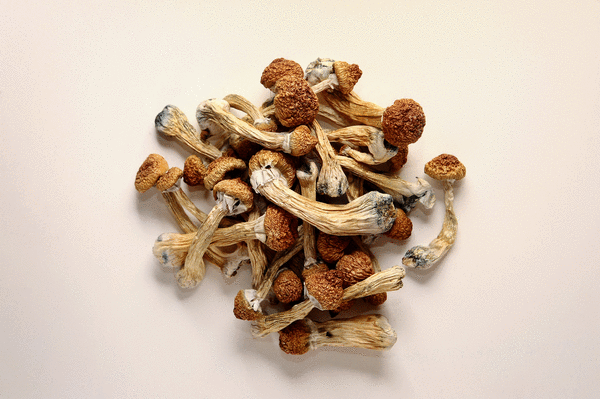
MINNEAPOLIS — Minnesota could soon legalize the therapeutic use of psilocybin mushrooms on a small scale, as lawmakers point to emerging research that suggests the psychedelic drug could help treat intractable mental illnesses.
A bipartisan group of state lawmakers is pushing to create a pilot program allowing for therapeutic use of the drug in supervised settings. The proposal comes as legislators and researchers nationwide have expressed growing interest in psychedelic-assisted therapy.
“These are great tools to help folks across a spectrum of mental health illnesses, from addiction to PTSD to seasonal depression,” said state Rep. Andy Smith, a Rochester DFLer who’s leading the Minnesota legalization effort.
The legislative push comes one year after a state Psychedelic Medicine Task Force recommended the creation of a regulated clinical program for mushrooms to treat mental health disorders.
The task force singled out psilocybin as a potential treatment for depression, anxiety, disordered eating and substance use disorders, among other conditions. Psilocybin has received the “breakthrough therapy” designation by the U.S. Food and Drug Administration, meaning preliminary clinical evidence indicates it may demonstrate substantial improvement over available therapies.
Psilocybin-assisted therapy has drawn an unusual coalition of supporters, uniting liberals focused on its mental health potential with conservatives who are skeptical about pharmaceutical drugs and see promise for veterans dealing with trauma.
U.S. Health and Human Services Secretary Robert F. Kennedy Jr. said last month that his agency and the Department of Veterans Affairs are eager to finalize rules allowing access to psychedelic-assisted therapy.
In the Minnesota Senate, GOP Sen. Mark Koran is co-sponsoring the bill to legalize psilocybin for therapeutic use. He said the drug has shown promise when used under the supervision of a doctor.
“Relative to pharmaceuticals today, I think it’s natural,” said Koran, of North Branch.
Under the proposal moving through the Minnesota Capitol, a select number of adults 21 and older who have been diagnosed with a qualifying medical condition could use psilocybin under the supervision of a licensed facilitator.
The therapy would occur in three phases: A “preparation session” where a patient meets with their facilitator before treatment, an “administration session” where the drug is consumed, and an “integration session” to process the experience afterwards.
“This will require a facilitator to be sitting with the patient while they are using it,” said drug policy lobbyist Kurtis Hanna, who is working with lawmakers on the bill. “Kind of like a trip-sitter, in colloquial terms.”
Minnesota’s health commissioner would be tasked with setting qualifying medical conditions, testing standards for mushrooms and qualifications for those who want to serve as facilitators of psilocybin-assisted therapy sessions.
The state’s Office of Cannabis Management would help oversee patient registries, facilitator licensing and the cultivation and testing of mushrooms.
The therapeutic psilocybin program would be limited to no more than 1,000 patients with qualifying medical conditions in its first three years. The bill also would cap the number of registered facilitators at 50 during the pilot period. Facilitators would be required to have experience either conducting clinical trials with psilocybin or administering ketamine-assisted therapy.
The bill cleared its first committee hearing of the year in the Minnesota House on Monday, March 9.
University of Minnesota psychiatry professor Jessica Nielson, who chaired the state Psychedelic Medicine Task Force, told the committee that she knew five people who took their own lives in the past year.
“I can’t help but wonder if their lives could have been saved if there were more effective options for them to access, especially when a viable alternative with psilocybin mushrooms is widely available yet currently illegal to access,” she said.
Nielson said her support for psilocybin mushrooms is backed by both her professional credentials and her lived experience.
“I have also personally healed from severe depression with psilocybin mushrooms after suffering multiple traumatic miscarriages in recent years,” she said.
Military veteran Stefan Egan told lawmakers he suffered gunshot wounds to the chest as well as several brain lesions caused by improvised explosive device (IED) blasts over the course of five combat deployments. He said the physical and mental trauma “ultimately led me down the paths of addiction and suicide attempts.”
Access to psilocybin “saved my life,” Egan said.
“Unlike many of my brothers and sisters in arms, I was provided with the opportunity to use psilocybin in a therapeutic manner, albeit from the illicit market, but therapeutic, nonetheless,” he said. “Without that access, I wouldn’t be here. ... It enabled me to be a good husband, a successful business owner and a good member of my community.”
Neither Koran nor Smith said they anticipate much political pushback to the proposal.
Smith said “the big question is money.” The cost of creating the program is still to be determined and the state’s budget outlook is uncertain.
“If it doesn’t happen this year, I feel very confident in the next budget year that we’ll be able to get this done,” Smith said.
_____
©2026 The Minnesota Star Tribune. Visit startribune.com. Distributed by Tribune Content Agency, LLC




Comments