Danish leader calls March vote after Greenland crisis boost
Published in News & Features
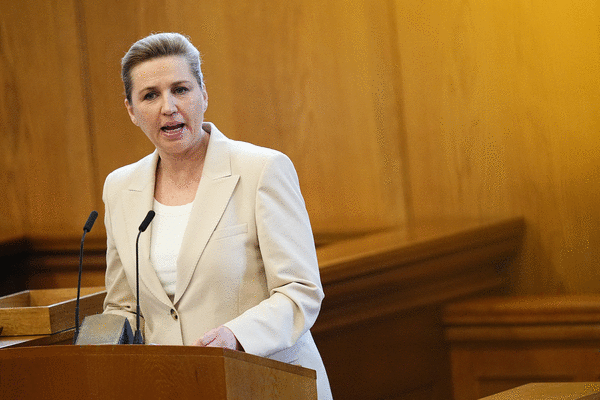
Denmark’s Prime Minister Mette Frederiksen called an early election for March 24, betting a popularity boost from a standoff with Donald Trump over Greenland will help secure her another term in office.
The move comes after the U.S. president revived claims over the Arctic territory in early January, causing a diplomatic rift with Europe. The rupture in relations bolstered Frederiksen’s domestic standing, reinforcing her image as a disciplined and steady leader during periods of national strain.
“It will be a decisive election, because in the next four years, we as Danes, and we as Europeans, will truly have to stand on our own,” Frederiksen, 48, said in a speech on Thursday in parliament. “We must define our relationship with the U.S. We must rearm to secure peace on our continent. We must hold Europe together, and we must safeguard the future of the Kingdom of Denmark.”
As in Denmark, Trump’s return to the White House is set to shape political elections across Europe. With key votes looming across the bloc, the outcomes will help determine how Europe positions itself toward the U.S. and how much it seeks to stand on its own.
The Danish government has been laying the groundwork for an early vote in recent weeks. It has rushed through relief grants on rising food prices, further sharpened its stance on immigration, and presented plans to change the school system, including reduced class sizes.
Frederiksen triggered the vote seven months before a constitutional deadline in a bid for a third term as prime minister.
Although the conflict over Greenland is “by no means over, we have managed to get through it so far,” Frederiksen said. She also reassured Danes that the government will work to manage the situation during the campaign, including holding international meetings necessary “in order to safeguard the interests of the kingdom.”
Frederiksen first rose to power in 2019 by steering her party toward a tougher stance on immigration to reclaim working-class voters who had drifted to the right. She held onto the premiership after elections in 2022 despite a weaker showing for her party by stitching together a broad coalition that included the Liberals, a traditional opponent, and the Moderates, a new centrist party.
Despite the recent improvement in her polling, Frederiksen’s current term has been marked by controversies that have weighed on her standing at home.
Rising costs of living and discontent over the government’s decision to scrap a public holiday have cost voter support. Last year, the Social Democrats lost political control over Copenhagen for the first time in more than a century, signaling waning support among the urban voters who have long been the party’s base.
The Social Democrats remain Denmark’s biggest party. A recent Voxmeter survey for Ritzau puts their backing at 22.1%. While that’s down from 27.5% in the 2022 election, it’s a significant boost from a low of 18% in polls before the Greenland crisis flared up.
Frederiksen looks set to secure another term as premier, with no obvious challenger to form a governing majority. Denmark does not elect its prime minister directly; the job goes to the politician who can assemble a majority in parliament after a vote.
“Even if her party were to suffer a significant setback, it’s difficult to see an outcome of an upcoming election in which Mette Frederiksen does not end up as prime minister,” said Kasper Moller Hansen, professor of political science at University of Copenhagen, who studies voter behavior, in an interview earlier this month.
Separately, the Faroe Islands, which are a semi-autonomous territory of Denmark, will hold a general election on March 26.
---------
—With assistance from Christian Wienberg and Gina Turner.
©2026 Bloomberg L.P. Visit bloomberg.com. Distributed by Tribune Content Agency, LLC.






Comments