Florida sports school to pay $1.7 million for taking students with Mexican cartel ties
Published in News & Features
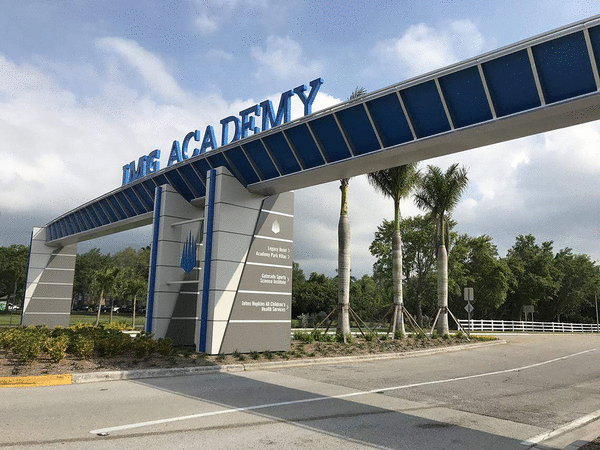
MIAMI – Bradenton’s IMG Academy agreed to pay $1.7 million to settle a potential liability suit after allowing two students with ties to the Mexican cartel to attend the school.
The U.S. Department of the Treasury’s Office of Foreign Assets Control announced Thursday that IMG Academy’s continued tuition transactions for the two students racked up nearly 90 violations of counternarcotics sanctions over the span of four years.
“As a result of IMG Academy’s conduct, designated individuals who provided financial support and services to a sanctioned Mexican drug cartel were able to conduct commerce with U.S. persons and gain access to the U.S. financial system,” the OFAC said in a statement.
The federal office said IMG received wire transfers from third-party individuals in Mexico as part of the tuition agreements. IMG Academy therefore had the names of the sanctioned individuals, and OFAC said the academy failed to screen them.
The federal office didn’t disclose the names of the students or the sports they played during their time at IMG.
IMG Academy bills itself as a “world-renowned boarding school” with a state-of-the-art campus and internationally recognized brand. According to the school’s website, it has placed 150 student-athletes in professional leagues over the past 10 years.
In a statement provided to the Bradenton Herald, IMG Academy said it disclosed the issue to OFAC when it became aware of the situation and has since started additional screening measures.
“IMG Academy is committed to maintaining the highest standards of compliance and integrity in all aspects of our operations. Between 2018 and 2022, IMG Academy did not have an OFAC sanctions compliance program in place and entered into tuition enrollment agreements and collected fees from two individuals who were unknowingly on OFAC’s SDN List,” the statement from IMG said.
“Upon becoming aware of their status, we disclosed the matter to OFAC and fully cooperated with its investigation,” the statement continued. “Since that isolated incident, extensive measures have been taken by IMG Academy to implement a comprehensive sanctions compliance program.”
Federal agency finds IMG violated national regulations
The statement from OFAC says IMG Academy disclosed the violations as soon as it became aware of them, however OFAC had already begun an investigation into the violations.
“IMG Academy demonstrated reckless disregard for U.S. sanctions requirements in committing the Apparent Violations, including by failing to conduct sanctions screening checks on its counterparties,” OFAC said.
OFAC says two specially designated nationals had been sanctioned under the Foreign Narcotics Kingpin Designation Act for providing funds or services to a Mexican drug trafficking organization.
In 2018, one national enrolled a child in a boarding program at IMG, for which the student was renewed for five years. The national paid IMG up to $98,867 a year.
In 2020, another specially designated national enrolled a child into IMG’s boarding program for two years, paying up to $102,235 a year for tuition.
To pay for the tuition, the nationals paid IMG through third-party wire transfers from individuals in Mexico, as well as credit cards that were on file for each student. As a result of the continued payments over several years, IMG accrued 89 violations of Foreign Narcotics Kingpin Sanctions Regulations.
“Although IMG may have lacked actual knowledge that the individuals with whom it dealt with were sanctioned, IMG Academy did have actual knowledge of the underlying transactions giving rise to the apparent violations,” OFAC said.
According to OFAC, IMG “took immediate remedial steps” after learning of the potential violations and, after an ownership change in 2023, a new chief legal officer “conducted a comprehensive lookback and implemented a risk-based sanctions compliance program.”
OFAC recommended that institutions like IMG screen students, counterparties and payers with the agency’s specially designated national list to better understand if they are doing business with potential sanctioned people.
“This case highlights the pervasiveness of sanctions risk across a wide variety of sectors and institutions,” OFAC said. “Even for entities operating largely domestically, the presence of international touchpoints creates opportunities for impermissible dealings with sanctioned actors, inadvertently or otherwise.”
©2026 Miami Herald. Visit at miamiherald.com. Distributed by Tribune Content Agency, LLC.




Comments