Reclaiming water from contaminated brine can increase water supply and reduce environmental harm
Published in News & Features
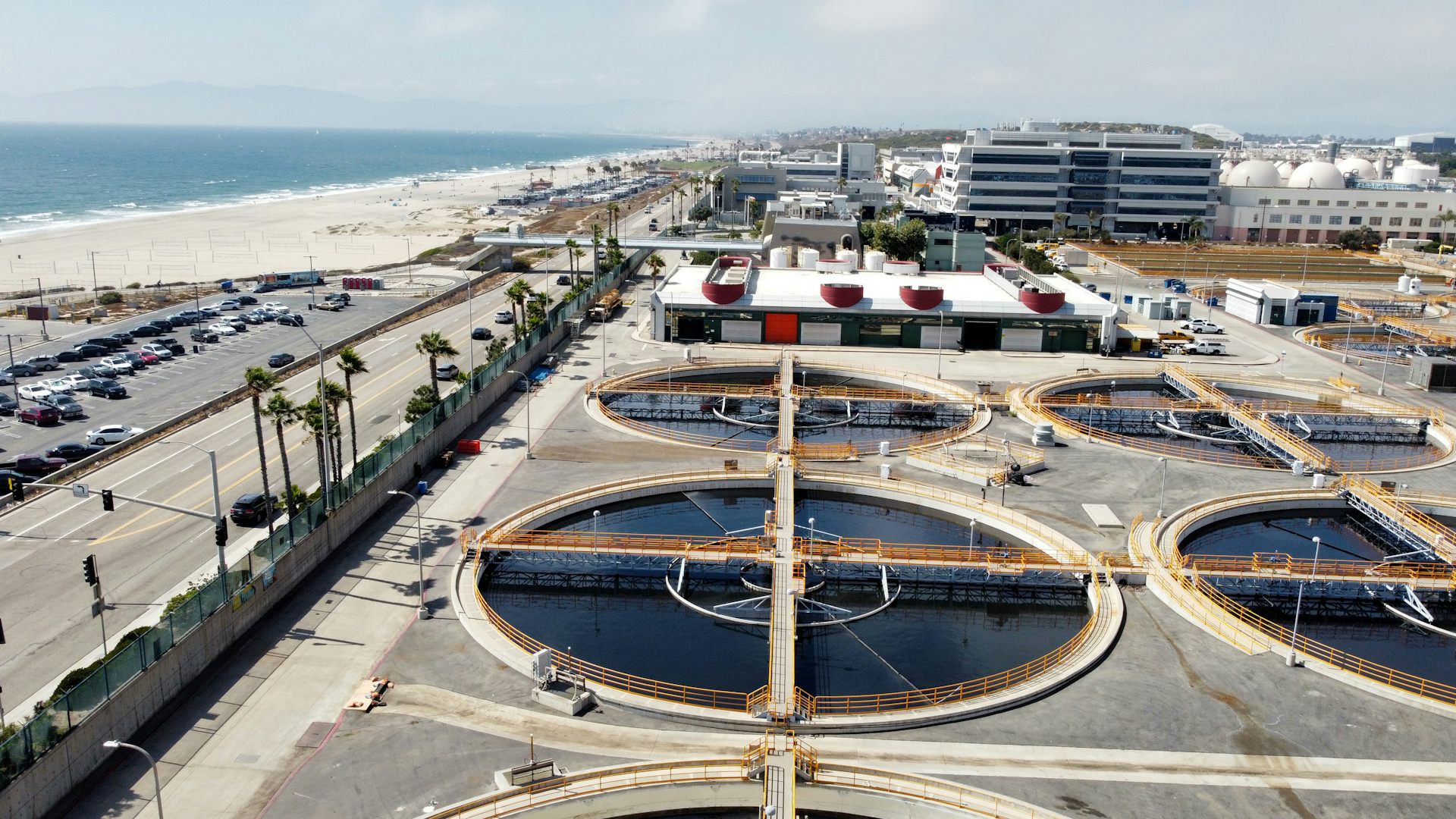



The world is looking for more clean water. Intense storms and warmer weather have worsened droughts and reduced the amount of clean water underground and in rivers and lakes on the surface.
Under pressure to provide water for drinking and irrigation, people around the globe are trying to figure out how to save, conserve and reuse water in a variety of ways, including reusing treated sewage wastewater and removing valuable salts from seawater.
But for all the clean water they may produce, those processes, as well as water-intensive industries like mining, manufacturing and energy production, inevitably leave behind a type of liquid called brine: water that contains high concentrations of salt, metals and other contaminants. I’m working on getting the water out of that potential source, too.
The most recent available assessment of global brine production found that it is 25.2 billion gallons a day, enough to fill nearly 60,000 Olympic-sized swimming pools each day. That’s about one-twelfth of daily household water use in the U.S. However, that brine estimate is from 2019; in the years since, brine production is estimated to have increased due to the continued expansion of desalination plants.
That’s a lot of water, if it could be cleaned and made usable.
Today, most brine produced along the coastline is released into the ocean. Inland cities without this option typically leave brine in ponds to evaporate, blend it with other wastewater, or inject it into deep wells for disposal.
However, most of these methods require strict environmental protections and monitoring strategies to reduce harm to the environment.
For instance, the extremely high salt content in brine from desalination plants can kill fish or drive them away, as has happened increasingly since the 1980s off the coast of Bahrain.
Evaporation ponds require specialized liners to prevent the brine from leaching into the ground and polluting groundwater. And when all the water has evaporated, the remaining solids must be promptly removed to prevent them from blowing away as dust in the wind. This happens in nature, too: As the Great Salt Lake in Utah dries up, salty windblown dust has already contributed to significant air pollution, as recorded by the Utah Division of Air Quality.
Brine injected into the earth in Oklahoma, including into wells used for hydraulic fracking of oil and natural gas, was one of several factors that led to a 40-fold increase in earthquake activity in the five-year period from 2008 to 2013, as compared to the preceding 31 years. And wastewater has been documented to leak from the underground wells up to the surface as well.
Researchers like me are increasingly exploring brine’s potential not as waste but as a source of water – and of valuable materials, such as sodium, lithium, magnesium and calcium.
Currently, the most effective brine reclamation methods use heat and pressure to boil the water out of brine, capturing the water as vapor and leaving the metals and salts behind as solids. But those systems are expensive to build, energy-intensive to run and physically large.
Other treatment methods come with unique trade-offs. Electrodialysis uses electricity to pull salt and charged particles out of water through special membranes, separating cleaner water from a more concentrated salty stream. This process works best when the water is already relatively clean, because dirt, oils and minerals can quickly clog or damage the membranes, reducing the performance of the equipment.
Membrane distillation, in contrast, heats water so that only water vapor passes through a water-repelling membrane, leaving salts and other contaminants behind. While effective in principle, this approach can be slow, energy-intensive and expensive, limiting its use at larger scale.
Smaller systems can be effective, with lower initial costs and quicker start-up processes.
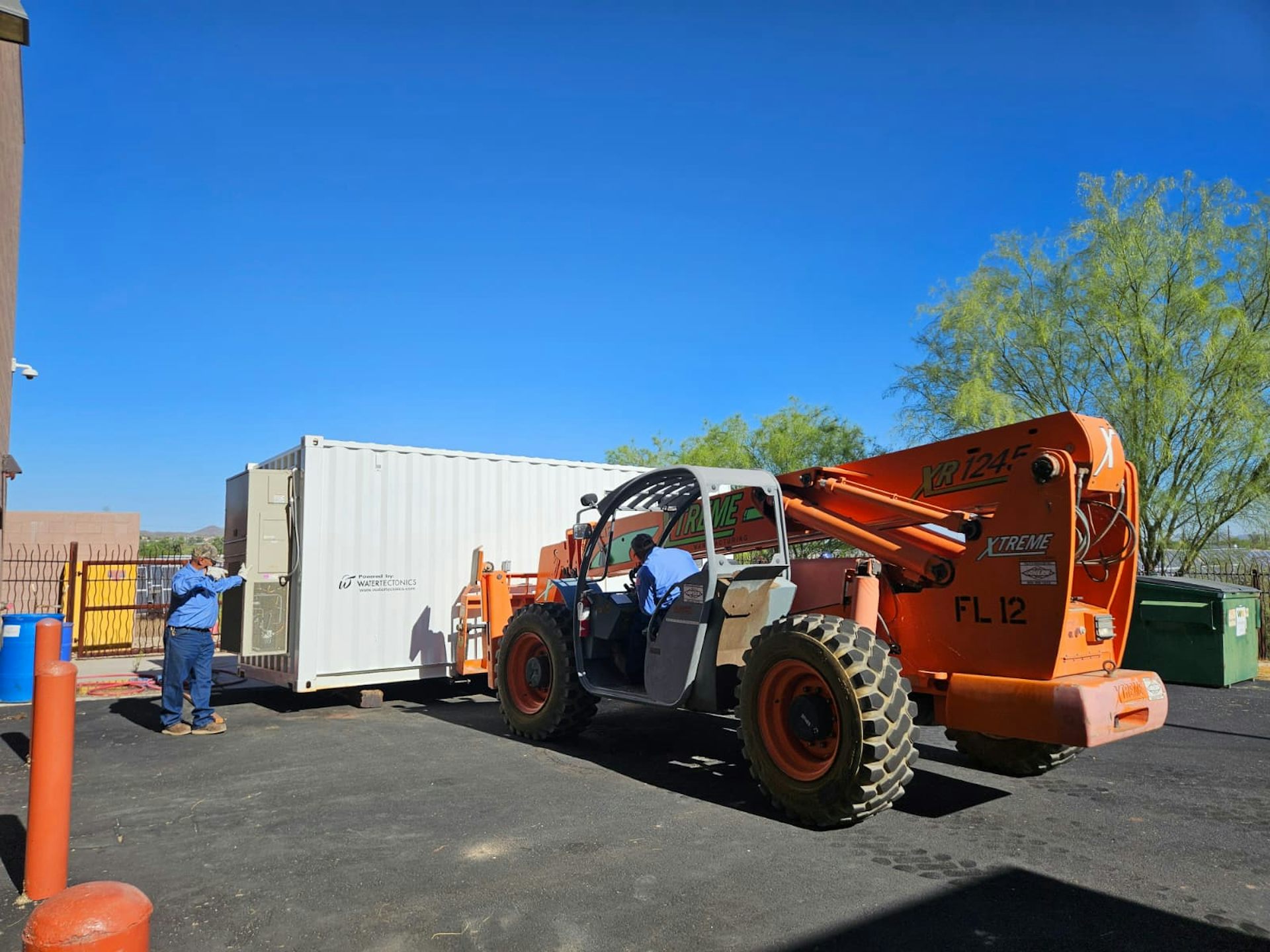
At the University of Arizona, I am leading the testing of a six-step brine reclamation system known as STREAM – for Separation, Treatment, Recovery via Electrochemistry and Membrane – to continuously reclaim municipal brine, which is salty water left over from sewage treatment.
The system combines conventional methods such as ultrafiltration, which removes particles and microbes using fine filters, and reverse osmosis, which removes dissolved salts by forcing water through a dense membrane, alongside an electrolytic cell – a method not typically employed in water treatment.
Our previous study showed that we can recover usable quantities of chemicals such as sodium hydroxide and hydrochloric acid at one-sixth the cost of purchasing them commercially. And our initial calculations indicated the integrated system can reclaim as much as 90% of the water, greatly reducing the volume of what remains to be disposed. The cleaned water in turn is suitable for drinking after final disinfection using ultraviolet or chlorine.
We are currently building a larger pilot system in Tucson for further study by researchers. We hope to learn if we can use this system to reclaim other sources of brine and study its efficacy in eliminating viruses and bacteria for human consumption.
We have partnered with other researchers from the University of Nevada Reno, the University of Southern California and the U.S. Army Corps of Engineers to help communities in the Southwest secure reliable water supplies by safely reusing municipal wastewater to serve everyday water use.
This article is republished from The Conversation, a nonprofit, independent news organization bringing you facts and trustworthy analysis to help you make sense of our complex world. It was written by: Mervin XuYang Lim, University of Arizona
Read more:
As the Colorado River slowly dries up, states angle for influence over future water rights
Data centers consume massive amounts of water – companies rarely tell the public exactly how much
How to provide reliable water in a warming world – these cities are testing small-scale treatment systems and wastewater recycling
Mervin XuYang Lim receives funding under Cooperative Agreement Number W9132T-23-2-0001 with the U.S. Army Corps of Engineers, Engineer Research and Development Center, Construction Engineering Research Laboratory (USACE ERDC-CERL).







Comments