New California bill looks to prevent President Donald Trump from seeking a third term
Published in News & Features

President Donald Trump and his administration have, at times, teased a potential bid for a third term.
And while the U.S. Constitution explicitly says a person cannot be elected to the presidency more than twice, there’s a new effort in the California Legislature to prevent a candidate from appearing on state ballots should an attempt be made to circumvent the 22nd Amendment.
The bill from Sen. Tom Umberg, D-Santa Ana, would allow the California secretary of state to exclude presidential candidates from the ballot if they are constitutionally ineligible, such as if they are not at least 35 years old or a natural-born citizen. And, specifically, it would bar a presidential candidate from seeking a third term.
The bill authorizes the secretary of state to “investigate the candidate’s qualifications and request proof of the candidate’s constitutional eligibility to hold the office,” should the state’s elections chief have “reasonable suspicion” that the presidential or vice presidential candidate does not meet the qualifications for the office.
It also lays out a quick process for the candidate to challenge the secretary of state’s determination in court.
“This would be a novel authority for the secretary of state in California to be able to look into specific qualifications,” said Umberg.
State secretaries of state already have the ability to remove ineligible candidates from the ballot for various offices and have already exercised that authority, according to Citizens for Responsibility and Ethics in Washington, a progressive nonprofit that advocates for government ethics and accountability.
However, CREW and other election experts argue that there is some ambiguity surrounding what California’s secretary of state is permitted to do.
“The existing statutes seem to impose a duty on the secretary of state to put candidates on the ballot under certain conditions, and those conditions don’t really have anything to do with qualifications or not,” said Justin Levitt, a constitutional law expert who teaches at Loyola Law School.
The secretary of state has kicked a presidential candidate off the ballot before: Eldridge Cleaver, who ran for the Peace and Freedom Party in the late 1960s, was removed because he was too young.
But then there is a 2010 California court decision regarding an effort to keep then-President Barack Obama off the ballot because of a false claim that he was not a natural-born U.S. citizen. A judge in the California Court of Appeals, Third District, said in the opinion that the “secretary of state does not have a duty to investigate and determine whether a presidential candidate meets eligibility requirements of the United States Constitution.”
“Existing precedence doesn’t squarely give the secretary that authority (to remove someone from the ballot), although the secretary has before, and existing court opinions hasn’t squarely taken it away,” said Levitt.
CREW, which supports Umberg’s bill, said in a recent letter to top legislators on committees slated to consider the bill this week that the legislation “carefully balances the Secretary of State’s oath to the Constitution to give them the ability to remove constitutionally ineligible candidates from the ballot and the candidate’s due process rights by setting out expedited procedures to adjudicate any disputes.”
“This bill clarifies the ambiguity,” said Levitt. “I don’t think it’s merely repetitive or redundant. I think it only adds clarity, and elections are a zone where most people prefer additional clarity ahead of time before the issue actually arises.”
It’s unclear whether Trump actually plans to attempt to circumvent the Constitution and run for a third term.
He has often teased the possibility, from “Trump 2028” merchandise available in the White House to his own comments.
In October, though, Trump told reporters, “Based on what I read, I guess I’m not allowed to run. So, we’ll see what happens.” He touted his poll numbers and added, “I would say that if you read it, it’s pretty clear. I’m not allowed to run. It’s too bad, but we have a lot of great people.”
When asked explicitly if he was ruling out during another October press gaggle, the president responded: “Am I not ruling it out? You’ll have to tell me.” He did, however, rule out running on a ticket as the vice president, calling that option “too cute” and “wouldn’t be right.”
The White House did not immediately respond to a request for comment for this story.
But Umberg said his bill “places California at the forefront of national efforts to protect voters from a potential constitutional crisis.”
“No president or candidate is above the Constitution, period,” the Santa Ana Democrat said. “When Donald Trump treats the rule of law as a suggestion, including constitutional term limits and decades-old election laws, it directly undermines our democracy.”
“California leaders have a duty to reaffirm and reinforce the guardrails that separate the U.S. from a monarchy or dictatorship, and this ballot integrity bill does exactly that,” he added.
Umberg, who is finishing his final term in the statehouse, was behind another bill last year related to the Trump administration and elections that Gov. Gavin Newsom ultimately signed into law.
The new law criminalizes lotteries for voter registration or participation. Umberg had said the idea was to ensure wealthy people or special interests cannot influence voter participation, pointing specifically to Elon Musk as an example; the former advisor to Trump paid some Wisconsin voters $1 million each last year, during a tight state Supreme Court election.
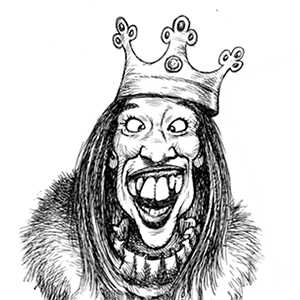
The latest effort, dubbed the “No Kings” bill — a reference to the large political demonstrations that have broken out across the country in opposition to Trump and his administration — is slated to be heard in the Senate elections and judiciary committees on Tuesday.
_____
©2026 MediaNews Group, Inc. Visit ocregister.com. Distributed by Tribune Content Agency, LLC.





Comments