Miami Judge lifts block on Trump library land transfer, tosses Sunshine Law case
Published in News & Features
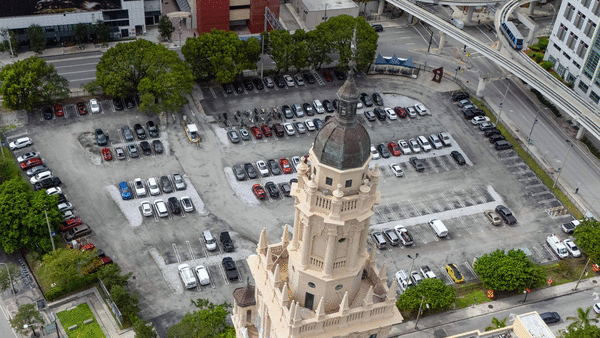
MIAMI — A judge on Thursday cleared the way for Miami Dade College to give up prime downtown land to be used for Donald Trump’s presidential library, tossing a case that alleged the college broke state law when trustees first voted to give away the Biscayne Boulevard parking lot to the state.
The decision clears the way for Trump’s foundation to move ahead on plans for a high-rise legacy project adjacent to the Freedom Tower with the $1 billion it plans to raise over the next three years, while Trump is still in office.
The city’s newly sworn-in mayor Eileen Higgins has criticized the college’s decision to transfer the valuable land at no cost, but she has limited options to push back against Trump’s plans from her new post. State lawmakers passed a law this year blocking municipal governments from passing rules governing presidential libraries.
Circuit Judge Mavel Ruiz made two rulings Thursday, one lifting a temporary block on the college from transferring the land and a second tossing the underlying public transparency case. She said the college sufficiently notified the public about a second vote on the land transfer held earlier this month.
“Although there’s been a lot of political issues associated with this case, let me make something very, very clear. This is not and has never been and is not today a political decision,” Ruiz said. “The complaint was based on the lack of notice. This court finds that the new notice complies,” with Florida’s Sunshine Law.
The college’s Board of Trustees initially approved the land transfer in a special meeting in September after no debate, discussion or public details released about its plan. A public notice announcing that vote included no information about the property in question, only stating trustees were voting on “potential real estate transactions.”
Historian and activist Marvin Dunn sued the college in court, alleging the initial vote violated Florida’s public transparency laws. Judge Ruiz said his case had substantial likelihood of success, blocked the college from transferring the land and set a trial date in August.
In response, the trustees took a second vote earlier this month, this time after listening to hours of public feedback about the proposal, including outrage at the lack of financial compensation the college was getting for its land, particularly while its in a budget shortfall.
Others decried the symbolism of a tribute to Trump — who has made mass deportations a central part of his agenda— adjacent to a former Cuban refugee center. Trustees again approved the deal unanimously.
Judge Ruiz ruled Thursday that the second vote cured the problems that underlied her initial block on the deed transfer. If the college hadn’t voted a second time, the transfer would likely have remained in limbo until the case went to trial next August.
Ruiz ended her ruling by praising Dunn for his role in challenging the college’s actions, and being willing to fund the $150,000 “stiff bond that this court imposed on you” after the court’s initial block on the land transfer.
“How important a member of this community is when they are willing to put themselves, their money and their home on the line for the greater good,” Ruiz told Dunn.
The case could have had sweeping implications for the future of public transparency in Florida after the state’s attorney general James Uthmeier joined the college’s defense, arguing that the institution had no obligation to tell the public what trustees were specifically voting on in September.
Open government advocates said, if the case had gone to trial a ruling in his favor could have set new legal precedent undermining public access to information about government meetings in the state.
©2025 Miami Herald. Visit at miamiherald.com. Distributed by Tribune Content Agency, LLC.






Comments