Trump's new shift on Ukraine leaves Europe feeling on the hook
Published in News & Features
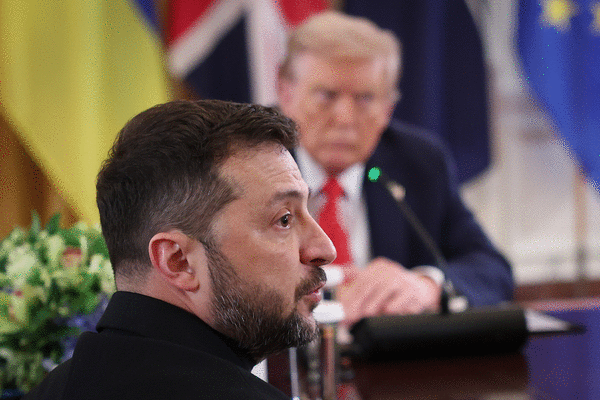
WASHINGTON — As Ukraine and its allies absorbed the surprise from Donald Trump’s newly upbeat view of Kyiv’s prospects in its war against Russia’s invasion, there were signs of a familiar move by the U.S. president — upping the pressure not on Russia but on Europe.
Trump’s social media post Tuesday reversed his past claims that Ukraine had “no cards to play” in the fight. But he didn’t offer any new U.S. steps to support Kyiv, leaving that up to allies in Europe. The post made no mention of new moves to tighten sanctions on Russia, either.
In public, Ukrainian and European officials hailed Trump’s verbal shift, which followed a meeting with President Volodymyr Zelenskyy. Privately, they were more cautious, sensing he was pushing the responsibility for ending the war to them. Though Trump seemed to set a baseline for U.S. support — easing allied fears of a cutoff of vital military aid — officials also warned that Trump’s view may change again.
His assertion that Ukraine could retake — with Europe’s support — the 20% of its territory lost to Russia also goes against most allied intelligence assessments, which see a bloody stalemate as the most either side can hope for at present. The Kremlin has dramatically stepped up strikes in the six weeks since Trump hosted Vladimir Putin in Alaska to discuss a peace deal, though progress on the ground has been limited.
By suggesting Russia could be a “paper tiger” on the verge of economic crisis, Trump is “really just trying to get under Putin’s skin,” said Kurt Volker, who was special envoy for Ukraine talks in Trump’s first term. “But he doesn’t suggest that he’s going to do anything about it.”
Russia’s economy is increasingly feeling the pain of the war effort — the government warned Wednesday that it plans to raise taxes to help offset the cost — and Ukraine’s strikes on energy and other infrastructure have reached deep behind the front lines.
Since he returned to office in January, Trump has periodically threatened to impose sweeping new sanctions he’s said would force Russia to the negotiating table. But he’s only rarely followed through, repeatedly giving Putin more time even as the Russian leader stepped up attacks on Ukraine.
U.S. officials assured allies this week that the administration realized the need for a new approach to change Putin’s mindset, given Russia’s escalation since the Alaska summit, lately including incursions into NATO airspace. For allies, Trump’s shift in tone on Ukraine’s chances of victory was a welcome change from his demands as recently as last month for Kyiv to give up territory to get a peace deal.
“You’re seeing the president’s frustration and disappointment, frankly, with Putin,” U.S. Ambassador to the U.N. Mike Waltz told Fox News Wednesday. “With the president’s urging, you’re seeing Europe increasingly step up.”
A White House official said Trump has been clear that this is not the U.S.’s war and that Europeans must step up to lead on their own defense.
Amid allied calls to raise the pressure on Russia, Trump has turned up the heat on Europe to cut its purchases of oil and gas from Russia, which have already plunged since Moscow’s full-scale invasion of Ukraine in February 2022. The EU has pledged to accelerate steps to throttle the remaining flows of oil and liquefied natural gas, hoping that will be enough to satisfy Trump.
His demands that they use tariffs as high as 100% to punish the countries that have stepped in since the invasion to boost purchases of Russian fuels — China and India — are a much taller order for the allies. The EU typically doesn’t impose such sweeping secondary sanctions and the bloc is heavily dependent on trade with China.
Trump repeated those terms in his speech at the U.N. General Assembly Tuesday, saying it was up to Europe to take “the exact same measures” — prohibitive tariffs — as he’s threatening.
“It is partly a strategy to deflect and to distract and to sort of park the ball over to the Europeans and say, ‘Well, you go first,’” said Liana Fix, a senior fellow for Europe at the Council on Foreign Relations. While Trump has imposed steep tariffs on India over its purchases of Russian oil amid trade negotiations, he’s in trade talks with China and backed off big hikes in levies there earlier this year.
There are also more immediate steps the U.S. could take if it were serious about shrinking Russia’s income from energy. The EU’s biggest offenders whose leaders also have the closest ties to the Trump administration — Hungary and Slovakia — so far haven’t faced any concrete pressure by the U.S. beyond asking them to stick with EU sanctions on Moscow, according to people familiar with the matter.
Trump on Tuesday told reporters Hungarian Prime Minister Viktor Orban is “a friend of mine,” adding “I have not spoken to him, but I have a feeling if I did, he might stop and I think I’ll be doing that.”
The U.S. could also more swiftly dig into Russia’s war-financing machine by lowering a cap on the price of its oil to match the EU’s level at $47.60 per barrel, allied officials said.
Putin has concluded that military escalation is the best way to force Ukraine into talks on his terms and that Trump is unlikely to do much to bolster Kyiv’s defenses, Bloomberg reported, citing people close to the Kremlin.
With Putin, Trump “still wants to get a deal and in the wake of a deal to make money,” something that new sanctions could complicate, said Volker.
“So instead of him looking at what the U.S. can do, he shifts the blame to Europe,” he added. “This could all change again tomorrow. He could call Putin and say, ‘Well, we had a big call.’”
_____
©2025 Bloomberg L.P. Visit bloomberg.com. Distributed by Tribune Content Agency, LLC.


Comments