California Gov. Gavin Newsom says he will sign AI regulation
Published in News & Features
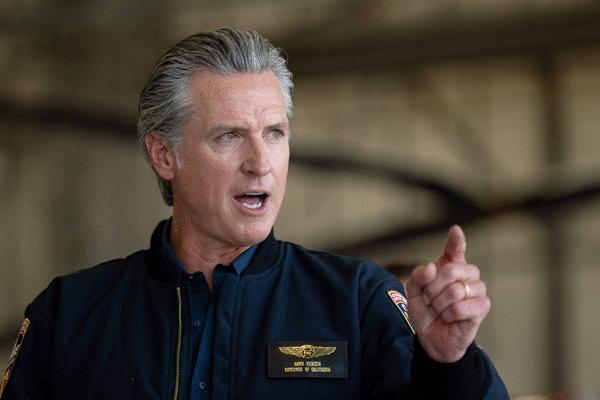
SACRAMENTO, Calif. — Gov. Gavin Newsom said Wednesday that he will sign a bill by Sen. Scott Wiener, D-San Francisco, to regulate artificial intelligence, making California the first state to put guardrails on the burgeoning technology.
Newsom made the announcement during an interview with Bill Clinton at the former president’s Clinton Global Initiative conference in New York, calling California an “innovator in the absence of federal leadership” when it comes to regulating AI.
“As a consequence of having so much leadership residing in such a concentrated place, California, we have a sense of responsibility and accountability to lead, so we support risk-taking, but not recklessness,” Newsom said, referring to a plethora of AI companies in Silicon Valley. “We have a bill on my desk that we think strikes the right balance, and we worked with industry, but we didn’t submit to industry.”
He referred to Wiener’s Senate Bill 53, which would require AI companies to have security protocols in place, implement whistleblower protections, report safety incidents to the state, and establish Cal Compute, a public AI research vehicle.
Wiener, who previously said he was confident Newsom would sign his bill after it “sailed through the Legislature,” did not immediately respond to a request for comment.
Big tech companies like Google, Meta, and OpenAI have recently ramped up their lobbying efforts to sway politicians to take a light touch towards regulating AI. Proponents say the technology has the power to upend industries from banking to education, and it has led to automation of some jobs and a spike in reports of people developing hallucinations or emotional dependencies after interacting with AI-powered chatbots.
Earlier this month, a Rancho Santa Margarita couple sued OpenAI after their son used ChatGPT to plan his suicide.
Last year, Newsom vetoed a regulatory bill from Wiener that would have required AI companies to institute guardrails and prevent “critical harms” like power grid paralysis or creating biological weapons.
Instead, the state hosted a working group of experts like Stanford’s Fei Fei Li, the “Godmother of AI,” that published recommendations earlier this year for how best to regulate AI.
Newsom is a longtime ally of Big Tech from his days as mayor of San Francisco and in 2013 he published a book, “Citizenville,” about how government should utilize technology to improve efficiency and engage citizens. Critics have accused him of letting his ties to industry executives sway him from taking a hardline stance as he has touted using generative AI, which creates content out of previous data inputs, for state operations.
But in the decade since Newsom came to Sacramento, the industry has drifted to the right. In January, chief tech executives like Meta’s Mark Zuckerberg, Google’s Sundar Pichai and Amazon’s Jeff Bezos had front row seats to President Donald Trump’s inauguration after pouring millions into his campaign. Government agencies have since agreed to begin using some of those companies’ AI models, like Meta’s Llama and ChatGPT.
A federal rule that would have preempted states from adopting AI regulations for 10 years failed to materialize after the Senate voted to strip out of the GOP’s “Big, Beautiful” tax bill earlier this summer.
In July, the White House doubled down on its earlier efforts to repeal Biden-era AI regulations, unveiling an “AI Action Plan” that removes much of the previous administration’s proposed rules. Earlier this month, Sen. Ted Cruz, R-Texas, who originally proposed the 10-year state AI regulatory moratorium, proposed a bill to allow the federal government to waive regulations from applying to AI companies.
To Newsom, all of this is a “let it rip” mindset, which he attributed to David Sacks, Trump’s AI and crypto czar, who has been a Silicon Valley mainstay since the 1990s as one of the first investors in PayPal.
A White House spokesperson did not immediately respond to a request for comment.
“We dominate in AI, we have no peers,” Newsom said of California. “We’re trying to find that balance, where we can support that ecosystem, continue to dominate, and at the same time, address that peril and the legitimate concerns people have.”
____
©2025 The Sacramento Bee. Visit at sacbee.com. Distributed by Tribune Content Agency, LLC.




Comments