Colorado to spot-check marijuana products for contamination
Published in News & Features
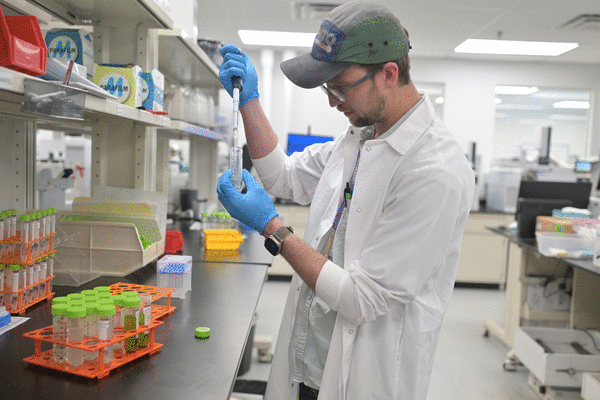
DENVER — Colorado’s health department and the Marijuana Enforcement Division will collect samples from dispensaries around the state in a one-time spot-check for contaminants or mislabeled potency.
An industry bulletin posted Friday said the Colorado Department of Public Health and Environment’s lab would analyze the samples through January. The agencies plan to compile a report in the spring, though they would take steps to remove any contaminated batches before then.
Colorado requires marijuana growers and manufacturers of edibles and concentrates to test for mold, yeast and certain heavy metals and pesticides. The companies supply their own sample to labs, creating the possibility that they could doctor the samples to pass even if the rest of the batch was contaminated.
MED fined 24 companies for altering their samples and 41 for not testing at various points over the last five years.
A draft description of the program said workers would attempt to get five to 10 samples from each store they visit, including multiple brands. The lab would process about 150 samples over three months, at a cost of about $90,000. The state won't pay dispensaries for the samples.
Hope Shuler, spokeswoman for the state health department, said the next steps would depend on what the testing shows.
"It is hoped the data will inform policy gaps and operational best practices, and increase product safety," she said in a statement.
Justin Singer, CEO of edibles maker Ripple, said the planned testing isn't adequate to ensure products are safe. Singer reported that when he had a sample of 15 products tested, 12 had significantly lower potency than advertised and four contained levels of yeast or mold that exceeded state standards.
Singer said he would like to see ongoing product sampling and thinks the state hasn't been aggressive enough in removing unsafe cannabis from the market.
"Shelf testing as a surveillance mechanism to inform instant, targeted oversight and enforcement for the benefit of consumers is good," he said. "One-time, opaque testing programs with delayed feedback are useful, but they're hardly the same thing as effective surveillance and enforcement."
_____
©2025 MediaNews Group, Inc. Visit at denverpost.com. Distributed by Tribune Content Agency, LLC.






Comments