Thousands of fish died during mid-July heat wave. More could die in the coming weeks.
Published in Outdoors
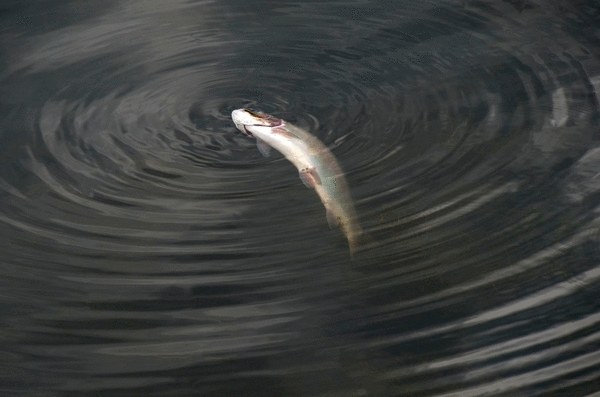
MINNEAPOLIS — Thousands of fish died in Minnesota lakes and rivers earlier this summer during a five-day stretch of intense heat.
Fish kills are a natural occurrence in Minnesota, but the intense heat wave July 16-20 triggered an unusual wave of deaths across the state, even in lakes with good water quality, said Isaiah Tolo, fish health supervisor at the Minnesota Department of Natural Resources.
The recent die-offs are part of a broader trend. Fish kills have become more common during Minnesota’s warmer months, coinciding with a warming of the state’s lakes.
A fish kill, defined under Minnesota law, is an incident that results in the death of 25 or more fish excluding those lawfully harvested. The DNR relies on reports from the public to track fish kills across the state.
Typically, the agency receives about 200 reports of fish kill events per year. The agency has already exceeded that count. During the heat wave it received about 65 reports, Tolo said.
Much of the kill happened in the second half of a 10-day hot streak that was the third longest recorded in the state and the longest since 1948, according to meteorologist Sven Sundgaard.
More fish will die throughout the summer from the heat, Tolo said. This year the DNR recorded surface temperatures exceeding 86 degrees Fahrenheit on various lakes and parts of the Mississippi River.
Cool water fish such as walleye, muskies and northern pike are particularly vulnerable to the prolonged heat, Tolo said. Pike can handle temperatures up to 84 degrees. Lake cisco and other salmonids become stressed when water temperatures exceed 75 degrees.
“The lakes that we’re seeing these die-offs on are ... from up north in Minnesota all the way to our southern border,” Tolo said. “There’s also a number of lakes with really good water quality that we wouldn’t normally expect to see mortality events in.”
Anglers should be mindful when casting during heat waves, Tolo said. Pike and muskie, for instance, are sensitive to thermal stress and are less likely to survive after being caught.
Their size is part of the reason. Large fish have a smaller gill-to-surface-to-body-mass ratio due to their bigger sizes. Recent reports of larger fish dying include large sturgeon washing ashore on Otter Tail Lake and dying cisco on Lake Koronis in Stearns County. Both lakes have relatively good water quality.
People typically notice fish kills in the spring, when ice thaws and fish that died over the winter float to the surface, according to Tolo. They also occur during the peak of summer, when warm water fuels the growth of algae and aquatic plants, reducing the oxygen fish need to survive.
The number of fish kill reports between May and September has increased since the ‘90s, according to a Star Tribune analysis of DNR data. A majority of these kills affected panfish. Other prominently affected groups include bass, walleye and northern pike.
The increase in fish kill reports coincides with warming temperatures. On average, the state’s lakes are about 3 to 4 degrees warmer and have lost about 10 to 14 days of ice cover in the last 50 years, according to the DNR.
Fish kills can have several causes, Tolo said. Fish are more susceptible to mortality if the lake is already impaired by pollution, such as excessive nutrients caused by runoff.
Mooney Lake in Plymouth, for example, had a report of more than 1,000 dead fish during the heat wave, likely stemming from a combination of poor water quality from storm water runoff and the heat. Rapid heat spikes can also kill fish, like in Lake Como in St. Paul when officials said temperature changes killed about 10,000 fish in June, including many crappies and bluegill sunfish.
Homeowners with waterfront property can help prevent die-offs by restoring natural shoreline and preserving trees and aquatic plants, which provide cooler water and shelter for fish. The DNR asks that Minnesotans report fish kills to its website or by calling (651) 649-5451. Reports should include the body of water, date, fish species and an estimate of the number of dead or dying fish.
©2026 The Minnesota Star Tribune. Visit startribune.com. Distributed by Tribune Content Agency, LLC






Comments