Adam Minter: Investors may get Team USA equity. Why not Olympians?
Published in Olympics
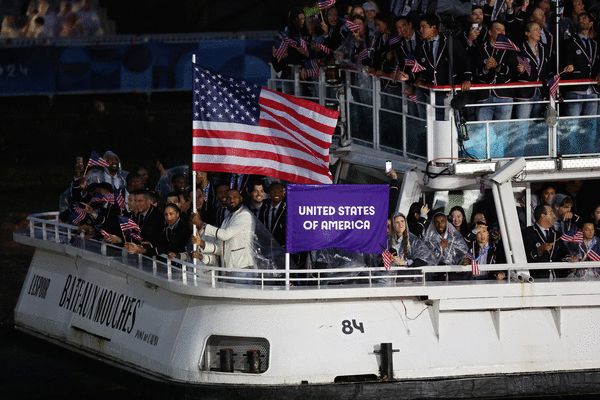
During the Olympics, Team USA belongs to every American. Soon, Wall Street might own a piece of it, too.
On Tuesday, Sky News reported that the U.S. Olympic and Paralympic Committee, the nonprofit organization behind Team USA, is in talks to sell investors a stake in Team USA’s commercial businesses, including its lucrative sponsorship and marketing rights.
It’s not a new idea. U.S. colleges and conferences have been exploring similar arrangements. With proper safeguards, private investment can bring fresh capital and ideas to sports organizations. But when these deals are negotiated, athletes are rarely cut in as owners.
That makes for a lopsided power dynamic deserving of more scrutiny. Sports businesses are built on athletes’ time and sweat. If private investors are going to own a share of Team USA’s future value, the athletes who create that value should own a share, too.
Consider what it takes to become an American Olympian. Unlike many of their foreign counterparts, the USOPC receives no direct federal government funding. As a result, many athletes rely upon modest grants, their own resources and a willingness to hustle in search of sponsors.
The costs are calculable. A congressionally mandated 2024 study found that participating in Olympic and Paralympic sports costs athletes an average of $12,000 annually. That’s on top of the careers and earning opportunities they forgo by dedicating prime years to Olympic training.
But it’s not as if their talent and toil are worthless. NBCUniversal is paying over $10 billion for U.S. broadcast and streaming rights to the Olympics through 2036. Meanwhile, the USOPC reports that it has secured more than $2 billion in sponsorship and licensing agreements for the 2028 Los Angeles Summer Olympics.
Those figures tell only part of the story. For investors, Team USA’s appeal is also grounded in its staying power. The brand draws on the reputations and achievements of athletes long after they step off the medal stand. Michael Phelps is synonymous with Olympic greatness a decade after his last Games, and clips of his achievements are still widely circulated. Simone Biles’ excellence is its own lucrative chapter. Meanwhile, thousands of lesser-known competitors, from curlers to Paralympic swimmers, contribute to the sense that Team USA’s legacy is more than just legendary athletes. It belongs, in a sense, to everyone.
Some of that value already reaches the athletes. The USOPC provides select competitors with grants, training facilities and other assistance. And thanks to a recent $100 million gift from financier Ross Stevens, qualifying Olympians and Paralympians will receive substantial financial benefits later in life.
Yet so long as there are athletes who turn to GoFundMe to pay for their training, it’s simply not enough. And the needs are only growing. For example, as colleges and universities cut Olympic sports programs (for tight budgetary reasons), the USOPC and its partners face pressure to fill the gaps.
Against that backdrop, the USOPC is exploring a commercial spin-off. Sky News reports that the rights could be valued at “several billion dollars.”
But why should investors be the only ones to profit from the legacies built by athletes? Equity in the spin-off could also reward athletes for past performance, while giving the next generation another reason to endure the grueling Olympic training cycle.
In that spirit, the USOPC should set aside, say, 10% of the proposed commercial entity’s equity in an athlete-governed trust. That would give athletes a meaningful equity stake without scaring off investors. Competitors would earn interests in the trust based on participation and performance; the more you compete and win, the more you own.
There’s a solid precedent. In 2024, private investors poured $1.5 billion into PGA Tour Enterprises, a spin-off from the premier golf tour that includes the series’ sponsorship, media rights agreements and other commercial assets. Players received equity based on performance and “historical contributions to the game of golf.” The goal, the nonprofit PGA Tour said, is to align the interests of golfers and the tour.
To be fair, an Olympic trust would be more complicated. Among other issues, it would cover dozens of sports. Distributions would almost certainly be more modest than what professional golfers receive. Reserving equity for athletes could also reduce what the USOPC raises from investors (a trade-off worth making).
But such a step shouldn’t scare off investors. Team USA remains one of the most powerful brands in sports, featuring some of its most marketable athletes, including stars from the WNBA and NBA. Even with athletes sharing in the upside, Team USA’s commercial appeal should leave plenty of value for outside backers.
The conversation could go beyond the Olympic rings. As private investors move into college sports, Team USA could serve as a model for athletic departments seeking to raise new money while giving institutions different ways to compensate their stars. That would acknowledge that investors are risking their money, but athletes are risking their health and careers.
———
This column reflects the personal views of the author and does not necessarily reflect the opinion of the editorial board or Bloomberg LP and its owners.
Adam Minter is a Bloomberg Opinion columnist covering the business of sports. He is the author, most recently, of “Secondhand: Travels in the New Global Garage Sale."
©2026 Bloomberg L.P. Visit bloomberg.com/opinion. Distributed by Tribune Content Agency, LLC.






Comments