Dave Hyde: Why this draft showed Dolphins finally have a chance to win again
Published in Football
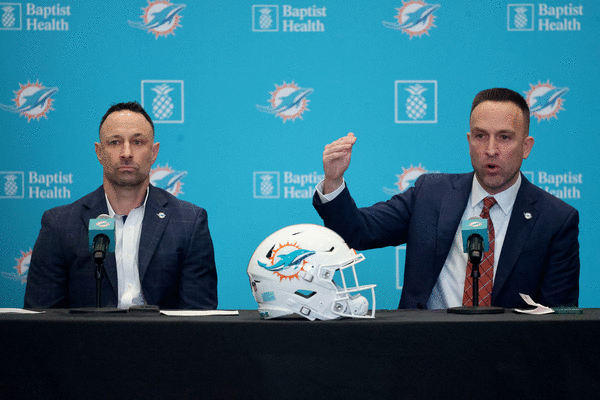
Well, that was educational. Day after day, pick by pick, you learned plenty about this new Miami Dolphins regime over this NFL draft, if you watched closely enough.
So, put down the popcorn with the draft wrapped up and go down a list of what you saw:
1. General manager Jon-Eric Sullivan follows convictions, even unpopular ones. How else to explain the Dolphins drafting tackle Kadyn Proctor with their first pick rather than local favorite Reuben Bain Jr. You can disagree with the pick. But that’s the point. The Dolphins’ front office had a weather-vane philosophy the past decade. Whoever pushed harder pointed the direction. Now the leader is the leader. Sullivan aggressively signed quarterback Malik Willis in free agency, raising eyebrows at the price. His first pick was the less-popular Proctor, who he deemed a better fit.
Question: Was any draft decision of this team’s past quarter-century applauded more than Tua Tagovailoa over Justin Herbert? Was that good?
2. Production is king. Everyone says they only take playmakers, right? So, explain edge rusher Chop Robinson having a scant 15 tackles his final Penn State season being the Dolphins’ top pick in 2024. Go down this draft. It’s not an All-NFL combine team of shuttle times and bench-press repetitions. Proctor allowed two sacks in 527 pass attempts as a senior. Cornerback Chris Johnson, the 27th pick, didn’t allow a touchdown and led the nation in pass-ratings-against last season. Second-round pick Jacob Rodriguez led the nation in tackles. Will Kacmarek graded as the top blocking tight end. Chris Bell’s third straight ACC game over 100 yards receiving last season was for 136 yards and two touchdowns against Miami.
3. Size matters again. For years, the Dolphins front office wavered between being a big, physical team built around the draft to a small, fast team built in free agency. No more wavering. They’re back to Bill Parcells’ days of size mattering when making big investments. Proctor is massive (6 foot 7, 352 pounds). Johnson (6 foot, 193) and Rodriguez (6-1, 231) are more average sized at their positions. Caleb Douglas (6-4, 206) and Bell is (6-2, 222) bring length to the receiving room.
“It’s important to me that this team looks a certain way and moves a certain way,” Sullivan said. “I believe it’s a big man’s game. That’s not to say that there’s not really good players in the league that are on the smaller side … but yeah, we want to build this team big, physical at all positions and have a size advantage.”
4. Health and durability count. Another no-duh idea, right? But previous GM Chris Grier said he wasn’t concerned with injury history and it showed in big draft investments (first-rounders DeVante Parker, Tagovailoa …) and free-agent buys (Bradley Chubb, James Daniels …). Bell is recovering from knee surgery this offseason. But he was a measured third-round pick because of that. Look at the top investments. Proctor started 40 of 42 games at Alabama. Johnson started 47 games in college. Rodriguez started the final 28 games of his Texas Tech career.
5. There are no absolutes. Yeah, there’s some wiggle room as each player is his own story. Sullivan went into the draft saying it was better to hit a double off the wall than swing for a home run. He then drafted Proctor, who has some boom-or-bust to him. He had weight issues through a senior season in which he started at 390 pounds and was noticeably out of shape. That’s something to follow. It was Parcells who said, “If you make an exception, you soon have a team of exceptions.”
6. They’re drafting a team, not just good players. Muted, perhaps, in the noise over the Proctor pick was the desire to get Willis help. Look what Proctor and Kacmarek bring just to the run game’s power and versatility. Consider what De’Von Achane’s 5.7-yard average might be with even better blocking. Now wrap your head around a team that’s had trouble winning in the cold or just windy north might fare in those conditions when it grows up.
7. Accountability is back. It’s been gone for too long around the Dolphins. When’s the last time anyone stood up and took ownership of a failed decision, much less a botched, multi-year plan? Sullivan articulated what needed to be said publicly around this franchise for years.
“At the end of the day, the buck stops with me,” he said. “I take responsibility for every player we pick. Whether it turns out the way you want it to or whether it goes south, it stops with me. I’m not hiding from it.”
The personnel guy is usually most important figure in any organization. Sometimes that’s the coach, other times someone behind the scene. Here it’s Sullivan. The Dolphins past couple of struggling decades show a franchise goes nowhere if it doesn’t draft well.
Sullivan sounds like he has a good plan and developed ideas. That represents a change around this team. You should’ve seen that at work this first draft.
But put your feet up on the table and rest a bit. The real answers of his decisions won’t start coming until these draft picks become NFL players.
©2026 South Florida Sun-Sentinel. Visit sun-sentinel.com. Distributed by Tribune Content Agency, LLC.


Comments