Sports
/ArcaMax
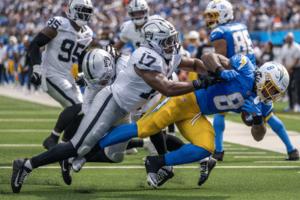
Jim Alexander: Is Chargers' season already spiraling downward?
INGLEWOOD, Calif. – If you are a Charger, or a Charger fan, it only gets more difficult from here.
And from the outside, given the performances of the past two weeks – and, essentially, the idea that they’ve squandered one-fourth of their home schedule with a pair of games that were ineffective at best and in some ways closer to ...Read more
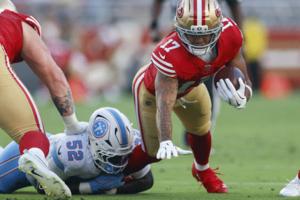
Dieter Kurtenbach: The 49ers' WR room is down to the studs. It's time for Jordan Watkins to step up.
SANTA CLARA, Calif. — Welcome to the reckoning, Jordan Watkins.
This is the most important week of your young NFL career, and it isn’t close.
Because the San Francisco 49ers’ wide receiver room hasn’t just thinned out. It’s been stripped straight down to the structural studs.
Kyle Shanahan and Brock Purdy don’t just need a ...Read more
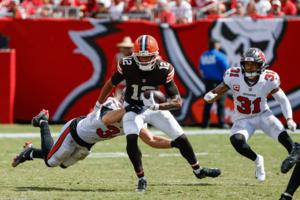
John Romano: Where do the Buccaneers go from an 0-2 start? Hint: It may not be up.
TAMPA, Fla. — Baker Mayfield. Charismatic guy. Tough son-of-a-gun.
And 0-2 quarterback.
Todd Bowles. Sweet man. Respected leader.
And 0-2 coach.
Tampa Bay Buccaneers. Deep roster. Well-paid group.
And 0-2 team.
The rest is details. Gratuitous. All you really need to know is the Bucs are winless and seemingly witless.
This is where we ...Read more
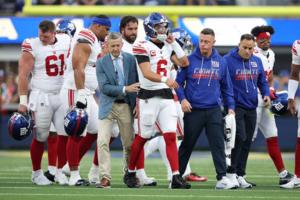
Jaxson Dart, Brian Burns hurt in Giants' Monday night blowout loss to Rams
INGLEWOOD, Calif. — The Rams’ glistening palace in South Los Angeles became the Giants’ own personal Hollywood house of horrors on "Monday Night Football."
Quarterback Jaxson Dart grabbed in pain at his left knee seven snaps in, limped off the field to a cart in the tunnel and did not return to a 28-6 loss at SoFi Stadium. Early reports ...Read more
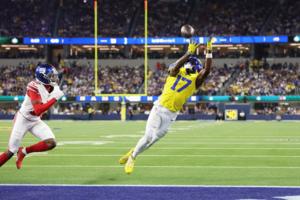
Matthew Stafford, Davante Adams shine as Rams beat Giants in Aaron Donald's return
LOS ANGELES — Aaron Donald made his triumphant return to NFL relevance on Monday night, and notably so did the Los Angeles Rams.
The team that looked lost in its Down Under debut returned to form against the New York Giants, even with star receiver Puka Nacua watching in street clothes because of hip pain.
Matthew Stafford was surgical with ...Read more
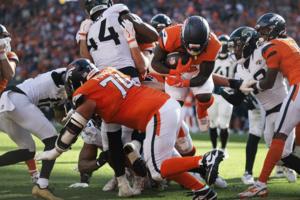
Sean Keeler: Broncos, Sean Payton, why wait? Time to start Jonah Coleman over J.K. Dobbins.
DENVER — Even if I trust J.K. Dobbins’ pinky, I don’t trust his hammy.
Jonah Coleman’s time is coming. And coming soon. If you’re Broncos coach Sean Payton, why wait? Start your rookie tailback in the Walmart Bowl against the Rams on Sunday night, and let the Great Value chips fall where they may.
“I think all three of those (...Read more

Ravens' Jesse Minter explains critical failed third-and-1 in Saints loss
BALTIMORE — Ravens coach Jesse Minter doesn’t think it’s “productive” to spend his Monday morning definitively saying they should have called something different. But that’s the question Ravens fans stirred over when their heads hit the pillow Sunday night.
Should Baltimore have tried for a kill shot deep ball to veteran receiver ...Read more
Tom Krasovic: Justin Herbert, Chargers teammates aren't taking to new offensive scheme
SAN DIEGO — In their first two games under NFL playcaller/designer Mike McDaniel, Miami Dolphins quarterback Tua Tagovailoa and teammates looked far more comfortable than Justin Herbert and Co. have appeared with the Los Angeles Chargers.
The sample size is meager, but the stark contrast warrants a closer look.
Where the Tagovailoa-directed ...Read more
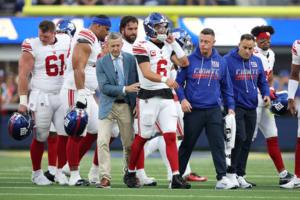
Giants QB Jaxson Dart leaves game vs. Rams with knee injury
New York Giants starting quarterback Jaxson Dart went down with a left knee injury on the team’s first drive in a "Monday Night Football" matchup against the Los Angeles Rams.
Dart’s leg appeared to take a hit immediately after taking a blow from Rams pass rusher Josaiah Stewart. Rams linebacker Byron Young also made contact with Dart, who ...Read more
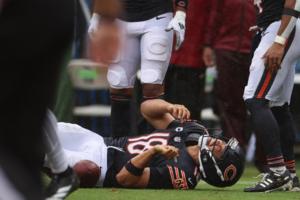
NFL injury updates on Caleb Williams, Jayden Daniels and more starting QBs
NEW YORK — Week 2 took a toll on two of the NFL’s top young quarterbacks, as Caleb Williams and Jayden Daniels on Sunday became the latest starters to suffer injuries.
Williams is considered week-to-week after leaving his Chicago Bears’ 9-3 loss to the Minnesota Vikings with a non-contact hamstring injury, head coach Ben Johnson said in ...Read more
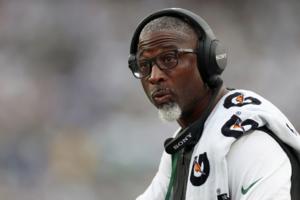
Aaron Glenn has no regrets after controversial calls cost Jets in overtime loss
NEW YORK — The New York Jets left MetLife Stadium on Sunday with a painful lesson and a lingering question.
Aaron Glenn left with no regrets.
A day after the Jets squandered a 10-point fourth-quarter lead in a 20-17 overtime loss to the Green Bay Packers, Glenn stood by his decision not to call a timeout with about a minute remaining in ...Read more
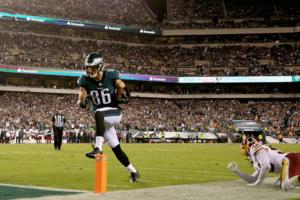
Sources: Zach Ertz is reuniting with the Eagles as tight end depth grows thin
PHILADELPHIA — The Philadelphia Eagles are reuniting with Zach Ertz, NFL sources said, confirming an initial ESPN report.
On the day tests revealed Dallas Goedert sprained the medial collateral ligament (MCL) in his knee in Sunday’s win over the Tennessee Titans and will miss multiple weeks, the Eagles are signing Ertz, 35, to their ...Read more
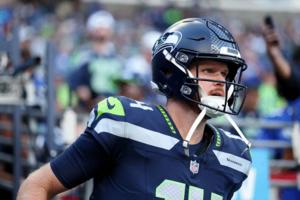
Seahawks say QB Sam Darnold will return to practice 'in some capacity'
SEATTLE — What looked to be a major injury suffered by Seattle Seahawks quarterback Sam Darnold five plays into the regular season might only end up sidelining him for one game.
Seahawks coach Mike Macdonald said Monday that he expected Darnold to be on the practice field in some capacity on Wednesday, opening up the possibility that he could...Read more
Dieter Kurtenbach: The 49ers' WR room is down to the studs. It's time for Jordan Watkins to step up.
SANTA CLARA, Calif. — Welcome to the reckoning, Jordan Watkins.
This is the most important week of your young NFL career, and it isn’t close.
Because the San Francisco 49ers’ wide receiver room hasn’t just thinned out. It’s been stripped straight down to the structural studs.
Kyle Shanahan and Brock Purdy don’t just need a ...Read more
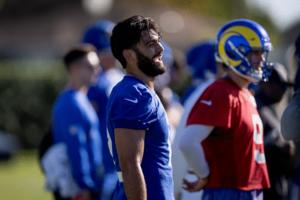
Rams WR Puka Nacua inactive for Monday's game vs. Giants with hip injury
INGLEWOOD, Calif. — Los Angeles Rams wide receiver Puka Nacua won’t play on Monday night against the New York Giants after he suffered a hip injury late last week, turning an oddly consequential game in Week 2 all the more interesting.
Nacua, who did not practice on Friday and Saturday, spent most of the preseason period on the sidelines ...Read more
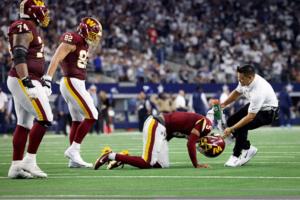
Mac Engel: Cowboys should give elbow of Washington's Jayden Daniels a game ball
ARLINGTON, Texas — The moment Jayden Daniels’ left arm bent in a direction God does not intend, the Dallas Cowboys had the matchup advantage they needed, because Christian Parker is not.
The Cowboys’ first-year defensive coordinator has not inspired a lot of confidence in a fanbase that desperately wants to believe that his hiring would ...Read more
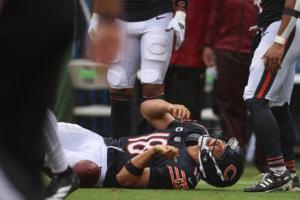
Caleb Williams 'will likely miss some time' -- though Bears coach Ben Johnson not ruling out Week 3
CHICAGO — Chicago Bears quarterback Caleb Williams may have avoided the worst-case scenarios after injuring his right hamstring Sunday, though coach Ben Johnson said Monday that Williams might miss “some time.”
Johnson declared Williams “week to week” but did not rule out the possibility that Williams could play in Week 3 against the ...Read more
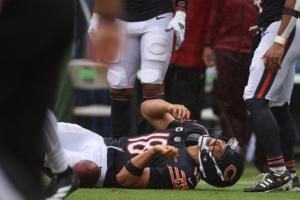
Bears QB Caleb Williams avoided a major injury to his hamstring, report says
CHICAGO — Chicago Bears quarterback Caleb Williams avoided any major injury to his right hamstring, according to a report from The Ringer and Netflix reporter Tom Pelissero.
Per the report, the Bears are not ruling out Williams’ possible return for the Week 3 game against the Philadelphia Eagles on “Monday Night Football” at Soldier ...Read more
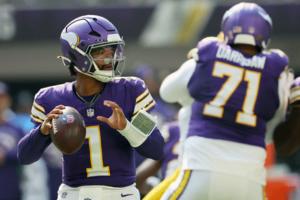
Vikings QB Kyler Murray clears concussion protocol, will start Week 3 vs. Buccaneers
MINNEAPOLIS — Kyler Murray has cleared the NFL’s concussion protocol and will start the Minnesota Vikings’ Week 3 game against the Tampa Bay Buccaneers, head coach Kevin O’Connell said Monday.
Though Murray returned to practice on a limited basis last week while working through the five-phase protocol, he was not fully cleared and was ...Read more
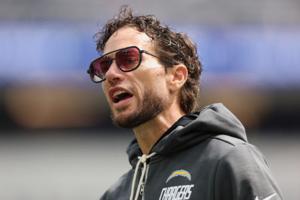
Mirjam Swanson: Mike McDaniel's complicated scheme is turning Chargers' offense into a disaster
LOS ANGELES — Be careful what you wish for when you're wishing for a new offensive coordinator.
Chargers fans were so over Greg Roman. Anything would be better than his run-heavy scheme stunting quarterback Justin Herbert's anticipated ascension. Anyone would be preferable to the man holding the reins while the Chargers scored just three ...Read more
Popular Stories
- Mac Engel: Cowboys should give elbow of Washington's Jayden Daniels a game ball
- Caleb Williams 'will likely miss some time' -- though Bears coach Ben Johnson not ruling out Week 3
- Mirjam Swanson: Mike McDaniel's complicated scheme is turning Chargers' offense into a disaster
- NFL injury updates on Caleb Williams, Jayden Daniels and more starting QBs
- Bears QB Caleb Williams avoided a major injury to his hamstring, report says
Comics