Adam Hill: College basketball games should be decided on the court, not in the courts
Published in Basketball
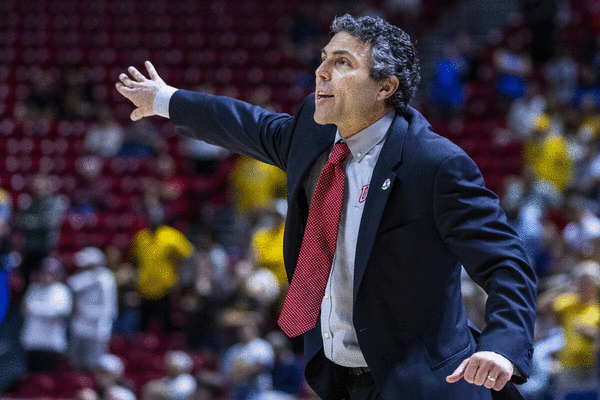
LAS VEGAS — UNLV basketball coach Josh Pastner sat in his arena and watched second-round draft pick Trey Kaufman-Renn play for the Minnesota Timberwolves in the NBA Summer League in July.
Now he’s going to have to try to design a defense to stop him in a college basketball game next month.
Pastner’s task will be made more difficult, at least as things stand, by the fact one of his best players has been ruled ineligible in a different court than the one that green-lighted Kaufman-Renn to play.
If you’re confused, you’re not alone.
Everyone knew when NIL was implemented that there was going to be an uneven playing field in terms of the resource advantage some programs had over others. The inequity in the court rulings on eligibility was more difficult to predict.
UNLV’s AJ Storr entered college in 2022 and has played four seasons. Kaufman-Renn started at Purdue in 2021 and redshirted a year before playing four seasons with the Boilermakers. Then he went through the draft process and got selected by Minnesota before playing with the Timberwolves in the NBA Summer League, averaging 6.6 points and 3.8 rebounds per game.
And which one of them is eligible to play college basketball this season?
Twisted expectations
Storr originally was granted eligibility in a Colorado court ruling because Class of 2022 student-athletes had been singled out as not having the new five-year eligibility rules applied.
UNLV believed it had landed a star guard for the upcoming season. But the NCAA won a stay of that injunction in Tennessee a month later, and Storr and 18 other players were ineligible.
Kaufman-Renn found a judge in Indiana to grant his request for an extra season. So did BYU forward Jaxon Kohler, who had 19 points against UNLV in an exhibition game Saturday. He was part of a group that won a more permanent injunction this week in California that should allow him to play this season.
Similar cases, different results.
Storr’s case is not dead. He has one more chance to find a state judge willing to follow the suit of so many others and grant him the ability to play this season. But he must select the jurisdiction carefully because he has just one more shot.
It would be nice if a Nevada judge would do the right thing and find in his favor, though Chief U.S. District Judge Andrew Gordon in the state already ruled against UNLV football defensive lineman Cohen Fuller’s petition to play this season after his eligibility outlook went from certain to bleak as different courts had their say.
It has come to this. College players are having to go court shopping not necessarily just for the right to play but just to secure the same rights other kids with less of a legal leg to stand on already have been granted.
Pastner wants an answer, which he hopes is in favor of Storr being able to play for UNLV this season.
No rulebook for this
But more than anything, he would like guidelines. As he puts it, teams in leagues like the Mountain West are going to be in huge resource deficits to the big boys, and that’s just reality. All he can ask for is the rules are the same for both teams once they take the court and the same eligibility standards are applied across the board.
That’s not happening now.
A certain columnist suggested to him he play Storr in a game and make someone from the NCAA drag him off the court.
UNLV won’t do anything like that. But think of the optics if the Rebels did it against Kansas and Kaufman-Renn was allowed to stay in uniform and compete for the more prestigious school while the little guy was punished.
And do not get the impression this is about Kaufman-Renn or Kansas specifically.
It’s just one example.
And it’s an easy one. Pastner, who was effusive in his praise of Kansas coach Bill Self and Kaufman-Renn, acknowledged there are no easy answers. He did offer one potential rule suggestion, though.
“I think if you played in the NBA Summer League and I’m sitting there watching you in the stands and you’re playing double-digit minutes, to me that should automatically (disqualify) you from playing college basketball,” Pastner said. “That’s just my viewpoint.”
Tough to argue.
But the Class of 2022 thing isn’t that hard. Those athletes were exempt from the new rules and essentially made ineligible to protect roster spots and opportunities for incoming freshmen. But at this point, those players that are already on rosters just waiting for rulings should be allowed to play.
If any judges are reading this, including Andrew Gordon, then do the right thing.
____
©2026 Las Vegas Review-Journal. Visit reviewjournal.com.. Distributed by Tribune Content Agency, LLC.





Comments