They survived a hurricane in Tropicana Field. Now these rays are in the World Series outfield.
Published in Baseball
TAMPA, Fla. — Hours before the 2026 World Series opener, Brett Durda threw out the real first pitch.
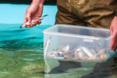
Instead of slinging a baseball at 95 mph, he gently lobbed a middleneck clam.
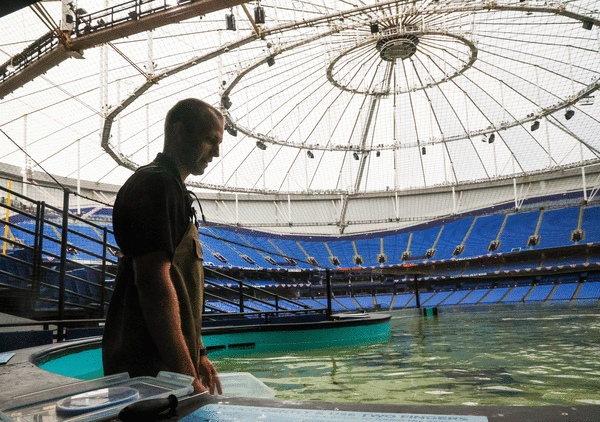
With a kerplunk, the clam plopped into the pool of 10 hungry male cownose rays who now live year-round in the Cownose Clubhouse, an exhibit just behind the right-center-field wall of Tropicana Field.
For their caretaker of almost a decade, the day-to-day checklist hasn’t changed now that the Tampa Bay Rays are playing in the Fall Classic.
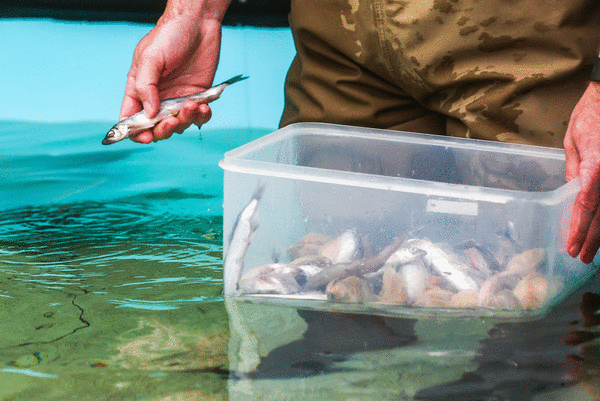
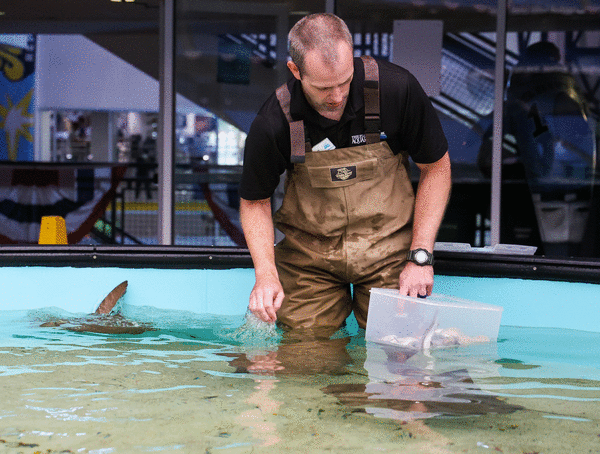
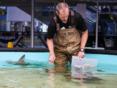
Durda still arrives at the stadium around 8:30 a.m. each day, tests the tank’s water quality, and dons a pair of tan waders. He then lowers himself into the 10,000-gallon tank and feeds the rays a tub of restaurant-grade scallops, clams and North Atlantic capelin. Once they are fed, he’ll complete a thorough health exam of the animals he has come to know intimately.
It’s the same routine he and his colleagues at the Florida Aquarium repeat 365 days a year, even on Thanksgiving, Christmas and the Fourth of July.
But with the national spotlight now focused squarely on the stadium, Durda sees the World Series as a unique opportunity to educate thousands more baseball fans about the aquarium’s conservation efforts in Tampa Bay, Florida’s largest open-water estuary.
It’s a chance, he said, for the 40,000 fans who attended Monday night's game to learn about — and use two fingers to carefully touch — a marine species found in their backyard.
“These rays, to me, are such a resilient symbol of this city,” said Durda, 34, a biologist and associate curator of exhibits at the aquarium.
“We love them every day, and we want to share them with everyone out there that we can, to show them how unique and special they really are.”
A triumphant return to the Trop
Like the team they represent, these animals have weathered their fair share of adversity. So have their caretakers.
Seven of the rays, including four who have called the exhibit home since its opening in 2006, were in their Tropicana Field pool the night Hurricane Milton ripped its roof to shreds.
When the storm passed, first responders cut the zip ties on the Trop’s doors so a worried Durda could race in and check the animals.
The net above their pool, installed in 2021 to stop home-run balls from entering the water, had shielded the rays from the falling ribbons of roof debris. About an inch of standing water circled the exhibit. But every ray survived and appeared in good shape, Durda said.
“For them, it was probably no different than the lights going out during a game,” he said.
After the storm, the Florida Aquarium team relocated the rays to the second-floor habitat area of its Tampa location, then later to their regular offseason home at Tampa Electric’s Manatee Viewing Center in Apollo Beach.
In April, staff returned the rays to the pool at Tropicana Field before Opening Day, where, for the first time beginning this year, they will now remain 365 days a year. The Aquarium made the decision to reduce stress they can experience during the moves, Durda said.
Three more rays, raised at the Jacksonville Zoo, permanently joined the tank during All-Star weekend. Durda can identify them all by how they look, each with slightly different colors and personalities. Some are more shy, waiting for their fellow rays to eat before they swim over for a fish or scallop. Others are pushy. One likes to hug the outer wall.
Surrounding the Cownose Clubhouse are facts about the species. Its name is inspired by the two lobes on the front of its body, which it uses to sift through sand for food. Their wingspan averages 4 feet. Rays in the Gulf migrate seasonally, and are found as far south as Brazil. They school in large groups called fevers and can often be found in Tampa Bay’s inshore waters.
Staff biologists estimate the rays collectively eat about 12 pounds of food a day, or roughly 4,300 pounds a year. The yearly food bill for the Florida Aquarium sits around $8,000.
Once the season ends, the Florida Aquarium team will give each ray a comprehensive health exam including an ultrasound, eye and weight checks and blood work.
All the effort, Durda said, works toward one main mission:
“Creating better understanding for how unique and amazing they are, and to make sure we do what we can to protect them.”
A good omen?
Durda crouches down, gripping a North Atlantic capelin fish like an ice cream cone (it’s easier for the rays to eat it that way).
One particularly eager ray, one of the original crew from 2006, dashes toward his hand and sucks down the meal.
Durda, a baseball fan and former player for the Trinity Prep Saints in Winter Park, said there are unique perks that come with a job overseeing the only permanent animal exhibit in a professional ballpark. On World Oceans Day, June 8, he took to the mound to toss a ceremonial first pitch. He’s watched batting practices and has met celebrities and pro players.
But one of the most rewarding parts of the job, Durda said, is hearing appreciation from the fans.
On Opening Day, a woman rushed over to the tank to welcome back the animals after the storm forced their relocation.
“I’m so excited you guys were able to help them after the hurricane,” she told Durda.
For many fans, the rays’ permanent return to their tank in Tropicana Field was the sign that baseball was back in St. Petersburg.
And to some on social media lately, they’re the good omen that will bring the baseball team its first championship — even despite going down the first two games.
But whether those Rays win or lose this week, these rays will still be here.
____
The Tampa Bay Times launched the Environment Hub in 2025 to focus on some of Florida‘s most urgent and enduring challenges. You can contribute through our journalism fund by clicking here .
©2026 Tampa Bay Times. Visit tampabay.com. Distributed by Tribune Content Agency, LLC.






Comments