Sports
/ArcaMax

Dodger Stadium has a botanic garden tour. Meet the man entrusted with making it a draw.
LOS ANGELES — Tens of thousands of people walk in and out of Dodger Stadium on any given night, paying scant attention to the trees, plants, and other foliage surrounding it on all sides. Chaz Perea made his peace with that a long time ago.
"Getting to Dodger Stadium is not a small thing," said Perea, 41, the stadium's landscape manager. "You...Read more
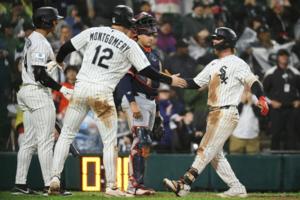
White Sox win 8-1 and own 3-game lead for third AL wild-card spot with 6 games remaining
CHICAGO — The conditions were less than ideal.
But after a nearly four-hour delay, the result was just what the Chicago White Sox needed in their fight for a playoff spot.
The Sox scored three runs in the fourth inning to distance themselves from the Detroit Tigers in an 8-1 victory in front of 21,354 at Rate Field.
Chase Meidroth hit a two...Read more

Orioles fade, and their season with it, in 3-0 loss to Brewers
BALTIMORE — When a season is over, every team ultimately is what its record says it is. There are injuries and batted-ball luck and a bounce here or a bounce there, all of which impact whether a bubble team makes the playoffs or not. But records are the barometers that determine which clubs play in October and which ones watch from home.
The ...Read more
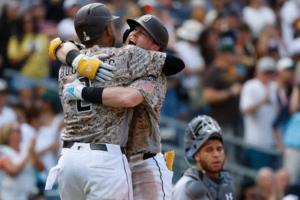
Padres complete sweep of Marlins, continue advance toward postseason
SAN DIEGO — Walker Buehler, who has pitched in three World Series and has a pair of rings, signed with the San Diego Padres in February for this feeling.
“Being on a winning team that does it the way we have this year and is going to make the playoffs, it looks like, I think is a huge accomplishment,” he said Sunday.
That’s right — ...Read more

Cardinals power way to final home win in 2026 with blasts from Ivan Herrera, Leo Bernal
ST. LOUIS — Jolted to a tied game in the eighth inning thanks to a homer from Ivan Herrera that marked his second of Sunday’s home finale at Busch Stadium, the Cardinals were lifted to a lead later that inning with a swing that produced the same result.
Down 3-2 entering the bottom of the eighth inning vs. the Nationals, the Cardinals ...Read more

Angels close home slate with ugly loss to Twins
ANAHEIM, Calif. — This was a fitting performance for what is likely to be the last Los Angeles Angels home game of a miserable era.
The Angels lost, 8-0, to the Minnesota Twins on Sunday afternoon, completing their home schedule in the final season under owner Arte Moreno.
They’ll have six more road games, and then their 11th straight ...Read more
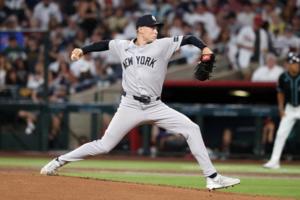
Yankees' division dreams fading after series loss to Diamondbacks, another Rays win: 'It's gonna be tough'
PHOENIX — The New York Yankees continued to fall behind in the American League East on Sunday, dropping their second straight game to the Arizona Diamondbacks to cement a series loss at Chase Field.
Coinciding with the 8-4 defeat was yet another Tampa Bay Rays win over the Boston Red Sox. With that, the Yankees, who lost in walk-off fashion...Read more

Kade Anderson delivers best start of career as Mariners stave off elimination
DENVER — Kade Anderson believes in standards not expectations. He sets the standard for what is considered acceptable while others can have expectations.
In his previous outing in Anaheim, Calif., he made it bluntly clear that his execution and performance was far below the standard he had set for himself.
On a gorgeous Sunday afternoon, ...Read more
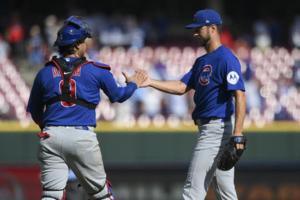
Alex Bregman sent to hospital after foul ball to face in Cubs win over Reds
CINCINNATI — A blowout win to put the Chicago Cubs on the verge of clinching a playoff spot Sunday was overshadowed by third baseman Alex Bregman taking a foul ball to his face.
Bregman was sent to a local hospital for X-rays and CT scans following the freak accident during the fourth inning of the Cubs’ 9-1 victory against the Cincinnati ...Read more
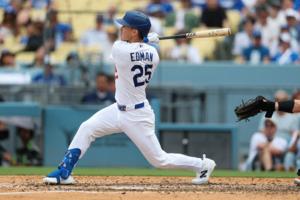
Is it still a rivalry? Dodgers complete sweep of woeful Giants.
LOS ANGELES — Only the Pittsburgh Pirates and Chicago Cubs have met more often than the Los Angeles Dodgers and San Francisco Giants, who faced off for the first time in 1889. And over all that time, the Dodgers are just two games better, with 1,294 wins to the Giants' 1,292.
The Dodgers and Giants have also won more pennants, made more World...Read more

Rafael Flores Jr.'s two-run homer helps Pirates complete a sweep of Royals
PITTSBURGH — On a rainy, gray Sunday at PNC Park, the Pittsburgh Pirates punctuated a sweep with a bat flip.
Rafael Flores Jr. continued his hot stretch with a go-ahead, two-run homer in the eighth inning, leading the Pirates to a 4-3 win against the Kansas City Royals.
Flores flipped his bat as the ball soared toward the left field seats. ...Read more

Rays beat Red Sox in home finale, head to New York seeking AL East title
TAMPA, Fla. — The Tampa Bay Rays have to go on the road to secure their most important regular-season goal, with the potential to clinch the American League East title as soon as Tuesday during a doubleheader at Yankee Stadium.
They are in position to do that because of how well they played under the familiar tilted roof of Tropicana Field ...Read more

Alex McFarlane's crucial strikeout, Justin Crawford's three-run triple lifts Phillies past Mets
NEW YORK — Alex McFarlane decided to challenge him.
The rookie reliever had inherited a runner from Cristopher Sánchez in the seventh, and had then allowed two singles to flip the Mets’ lineup back over. To get out of the jam, he now had to contend with New York’s biggest power threat: Juan Soto.
But in the two months that McFarlane has...Read more

Christian Moore caps Angels' comeback with walk-off hit against Twins
ANAHEIM, Calif. — In the penultimate home game of a miserable season, the Angels gave the Fan Appreciation Night crowd something to celebrate.
Down by three runs in the eighth inning, the Angels scored the winning run on Christian Moore’s infield hit to beat the Minnesota Twins, 6-5, in 11 innings on Saturday night.
The Angels scored two ...Read more

Dodgers' September surge continues: LA racks up 15 hits in win over Giants
LOS ANGELES — When Los Angeles Dodgers manager Dave Roberts said earlier this week that the best was yet to come, his expectations were centered on the offense.
In the Dodgers’ 10-4 rout of the San Francisco Giants on Saturday, that better version of the offense was on display, putting together a pair of three-run rallies in back-to-back ...Read more

Padres come back to beat Marlins, shave magic number to 3
SAN DIEGO — San Diego Padres manager Craig Stammen asked Mason Miller to fetch five outs Saturday night.
The well-rested closer was not quite up to the task, but the Padres aren’t flinching much lately.
Miller served up a game-tying homer in the ninth inning, but David Morgan stranded the automatic runner in the 10th and rookie Ethan Salas...Read more
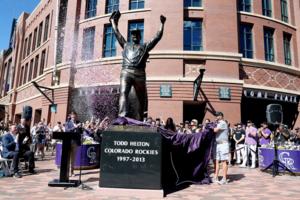
Rockies unveil Todd Helton statue outside Coors Field honoring 'the captain of this franchise'
DENVER — Colorado’s most joyous baseball moment is immortalized in bronze.
The Rockies unveiled the Todd Helton statue on Saturday at 20th and Blake outside Coors Field, a freeze-frame of the Hall of Famer celebrating at first base after catching the final out that sent the club to its lone World Series in 2007.
Helton, who was enshrined ...Read more

Mariners on the brink of elimination after dispiriting 5-3 loss to Rockies
DENVER — The outline to the Seattle Mariners’ 5-3 loss to the Colorado Rockies felt familiar because it followed one that’s been far too common this season.
— The Mariners grab an early lead against the starting pitcher then fail to add runs in the innings that follow.
— Seattle’s starter doesn’t provide a quality start, forcing ...Read more
Cardinals unable to complete comeback in 11th, lose to Nationals
ST. LOUIS — The Cardinals got back in the game with a hand from the Washington Nationals and when they lost the game in the 11th it all started with a mitt.
A catcher’s interference forced home the first run of the Nationals’ winning rally in the 11th and proved prelude to an outburst the Cardinals could not answer in their half of the ...Read more

Brandon Lowe's fourth homer in five games leads Pirates to 6-5 win against Royals
PITTSBURGH — One two-run homer wasn’t enough. Two wasn’t either. Brandon Lowe offered a third.
Lowe blasted a two-run homer, the Pirates’ third of the game, in the eighth inning, leading the Pirates to a come-from-behind, 6-5 victory against the Kansas City Royals on Saturday night at PNC Park.
Lowe has homered four times in his last ...Read more
Popular Stories
- Rafael Flores Jr.'s two-run homer helps Pirates complete a sweep of Royals
- Alex Bregman sent to hospital after foul ball to face in Cubs win over Reds
- Yankees' division dreams fading after series loss to Diamondbacks, another Rays win: 'It's gonna be tough'
- Rays beat Red Sox in home finale, head to New York seeking AL East title
- White Sox win 8-1 and own 3-game lead for third AL wild-card spot with 6 games remaining
Comics