Sports
/ArcaMax

Mike Vorel: Brewers-Rays World Series doesn't justify Mariners' payroll strategy
SEATTLE — On the same day Seattle fired four of its coaches, following manager Dan Wilson on the blame trail out of T-Mobile Park, Mariners chairman and managing partner John Stanton told The Seattle Times last month:
“I am a passionate fan. I care deeply about this city, about this team, about winning a championship. I’m embarrassed that...Read more

John Romano: The Miz was good for Milwaukee, but the Rays made it easier for him
MILWAUKEE — From the 103-mph fastball to the 77-mph change-up, every pitch is charted, measured and analyzed.
And, in the case of the World Series, obsessed over.
With that in mind, we’ve broken down the most important pitches, and the surrounding factors, from Milwaukee’s 3-2 victory over Tampa Bay in Game 1 of the World Series on ...Read more

Rays falter in several ways in World Series-opening loss to Brewers
MILWAUKEE — The Rays’ first World Series appearance since 2020 didn’t go well on Friday night.
They gave up two runs in the first inning on hard-hit balls that went off the gloves of two of their best defenders. They ran into two outs on the bases that killed scoring chances. They gave up another run in the seventh after a leadoff walk by...Read more

Bill Shaikin: Why Dodgers fans need to be cheering for the Brewers in this World Series
MILWAUKEE — The Dodgers have been dead for a week. The sting has dissipated. The World Series starts Friday.
For the first time in three years, Los Angeles faces a Fall Classic with no rooting interest.
Might we suggest the Milwaukee Brewers?
No?
So maybe the sting has not dissipated, not after the Brewers so rudely swept the Dodgers in ...Read more

How Jake Bauers 'different lifetime' with Rays led to Brewers' star turn
MILWAUKEE — National League Championship Series MVP and Brewers star Jake Bauers remembers his career-starting days with the Rays.
It just takes him a minute.
“Oh man,” he said Thursday during World Series media day. “It feels like a different lifetime.”
It should, having been acquired by the Rays as a 19-year-old Class-A player, ...Read more
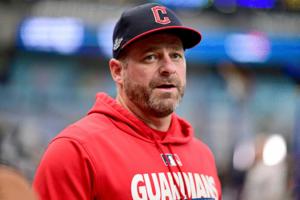
Cleveland manager Stephen Vogt shoots down rumors of link to Mariners' opening
Cleveland manager Stephen Vogt says he isn’t coming back to Seattle.
Vogt, a longtime Olympia resident, told reporters in Cleveland on Thursday that he plans to return to manage the Guardians in 2027 and isn’t interested in the Mariners’ managerial opening.
Vogt was the Mariners’ bullpen coach in 2023, commuting from his family’s ...Read more

2026 World Series Preview -- Brewers vs. Rays is a small-market matchup of big-time proportions
They play in two of MLB’s smallest markets, are nowhere near baseball’s highest spenders and hardly hit home runs in an era obsessed with power.
Yet the 103-win Milwaukee Brewers and 98-win Tampa Bay Rays were the best teams in their respective leagues practically all season.
And soon, one will be crowned World Series champions for the ...Read more
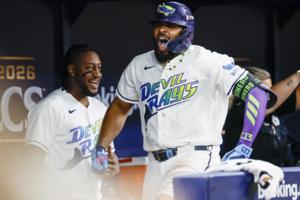
John Romano: Rays. Brewers. World Series. So, who has the edge? We have thoughts
So, this is a new experience for Tampa Bay.
In their previous two World Series appearances, the Rays had not seen their opponent in the regular season. In fact, there was little history between the Rays and Phillies in 2008 (three games in the previous five seasons) or the Rays and Dodgers in 2020 (eight games in the previous five seasons).
...Read more

Dodgers 'excited' about Shohei Ohtani returning to the mound in 2027
LOS ANGELES — Shohei Ohtani’s days as a two-way player might have an expiration date. But the Dodgers agree with the four-time league MVP — that date hasn’t arrived yet.
“I fully expect him to pitch next year,” Dodgers president of baseball operations Andrew Friedman said on Wednesday.
“And I’m not only expecting him to pitch �...Read more
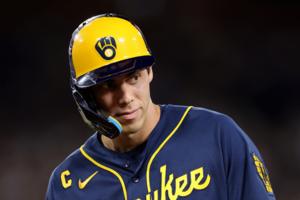
As Rays head to World Series, 'easy to see' why Brewers are so good
TAMPA, Fla. — The only time the Tampa Bay Rays have seen the Milwaukee Brewers in person this year was in the second series of the season, when Tampa Bay lost two of three over March 30-April 1 at American Family Field.
But they’ve seen, heard and read enough reports from the team of six scouts — Max Cohen, Jason Cole, Bobby Heck, Brandon...Read more

Hal Steinbrenner responds to Aaron Judge's insinuation Yankees haven't been 'all in' enough: 'We did that this year'
NEW YORK — Shortly after the Yankees were swept by the Rays in the ALDS, Aaron Judge was asked how owner Hal Steinbrenner and general manager Brian Cashman should react to the team’s latest postseason failure.
“We’re the Yankees,” said the back-to-back MVP, who was sidelined for the playoffs by a calf strain. “I feel like they ...Read more
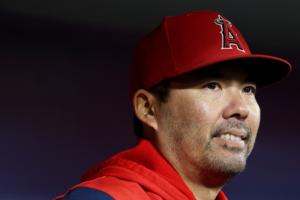
Kurt Suzuki won't return as Angels manager
ANAHEIM, Calif. — Kurt Suzuki will not return as the Angels’ manager in 2027, the team announced on Wednesday, less than four weeks after interim general manager John Mozeliak said that he thought Suzuki did a good job.
Suzuki, who had a one-year contract with an option, will be offered a position to stay in the organization as a special ...Read more

After NLCS exit, Dodgers face big questions about their aging lineup and future
LOS ANGELES — Dodger Stadium was eerily quiet on Wednesday, as a light rain fell over the already-yellowing grass. A crow perched on an empty seat. Scattered lights flickered in mostly-dark hallways.
Before the World Series had begun, the stadium was closed down for the season, hosting just one last event before officially wrapping up the ...Read more

Hal Steinbrenner rips Yankees' 'detrimental' offense, backs Brian Cashman and Aaron Boone again
NEW YORK — With the Yankees fresh off another embarrassing ALDS loss and in the midst of a 17-year title drought, Hal Steinbrenner was asked if he’s sick of having to explain his club’s early postseason exits year after year on Wednesday.
Unsurprisingly, the owner, speaking in Tampa and on Zoom — opposed to from the Bronx for an in-...Read more

Bill Shaikin: Might MLB have to sacrifice World Series TV revenue in exchange for competitive balance?
LOS ANGELES — The World Series is upon us, and this one should be a delight: The team with the best record in the National League, the Milwaukee Brewers, against the team with the best record in the American League, the Tampa Bay Rays.
The players are about to take baseball's grandest stage. Yet this has somehow become a strange national ...Read more
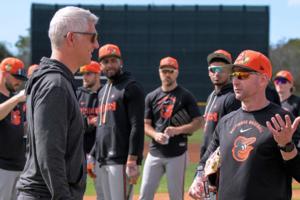
Josh Tolentino: How GM Jared Banner's 'relentless' approach can shake up Orioles
BALTIMORE — Not long ago, the Baltimore Orioles faced the enviable problem of fitting all their promising young hitters into one lineup. Getting those hitters back on track has become a far more urgent concern.
That challenge awaits Jared Banner, Baltimore’s new general manager and formerly an assistant GM with the Chicago Cubs. He also ...Read more
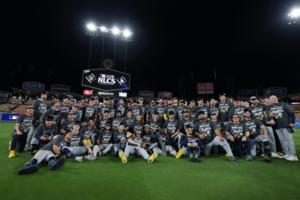
John Romano: Odds say Milwaukee is the Series favorite. The Rays say hold my brew.
TAMPA, Fla. — In the coming days, you will hear how this World Series is an epic clash between like-minded organizations.
That the Rays and Brewers are mirror images with nothing but zip codes separating one from the other.
This is simply not true.
When it comes to divining the good guys from the bad, there are clear choices to be made.
...Read more

After a turnaround for the ages, White Sox eye pitching and outfield depth in their offseason plans
CHICAGO — The Chicago White Sox had a turnaround for the ages.
So what’s the next step for a franchise that went from three consecutive 100-plus-loss seasons between 2023-25 to the postseason in 2026?
General manager Chris Getz wants to “continue to focus on fueling the foundation” of the organization.
“This year’s success is a ...Read more
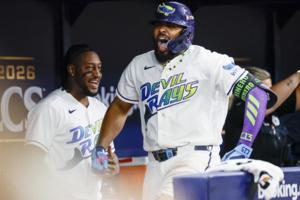
Rays headed to World Series against Brewers after ousting Guardians
TAMPA, Fla. — Yandy Diaz hit another one on the barrel.
The Tampa Bay Rays did win on Monday.
And now they’re going to the World Series, starting play Friday night in Milwaukee.
With Diaz declaring after Sunday’s win in Cleveland the Rays were going to wrap up the American League Championship Series on Monday, the Rays did so with a 7-3...Read more
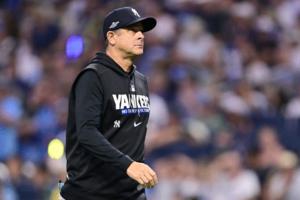
Yankees bringing Aaron Boone back as manager in 2027: source
NEW YORK — Aaron Boone is sticking around after another early playoff exit left New York Yankees fans agitated.
The club is bringing the manager back for the 2027 season, a source confirmed to the New York Daily News on Monday. Boone, 53, is entering the final year of a two-year extension that he signed two spring trainings ago and is owed $5...Read more
Popular Stories
- John Romano: The Miz was good for Milwaukee, but the Rays made it easier for him
- Rays falter in several ways in World Series-opening loss to Brewers
- Bill Shaikin: Why Dodgers fans need to be cheering for the Brewers in this World Series
- Mike Vorel: Brewers-Rays World Series doesn't justify Mariners' payroll strategy
- Yankees bringing Aaron Boone back as manager in 2027: source
Comics