Heat wave smothering Southern California nears its peak
Published in Weather News
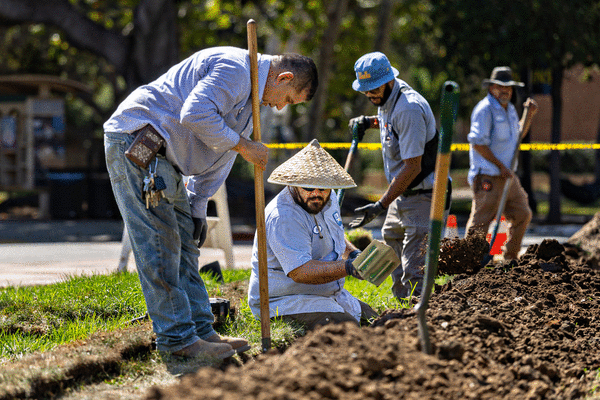
LOS ANGELES — A heat wave that's expected to rank among the hottest of the year so far will peak in Southern California on Thursday, with nights sultry enough to increase the risk of heat illness, as well as periods of critical fire weather, forecasters said.
Temperatures will be 8 to 12 degrees above normal, with muggy conditions limiting overnight cooling, said Kristan Lund, a meteorologist with the National Weather Service in Oxnard.
Valley areas should reach triple digits, with Woodland Hills hitting 105 to 106 degrees, she said. Beaches also will be warmer than usual, due in part to unseasonably warm ocean water temperatures driven by El Niño, she said.
In downtown Los Angeles, where temperatures are forecast to reach the mid-90s, Langer's Deli owner Norm Langer said staff would place air conditioning units in front of the store and hand out cold bottled water to customers waiting in line. "Extreme heat is part and parcel of our lives these days, and we must adapt to it," Langer said in a statement.
A Weather Service heat advisory is in effect for many areas through 8 a.m. Monday.
Forecasters aren't expecting the heat to break any temperature records but said that some places, including Woodland Hills, Van Nuys and Palmdale, might come within a few degrees of setting new daily highs.
The Los Angeles County Department of Public Health issued an extreme heat warning for residents of many areas, citing both daytime temperatures and unusually warm overnight conditions. Hotter nights can prolong the stress that heat places on the human body by depriving people of a chance to recover, increasing the risk of heat-related illness.
Forecasters also warned of the risk of fast-spreading fires, with the Weather Service calling for elevated to brief critical fire weather conditions across Southern California's valley, mountain and desert areas through Monday due to hot temperatures and dry vegetation. Southern Santa Barbara County is also expected to see dry, gusty sundowner winds in the evenings through Thursday, Lund said.
"Just because we have higher humidities," she said, "the mugginess doesn't mean that the vegetation won't burn."
The conditions are brought on by a powerful ridge of high pressure moving in from the east as well as the unusual path of the remains of Tropical Storm Elida. The system lost its tropical storm status Monday morning as it moved into cooler waters but was still traveling northward in the Pacific Ocean and sending hazardous surf and strong rip currents to Southern California beaches.
Although it's unclear to what extent climate change is influencing this particular heat wave, scientists have found that global warming from the burning of fossil fuels is making Western heat waves more frequent, persistent, humid and lethal.
"The evidence shows that heat waves are increasing in frequency, intensity and duration, and using sophisticated modeling, it's possible to show that those absolutely are because of climate change," said Kristie Ebi, a professor of global health at the University of Washington, on Tuesday at a media briefing held by journalism and science nonprofit SciLine.
Things have reached the point, she said, "where many climatologists will tell you there is now no heat wave that hasn't been exacerbated in some way by climate change."
—Times staff writer Rong-Gong Lin II contributed to this report
©2026 Los Angeles Times. Visit at latimes.com. Distributed by Tribune Content Agency, LLC.






Comments