Weather
/Knowledge
/ArcaMax
Floods keep shutting down roads on edge of KC. City, county say not their problem
KANSAS CITY, Mo. — On a rainy day around Kansas City, most people reach for an umbrella. But those who live and work in an unincorporated area of Jackson County that some call Dogpatch brace themselves for much worse.
Roads become undrivable as pools of water rise.
At the intersection of East 23rd Street Trafficway and Television Place in ...Read more

Virginia Gov. Spanberger urges preparedness ahead of hurricane season
RICHMOND, Va. — With the June 1 onset of the Atlantic hurricane season, Gov. Abigail Spanberger is urging Virginians to take precautions.
Wednesday at the Virginia Emergency Operations Center, she said the first step is to be on the lookout for wireless emergency alerts and to have a plan in place for what to do in the event of an evacuation....Read more
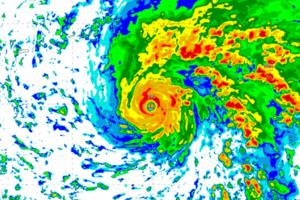
How AI could help save lives this hurricane season
MIAMI — Artificial intelligence may have its flaws, but specific programs have proven themselves to be groundbreaking — if not lifesaving — tools in hurricane forecasts, and the National Hurricane Center will keep incorporating them into its forecast arsenal.
Last year, an AI model was actually more accurate than traditional methods at ...Read more

Denver International Airport ground stop lifted, hundreds of flights delayed by storms
DENVER — Flights at Denver International Airport were grounded for about 90 minutes on Saturday afternoon because of thunderstorms, causing hundreds of flight delays.
The Federal Aviation Administration issued the ground stop at 3:13 p.m. and lifted it as of 4:50 p.m., according to agency alerts.
Thunderstorms could bring tennis-ball-sized ...Read more

Denver International Airport flights grounded because of thunderstorms
DENVER — All flights at Denver International Airport are grounded after federal officials ordered a ground stop because of thunderstorms on Saturday afternoon.
The Federal Aviation Administration issued the ground stop at 3:13 p.m. and agency leaders said there’s a “medium” chance it will be extended past 4:30 p.m.
Thunderstorms could ...Read more

How AI could help save lives this hurricane season
Artificial intelligence may have its flaws, but specific programs have proven themselves to be groundbreaking — if not lifesaving — tools in hurricane forecasts, and the National Hurricane Center will keep incorporating them into its forecast arsenal.
Last year, an AI model was actually more accurate than traditional methods at predicting ...Read more
What's in a name? Hurricane season starts Sunday and here are the storm names for 2026
ORLANDO, Fla. — There are 26 letters in the alphabet but only 21 are set aside each year for potential tropical storm and hurricane names in areas tracked by the National Hurricane Center.
The names for the 2026 Atlantic hurricane season are Arthur, Bertha, Cristobal, Dolly, Edouard, Fay, Gonzalo, Hanna, Isaias, Josephine, Kyle, Leah, Marco, ...Read more
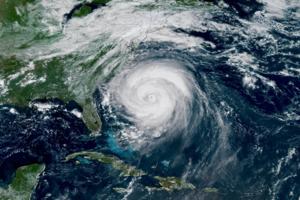
Hurricane season forecast is 'below normal' -- but it comes with a warning
The 2026 Atlantic hurricane season is expected to be “below normal,” largely due to an El Niño weather pattern, according to the National Oceanic and Atmospheric Administration.
NOAA’s hurricane season outlook, released Thursday, forecasts 8 to 14 named storms, including three to six hurricanes and one to three major hurricanes.
...Read more

El Niño is heating up faster than expected. Here's what that means for hurricane season
WEST PALM BEACH, Fla. — El Niño is likely to show up sooner than previously expected, as early as late May, meaning it could have a better chance of hindering hurricanes later in the season, experts say.
The National Oceanic and Atmospheric Administration said in an update on Thursday that El Niño has an 82% chance of emerging from May to ...Read more
National Hurricane Center begins regular tropical outlook forecasts ahead of season's start
ORLANDO, Fla. — Hurricane season does not officially begin until June 1, but the National Hurricane Center kicked off Friday its regular issuance of tropical outlooks for the Atlantic basin.
The routine reports describe significant areas of disturbed weather and their potential to form into a tropical system over the next seven days. The ...Read more

This coming El Niño could be a monster. Will it bring epic rain to California this winter?
LOS ANGELES — The likelihood of a potentially powerful El Niño taking shape in the Pacific Ocean is rising, heightening concerns that Southern California could be in for an extreme rainy season.
There is now an 82% chance that El Niño is likely to emerge over the next few months, up from the 61% chance estimated a month ago. And there’s ...Read more
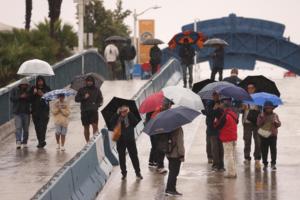
Heavier storms and longer dry spells are drying California and the West
Rainfall across much of California and the West has become more clustered in heavier storms, with longer dry spells in between.
The net effect is a drying out, researchers found in a new study. It isn’t just the western United States; the same is true in much of the rest of the world.
The research is the first to reveal how this ...Read more

Tornado season is underway in Chicago. Here's what to expect and when
CHICAGO — The reemergence of thunderstorms and warming temperatures in the forecast are a reminder that tornado season is here in Chicagoland.
Isolated thunderstorms are expected in the area between 4 p.m. and 10 p.m. Tuesday, according to the National Weather Service forecast. There is a chance for lightning and wind gusts to reach up to 40 ...Read more

The possibility of a 'super' El Niño is starting to make coastal California nervous
SAN DIEGO — Winter is months away, but the mere possibility that a major El Niño will whack places like San Diego late this year is stirring deep concern in the town square that is social media.
A flood tide of people are saying they’re worried that warm water from the equatorial Pacific will produce a “super” El Niño that will ...Read more
Heat is set to blast much of California, topping 100 degrees in some areas
LOS ANGELES — Sweltering weather will descend on much of California over the next few days, possibly ushering in temperatures deeper into the triple digits earlier than ever for some areas.
Temperatures could climb over 100 degrees in the Central Valley for the first time this year. By Monday, Fresno could see temperatures as high as 102 ...Read more
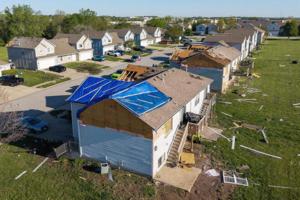
Two more tornadoes confirmed in Kansas City region this week. One tracked 36 miles
KANSAS CITY, Mo. — Two more tornadoes, including one that traveled more than 36 miles, touched down earlier this week as storms raced across the Kansas City region, the National Weather Service said in survey results released Wednesday.
That brings the total number of confirmed tornadoes from the severe weather that moved through the region ...Read more

Washington weather: 'Very strong' El Niño could come. But what does that mean?
SEATTLE — If you thought this past winter was warm and dry, wait until El Niño comes to town.
Should the famed warm weather generator’s trajectory hold, next winter could see even warmer and drier conditions in the Pacific Northwest, experts say.
There is about a 61% chance that El Niño will emerge in the region between May and July and ...Read more
Severe thunderstorms bring heavy rains, flash flooding, tornado warnings to KC
KANSAS CITY, Mo. — Severe thunderstorms barreled through the Kansas City area early Monday, unleashing frequent lightning and booming thunder, dumping torrential rain and triggering a tornado warning.
Kansas City firefighters are responded to numerous water rescues around the city in areas that typically see high-water areas, according to ...Read more
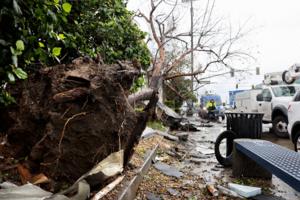
Rare Central Valley tornado outbreak: 4 twisters strike in 5 hours
LOS ANGELES — Tornadoes aren't completely out of the question in California's Central Valley. Over the last century, the region has had scores of them.
But this week, as several thunderstorms moved through, the region experienced something rare: four tornadoes on the same day, all in less than five hours.
The first touched down Tuesday ...Read more
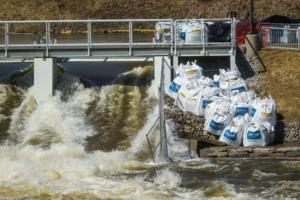
Cheboygan Dam flooding event 'far from over,' Michigan officials warn
DETROIT — The water level must drop more than 9 inches before emergency operations at the Cheboygan Lock and Dam Complex are halted, state officials said Thursday.
"As of 8:30 a.m., 9.12 inches of water must recede before the Cheboygan Lock and Dam Complex Emergency Action Plan is deactivated," the Michigan State Police Emergency Management ...Read more
Inside Weather
Popular Stories
- Floods keep shutting down roads on edge of KC. City, county say not their problem
- Virginia Gov. Spanberger urges preparedness ahead of hurricane season
- How AI could help save lives this hurricane season
- Denver International Airport flights grounded because of thunderstorms
- Denver International Airport ground stop lifted, hundreds of flights delayed by storms


Comics