Sports
/ArcaMax

Jonathan Tannenwald: The USMNT's World Cup auditions are over. Now it's time to project the tournament roster.
ATLANTA — After 24 games over Mauricio Pochettino’s 18-month tenure, the auditions are done.
The manager has seen everything he can from players in a U.S. jersey before he picks the World Cup roster in late May. Any other evidence he wants will have to come from those players’ work with their clubs.
Now the countdown is officially on to ...Read more

The USMNT loses to Portugal in what amounted to a final pre-World Cup audition
ATLANTA — If fans of the U.S. men’s soccer team wanted to see an A-level squad take on Portugal’s stars, they didn’t get it.
But if U.S. manager Mauricio Pochettino wanted to see what would come of a slew of auditions for spots on his World Cup roster, he certainly got that.
Pochettino tested 20 players across four formations over the ...Read more

FIFA Men's World Cup: Bosnia and Herzegovina earn trip to Seattle in win over Italy
SEATTLE — So much for seeing one of the most storied soccer countries in the world playing in the FIFA Men’s World Cup in Seattle.
The Italian curse continued.
Bosnia and Herzegovina pulled a shocking upset, beating Italy on penalties on Tuesday to claim the final European qualifying spot for the World Cup and with it a spot in one of the ...Read more
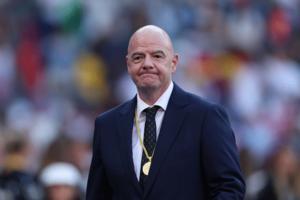
FIFA president says Iran will play in men's World Cup and in Seattle
SEATTLE — FIFA president Gianni Infantino insisted yet again on Tuesday that Iran will participate in the men’s World Cup this summer, including its scheduled match in Seattle.
Infantino spoke to French news agency AFP while attending a friendly between Iran and Costa Rica that was played in Turkey on Tuesday.
“Iran will be at the World ...Read more

Sean Keeler: Denver Summit FC's new attendance record is a win for women's sports -- and Colorado
DENVER — The Best Little Sports Town in America just added another banner to hang a Mile High.
As the Summit drew near, Denver drew a line in the sand. And dared the rest of the U.S.A. to cross it.
“I think it’s intoxicating, that environment you just feel,” Summit FC goalkeeper Abby Smith said after Denver’s home opener ended in a ...Read more
The USMNT flunks a test against Belgium's stars in a 5-2 blowout loss
ATLANTA — The U.S. men’s soccer team wanted to test itself against Europe’s best this month, and it got what it asked for on Saturday.
It also failed that test in front of a pro-American crowd.
Belgium rolled over the Americans, 5-2, playing just as well against the U.S. starters as against the many second-half substitutes.
U.S. manager...Read more

Airbnbs are topping $6,000 a night in World Cup housing frenzy
The biggest winners from this year’s World Cup are poised to be those able to rent out their properties, especially in the tri-state area.
Bobby Roufaeal, who manages more than a dozen short-term rentals in New Jersey, said a luxury rental in the state could bring in $240,000 between June 11 and July 19 when the tournament runs. He said he’...Read more

Messi scores 900th goal, but Inter Miami ousted from Champions Cup by Nashville
MIAMI — Inter Miami had not scored in its past two matches, and Lionel Messi was stuck one goal short of the 900th of his legendary career.
It took less than seven minutes to end both droughts as Messi quickly achieved his historic milestone on Wednesday night at Inter Miami Stadium.
But the night ended with major disappointment for Inter ...Read more

The USMNT's March squad shows Mauricio Pochettino has much work to do before the World Cup
PHILADELPHIA — The last U.S. men’s soccer roster before the World Cup team is picked shows a far-from-settled depth chart three months before the tournament.
Attacking midfielder Gio Reyna made it despite barely playing for his club, Germany’s Borussia Mönchengladbach, but Alejandro Zendejas didn’t, despite playing well for his club, ...Read more

Messi disappointed as Finalissima between Argentina, Spain in Qatar is canceled
MIAMI — Inter Miami captain Lionel Messi was disappointed to learn of the cancellation of the Finalissima match between Argentina and Spain, which had been scheduled to be played in Qatar on March 27 but was called off due to the war in the region.
According to a source close to Messi, he was looking forward to playing in the match featuring ...Read more

Mike Bianchi: Bring back Inchy! Orlando City was built by Adrian Heath -- maybe he can save it.
ORLANDO, Fla. — In dire periods of uncertainty, sometimes sports franchises should resist the urge to march blindly into the future and instead reach back into their past; not merely for nostalgia, but for identity.
That is precisely where Orlando City Soccer Club finds itself today: staring into the fog of a confusing present while the ...Read more

Trump says Iran soccer team shouldn't play in World Cup
President Trump said Thursday it wouldn’t be “appropriate” for Iran’s national soccer team to play in this summer’s World Cup on U.S. soil, even though he also said the squad would be “welcome” to compete in the world’s biggest sporting event.
“The Iran National Soccer Team is welcome to The World Cup, but I really don’t ...Read more

Which team could replace Iran in the World Cup? The answer is complicated.
LOS ANGELES — Iran’s sports minister said his nation will not participate in this summer’s World Cup following the attacks on the country by the U.S., one of the tournament’s hosts.
The U.S. bombing campaign against Iran, which began two weeks ago, has triggered a region-wide conflict and killed more than 1,300 Iranians including ...Read more

Kevin Baxter: With US at war with Iran, political upheaval could engulf World Cup
LOS ANGELES — Twelve days ago the U.S., a World Cup host country, launched a full-scale bombing campaign against Iran, a country that has qualified to play in the tournament. That's never happened before.
Five days later, that same World Cup host began military operations inside the borders of Ecuador, another World Cup qualifier, half a ...Read more
Australia backs Iran women's soccer players seeking asylum: 'We stand in solidarity'
LOS ANGELES — Five players defected from the Iran women's soccer team Monday after the team's final match in the Asian Women's Cup in Australia and have applied for asylum with the Australian Federal Police, according to reports.
Police assisted the women in leaving their hotel and placed them in a safe house.
According to sports journalist ...Read more

Lionel Messi scores 899th goal as Inter Miami beats D.C. United, 2-1, in Baltimore
A grueling travel schedule, including a White House visit on Thursday, did not seem to have any ill effect on Lionel Messi or his Inter Miami teammates, who came out inspired, took an early lead and held on to win, 2-1, over D.C. United in Baltimore on Saturday night.
A near-sellout crowd of 72,026 was on hand at M&T Bank Stadium as Messi ...Read more

Alyssa Thompson's goal earns the USWNT a 1-0 win over Colombia and a SheBelieves Cup sweep
HARRISON, N.J. — The U.S. women’s soccer team topped Colombia, 1-0, on Saturday afternoon to wrap up a sweep of the annual SheBelieves Cup friendly tournament.
U.S. Soccer traditionally puts the toughest opponent for the Americans in the last game, and this year gave it to Las Cafeteras over Canada. The decision was justified right away, as...Read more
Galaxy's Jamaican opponent in Champions Cup may be short 10 players because of visa woes
LOS ANGELES — The State Department has denied visas for members of a Jamaican soccer team scheduled to play the Galaxy on Wednesday in the round of 16 of the CONCACAF Champions Cup, raising concerns that the Trump administration could bar players from traveling to the U.S. for this summer's World Cup as well.
A CONCACAF source with knowledge ...Read more
President Trump welcomes Messi, Inter Miami to White House to honor champions
President Donald Trump welcomed Lionel Messi and his Inter Miami teammates to the White House on Thursday to celebrate the team’s 2025 MLS Cup title.
The Miami players, dressed up in dark suits with the club crest, entered the East Room first. Trump then arrived flanked by Messi and the team’s managing owner Jorge Mas. The team stood behind...Read more

Kevin Baxter: New soccer media company confident it can cultivate a captive US audience
LOS ANGELES — John Parker believes he has solved the riddle.
For years we've been told soccer is the sport of the future in the U.S. It's the fastest-growing, has the most attractive demographics, skews younger, is the most cosmopolitan, blah, blah, blah.
Yet the sport has struggled to find a broadcast audience, especially among the legacy ...Read more
Popular Stories
- The USMNT loses to Portugal in what amounted to a final pre-World Cup audition
- FIFA Men's World Cup: Bosnia and Herzegovina earn trip to Seattle in win over Italy
- FIFA president says Iran will play in men's World Cup and in Seattle
- The USMNT flunks a test against Belgium's stars in a 5-2 blowout loss
- Sean Keeler: Denver Summit FC's new attendance record is a win for women's sports -- and Colorado
Comics