Sports
/ArcaMax
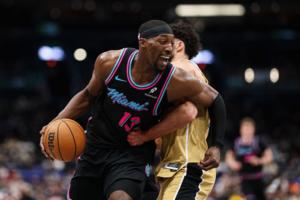
Ira Winderman: A case study of dual scenarios for overhauled Heat
MIAMI — While finishing touches remain for the Heat’s roster, those who will get the most touches are in place and ready to go for the Sept. 29 start of training camp.
So what’s the best-case, worst-case scenarios for each?
In the balance could be — no, will be — how this massive makeover shakes out.
Giannis Antetokounmpo
— Best ...Read more

Knicks star Jalen Brunson to appear on 'Law & Order SVU'
NEW YORK — Knicks star Jalen Brunson is joining another New York institution.
Brunson will make a guest-starring appearance during the upcoming 28th season of “Law & Order: SVU,” which is set to premiere on NBC on Oct. 8. The network revealed Brunson’s casting this week, confirming that he will show up in the fifth episode of the ...Read more

Michael Rand: The Wolves' LaMelo Ball trade was years in the making. Here's all that went into their roster reset.
MINNEAPOLIS — For Timberwolves fans and perhaps even other NBA organizations, this offseason might have felt like a sudden transformation.
The Wolves dramatically remade their roster around under-26 players by trading away two productive power forwards in Julius Randle and Naz Reid while acquiring LaMelo Ball as part of the four-team deal and...Read more

Lakers ticket prices could rise substantially as Kushner, Iger look to cut out brokers
LOS ANGELES — Mark Walter may be selling the Lakers, but the new owners plan to take a money-making page out of the Dodgers’ playbook nonetheless: Dump the ticket brokers and leverage control over the resale market to drive up the cost of a ticket.
As a result, the average price for a Lakers ticket could rise from $217 to $361 within the ...Read more
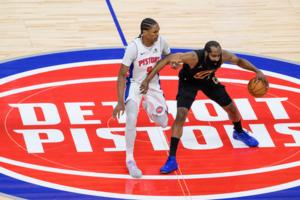
Ausar Thompson, Pistons agree to five-year contract extension
DETROIT — At the end of the 2025-26 campaign, basketball operations president Trajan Langdon said the goal was to build around the Detroit Pistons' three core players — Cade Cunningham, Jalen Duren and Ausar Thompson — now and in the future.
The Pistons have locked up two of the three players to build sustainable success, with Thompson ...Read more
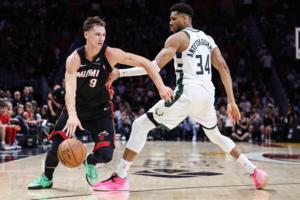
Heat, Pelle Larsson agree to four-year, $60 million extension, avoid 2027 free agency
MIAMI — The Miami Heat made a move ahead of their Sept. 29 start of training camp by reaching an agreement with guard Pelle Larsson on a four-year, $60 million extension, the South Florida Sun Sentinel confirmed Friday.
Larsson, who has been a breakout contributor after being selected in the second round of the 2024 NBA draft out of Arizona, ...Read more
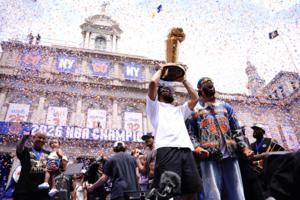
Secondary market pushing Knicks home-opener tickets to historic levels
NEW YORK — In just over a month, Madison Square Garden will host the most expensive regular-season basketball game in NBA history.
A record once held by Staples Center for the night of Kobe Bryant’s final NBA game is now set to belong to the defending champion Knicks, who beat the San Antonio Spurs 4-1 in the 2026 NBA Finals, and on Oct. 20...Read more
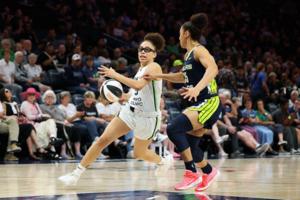
Mac Engel: How the Wings' Azzi Fudd ignores the comparisons to ex-TCU star Olivia Miles
ARLINGTON, Texas — Jose Fernandez stumbled into revealing something with an innocent answer that explains why the Dallas Wings selected Azzi Fudd with the first pick in the WNBA draft, one slot ahead of a player who may be named MVP.
“She got picked No. 1 because I felt, and our organization felt, that she was going to be the best fit not ...Read more
Michael Sweetney, former Knicks first-round pick, dead at 43: 'An incredible person'
NEW YORK — Michael Sweetney, a former first-round pick by the Knicks after a standout career at Georgetown, has died at age 43, his family announced.
A cause of death has not been released.
A 6-8 forward/center, Sweetney spent two seasons with the Knicks from 2003-05, averaging 7.0 points and 4.8 rebounds per game.
“No one loved him more ...Read more
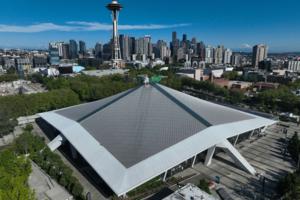
Analysis: Climate Pledge Arena has passed test for Sonics to return
NEW YORK — Twenty years ago, parts of the NBA went out of its way to disparage KeyArena. The previous owner of the SuperSonics didn’t like it because of the lease. The new owners of the team didn’t like it because it wasn’t in Oklahoma City. The commissioner of the league really didn’t like it, period.
It was outdated the day the ...Read more
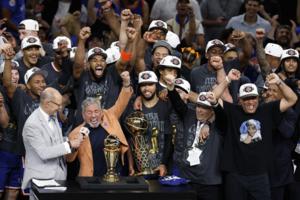
Going to Knicks' opening night? It'll cost you at least $1,000.
NEW YORK — If you’re going to watch the Knicks receive their 2026 NBA championship rings on opening night at Madison Square Garden, you’ll need to bring your checkbook with you.
It’s a $1,000 get-in price for nosebleed seats on Oct. 20, when the defending champions will receive their rings from their 4-1 gentlemen’s sweep of Victor ...Read more
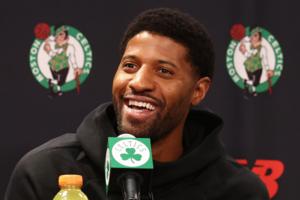
Paul George understands trade hate, won't try to be 'superstar' for Celtics
BOSTON — Addressing reporters Tuesday for the first time as a member of the Celtics, Paul George made two things clear:
First, that he understands why some Celtics fans, still unhappy over the controversial trade that brought him to Boston and sent Jaylen Brown to Philadelphia, might not immediately embrace him.
And second, that Jayson Tatum...Read more
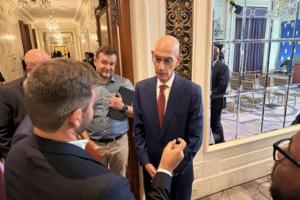
NBA says goal still to have vote on expansion, Sonics return this year
NEW YORK — No one likes to be reduced to being secondary or a footnote in conversations or discussions.
In the case of the latest NBA owners meetings, sitting second on the agenda when it comes to expansion conversations seems like it could be a good thing for Seattle as it has fewer questions than Las Vegas and fewer answers needed.
The ...Read more
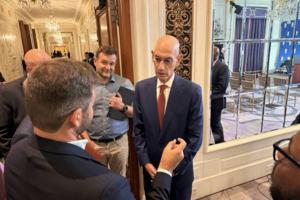
NBA commissioner: Las Vegas dominates expansion talks this week
NEW YORK — NBA Commissioner Adam Silver said Tuesday there was more discussion this week surrounding Las Vegas than Seattle in relation to potential league expansion.
Multiple bid groups and arena sites are still in play in Las Vegas, while Seattle has multiple groups and one arena site under consideration. That is why Las Vegas received more...Read more
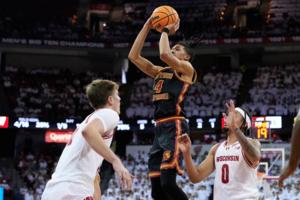
Chad Baker-Mazara sues USC, accuses Eric Musselman of 'racially charged' tirade
LOS ANGELES — Former USC forward Chad Baker-Mazara has filed a lawsuit against the university accusing head basketball coach Eric Musselman of launching into a “profanity-laced, racially charged locker room tirade” that precipitated the sudden dismissal of USC’s leading scorer last February.
In a lawsuit filed Monday in Los Angeles ...Read more
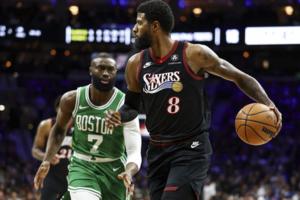
Former Sixer Paul George says Celtics fans' response to Jaylen Brown trade was 'fair'
Boston Celtics fans took to social media expressing their disappointment in the offseason trade of Jaylen Brown to the 76ers for Paul George and draft picks in early July.
A 6-year-old Brown fan even went viral for his reaction to the announcement.
The reaction for Celtics fans largely centered on the Celtics moving on from Brown, who had been...Read more
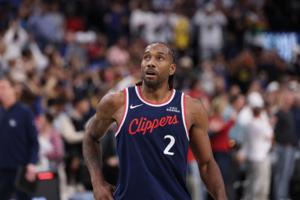
Mirjam Swanson: Clippers avoid a death penalty with Kawhi Leonard trade, but only if they clean house
LOS ANGELES — Along with Kawhi Leonard, the Clippers should send the Toronto Raptors a fruit basket and a thank you card.
Because what was already a steal when the teams first agreed to the trade in June now looks like an absolute lifesaver. Paddles for the life raft so the Clippers can change directions and make better decisions — ...Read more
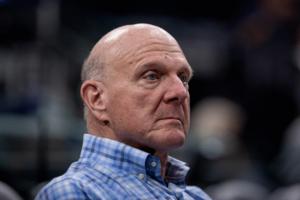
Steve Ballmer apologizes to fans, says Clippers will comply with NBA sanctions
LOS ANGELES — Clippers owner Steve Ballmer released a lengthy statement Sunday night apologizing to fans and accepting the findings of an NBA investigation of salary cap violations.
"This has been a very difficult time for everybody associated with the Clippers, and for that, I have sincere regrets," Ballmer said in the statement released 11 ...Read more
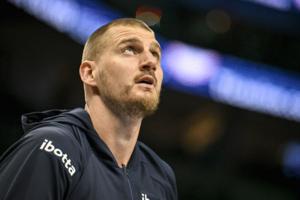
Troy Renck: Why Nuggets are right to trust Nikola Jokic about contract extension delay
DENVER — Without trust, there can be no loyalty. Without loyalty, there can be no Nikola Jokic. And without Nikola Jokic, there can be no Denver Nuggets.
Jokic missed too many shots against the Minnesota Timberwolves. But Jokic is a straight shooter. And when the Nuggets were told by Jokic that it makes more dollars and sense for him to sign ...Read more
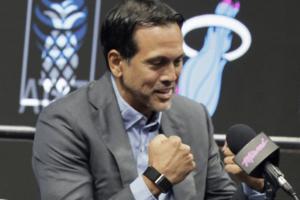
Ira Winderman: Heat similarities to 2004-05 offer hope, with need to take heed
MIAMI — In just over two weeks, Erik Spoelstra will, at some point during his comments at media day, stress how the 2026-27 Miami Heat will be a team telling its own story.
Just as he has for years with almost all of his teams, with a clear dissuasion toward comparisons to what came before during his coaching tenure.
So expect no comparisons...Read more
Popular Stories
- Knicks star Jalen Brunson to appear on 'Law & Order SVU'
- Ira Winderman: A case study of dual scenarios for overhauled Heat
- Michael Rand: The Wolves' LaMelo Ball trade was years in the making. Here's all that went into their roster reset.
- Lakers ticket prices could rise substantially as Kushner, Iger look to cut out brokers
- Ausar Thompson, Pistons agree to five-year contract extension
Comics