Ryan Jeffers accepts $23.15 million qualifying offer, will return to Twins in 2027
Published in Baseball
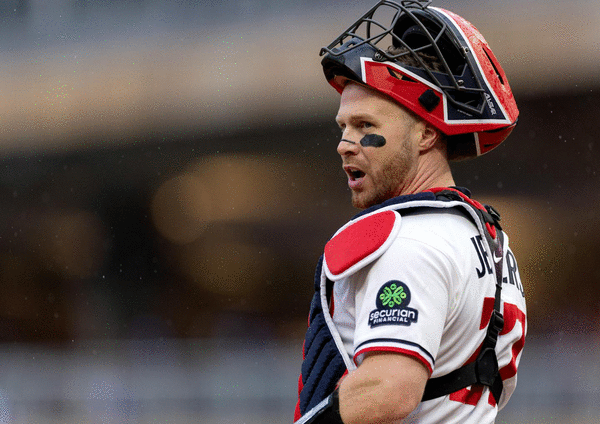
MINNEAPOLIS — The Twins made their first splash into free agency Tuesday, and it was a surprise signing: Catcher Ryan Jeffers agreed to take their one-year, $23.15 million qualifying offer.
The signing marked a reversal for Jeffers, who was seeking a long-term contract in his first entry into free agency. Instead, the 29-year-old catcher will remain with the Twins for at least one more season, and he will be the highest-paid catcher in baseball next year.
Eight free agents were tagged with qualifying offers to begin the offseason. Jeffers and New York Yankees closer David Bednar were the only players to accept.
“When things were laid out and we had our cards on the table, we’re looking at what’s presented, we ended up making the best decision for me and my wife,” Jeffers said. “And we’re coming back for a year.”
It’s a huge salary for the Twins — Jeffers becomes the highest-paid player on the Twins’ roster — but they are set at the catcher position with Jeffers and Victor Caratini as their tandem. Caratini, who signed a two-year contract last winter, is owed $10 million next year.
The Twins prioritized Jeffers after he became a free agent, and front office staff met with his agent, Scott Boras, shortly after they arrived at the MLB General Managers Meetings last week in Las Vegas.
“Tom [Pohlad’s] commitments to the 2027 team and the team going forward plays a factor in me coming back and wanting to see where this core goes,” Jeffers said. “Taking the one-year deal gives us opportunities that something else might not.”
Jeffers missed about two months because of a broken bone in his left wrist, but he produced one of the best offensive seasons of his career. He posted a .256 batting average, a .353 on-base percentage and an .814 OPS in 317 at-bats while totaling 14 homers, 19 doubles and 56 RBIs.
Initially a walk-on at North Carolina-Wilmington, Jeffers was the Twins’ second-round pick in the 2018 MLB draft. It was a surprise pick at the time because Jeffers wasn’t a highly-rated prospect out of college.
“I do a lot of things that a lot of catchers don’t do and can’t do,” Jeffers said. “I think I’m in a special class of player and I’ve worked really hard for that. It goes back to my story of where I’ve come from.”
After receiving the qualifying offer at the beginning of November, Jeffers had two weeks to survey the free-agent market. A long-term contract apparently didn’t materialize, and he didn’t want to risk losing the security of a large one-year deal.
He admitted that signing before the sport’s looming lockout on Dec. 2 gave him some peace of mind.
When Jeffers was asked whether the Twins made a multi-year offer, he said, “There were things that were put in front of us.”
In free agency, there were knocks against his defense, throwing out only seven of 66 base-stealers this year. The Twins were one of the worst teams at controlling base runners, an area that must improve next season. Jeffers, however, excelled at strike-zone challenges.
The Twins didn’t hesitate to issue a qualifying offer to Jeffers, though the $23.15 million contract represented the second-highest yearly salary for a catcher in MLB history.
J.T. Realmuto received $23.875 million in the final four years of his $115.5 million contract with the Phillies. Hall of Famer Joe Mauer received $23 million per year during his eight-year, $184 million contract extension with the Twins.
The offer was part of the Twins’ calculus when they didn’t trade him at the Aug. 3 trade deadline despite interest from the Rays and Yankees. At worst, they would’ve received a compensatory draft pick if he signed elsewhere.
Now, the Twins retain one of the anchors of their lineup and an important right-handed bat for a team that is a little heavy on lefty batters. Before Jeffers sustained his injury last season, he was batting .295 with a .949 OPS.
“I don’t think my best baseball has been played,” Jeffers said. “I think and I believe in myself and my ability to continue to improve every single year and put a better product out there every time I go out on the field.”
Twins general manager Jeremy Zoll said last week that Jeffers accepting the qualifying offer wouldn’t negate them from making more offseason additions. The bullpen is an area the Twins want to upgrade, along with potentially adding another power bat for the right side of their infield.
“Tom has been public about wanting to change the perception of how the Twins do things,” Jeffers said. “I think it’s an exciting to be a Twins fan.”
©2026 The Minnesota Star Tribune. Visit startribune.com. Distributed by Tribune Content Agency, LLC





Comments