Sports
/ArcaMax
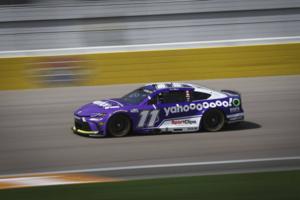
Denny Hamlin holds off Chase Elliott to win Pennzoil 400
LAS VEGAS — Denny Hamlin led a race-high 134 laps and won the Pennzoil 400 NASCAR Cup Series race on Sunday at Las Vegas Motor Speedway.
Hamlin held off a late charge from second-place finisher Chase Elliott, who finished 0.502 seconds behind Hamlin, to pick up his third Cup Series win at LVMS.
Hamlin started second. William Byron finished ...Read more
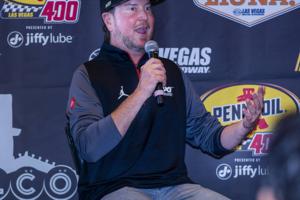
Las Vegas native Kurt Busch: NASCAR still fits within city's growing sports landscape
LAS VEGAS — Las Vegas native and NASCAR hall of famer Kurt Busch has seen the sports landscape grow from the then-Las Vegas Stars to multiple major league teams.
NASCAR was a leader in major sporting events competing in Southern Nevada, with the racing series calling the area home since 1998.
Busch, who retired from NASCAR in 2023 and now ...Read more
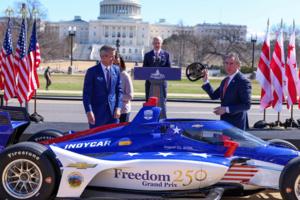
Sidestepping Congress, IndyCar to race around National Mall
WASHINGTON — The IndyCar race planned for this summer as part of America’s 250th anniversary won’t go through the Capitol grounds, but will instead follow a 1.66-mile, seven-turn street circuit course around the National Mall, event organizers announced Monday.
It comes after President Donald Trump signed an executive order in January ...Read more
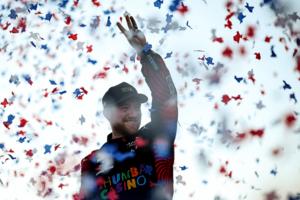
'3 Peat Baby': NASCAR's Tyler Reddick celebrates historic start to season with team co-owner Michael Jordan
Tyler Reddick isn't exactly the Michael Jordan of NASCAR.
Not yet anyway.
Still, Reddick seems to be at the start of something special as the driver of a team co-owned by the NBA legend who led the Chicago Bulls to two NBA championship three-peats in the 1990s (1991-93 and 1996-98).
Less than a month into the season, Reddick has established ...Read more
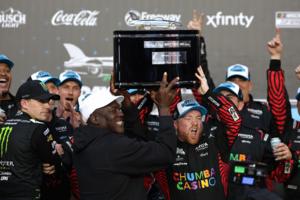
Mike Bianchi: 25 years after Dale Earnhardt's death, Tyler Reddick raises Daytona 500 trophy while Michael Jordan raises the stakes
DAYTONA BEACH, Fla. — No matter who won Sunday’s Daytona 500 — even if it was Tyler Reddick boldly darting, dodging and diving through traffic and surging past Chase Elliott in a final lap blur of horsepower and hope — it wasn’t enough.
Even if Reddick was driving a car owned by the iconic Michael Jordan, it still wasn’t enough.
It...Read more
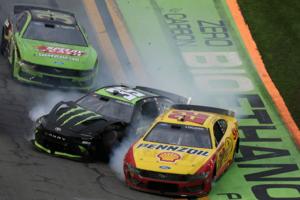
'One of the dumbest things I've ever seen.' Daytona 500 last lap draws ire.
DAYTONA BEACH, Fla. — In Daytona International Speedway’s Victory Lane, with his trademarked smile beaming, global sports icon and 23XI Racing owner Michael Jordan took time out of his celebration to mention someone.
His first mention wasn’t Tyler Reddick, the winner of the 2026 Daytona 500.
It was someone who you don’t often hear ...Read more
Tyler Reddick stuns Chase Elliott, wins Daytona 500 for Michael Jordan's team
DAYTONA BEACH, Fla. — Tyler Reddick needed a game-winner at the buzzer to win the Daytona 500 Sunday and deliver team owner Michael Jordan another championship.
Reddick led a single lap on Sunday at Daytona International Speedway, and it wasn’t for long.
With leader Chase Elliott seemingly in command coming off Turn 4, Reddick made a move ...Read more
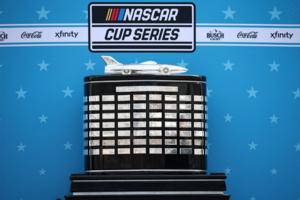
NASCAR announces new Daytona 500 race time due to threat of bad weather
DAYTONA BEACH, Fla. — The Great American Race’s start time has been moved up an hour.
NASCAR has announced that the 2026 Daytona 500 will now begin at 1:30 p.m. ET Sunday — an hour earlier than its previously scheduled 2:30 p.m. green flag — due to the threat of inclement weather in the Daytona Beach area late Sunday.
The sanctioning ...Read more
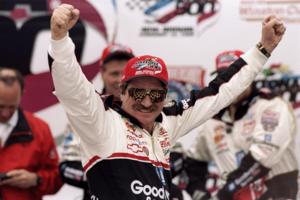
Dale Earnhardt Sr.'s legacy looms large 25 years after Daytona 500 tragedy
DAYTONA BEACH, Fla. — On a table at Ricky Stenhouse Jr.’s home sits a photo of Dale Earnhardt Sr. and Stenhouse — when he was just 3 or 4 years old and long before he raced for a living.
“I’ve got pictures sitting on the table of him signing autographs,” Stenhouse told the Orlando Sentinel. “It’s awesome.”
Earnhardt inspired ...Read more
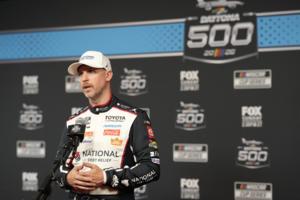
Denny Hamlin chases historic 4th Daytona 500 win on the heels of heartbreak
DAYTONA BEACH, Fla. — Denny Hamlin has driven without fear, doubt or hesitation for more than two decades, especially at Daytona International Speedway.
But the cocksure NASCAR star arrived at the storied track still shaken, a bit unsure and curious how he would respond to the emotions of recent months.
Hamlin will seek his fourth Daytona ...Read more
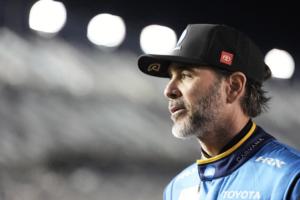
Jimmie Johnson seeks Daytona 500 glory as a last link to bygone era
DAYTONA BEACH, Fla. — NASCAR legend Jimmie Johnson’s contemporaries from his sport’s heyday are all but gone.
Pictures in a frame. Names on a trophy. Plaques in the Hall of Fame.
All remain faces of the sport, most just sans helmet and fire suit.
Dale Earnhardt Jr. and Kevin Harvick are on TV. Jeff Gordon is a big wig at Hendricks ...Read more
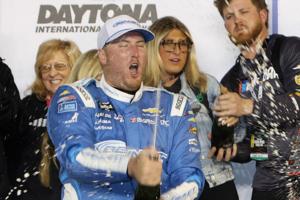
Austin Hill prevails again, continues Daytona domination in thrilling O'Reilly race
DAYTONA BEACH, Fla. — It was always going to be Austin Hill, wasn’t it?
The driver of the No. 21 O’Reilly Auto Parts Series car notched his fourth win at Daytona International Speedway on Saturday evening — doing so by leading a field-most 78 laps, sweeping the stages and earning 75 season points for good measure.
That marks 11 ...Read more
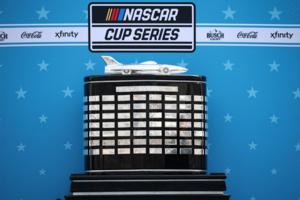
NASCAR announces new Daytona 500 race time due to threat of bad weather
DAYTONA BEACH, Fla. — The Great American Race’s start time has been moved up an hour.
NASCAR has announced that the 2026 Daytona 500 will now begin at 1:30 p.m. ET Sunday — an hour earlier than its previously scheduled 2:30 p.m. green flag — due to the threat of inclement weather in the Daytona Beach area late Sunday.
The sanctioning ...Read more
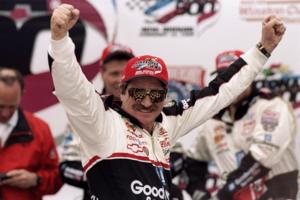
Dale Earnhardt Sr.'s legacy looms large 25 years after Daytona 500 tragedy
DAYTONA BEACH, Fla. — On a table at Ricky Stenhouse Jr.’s home sits a photo of Dale Earnhardt Sr. and Stenhouse — when he was just 3 or 4 years old and long before he raced for a living.
“I’ve got pictures sitting on the table of him signing autographs,” Stenhouse told the Orlando Sentinel. “It’s awesome.”
Earnhardt inspired ...Read more
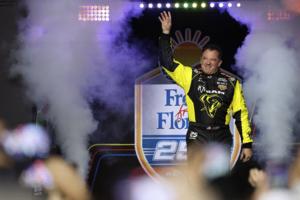
'Wrong end of the stick.' Tony Stewart's return to NASCAR racing ends early.
DAYTONA BEACH, Fla. — Tony Stewart’s return to NASCAR racing concluded with an early exit, and it sounds like the all-time great driver doesn’t have it in his plans to redeem his unlucky run.
Stewart, after getting knocked out of the season-opening NASCAR Truck Series race on Friday night, reiterated to reporters what he said Thursday ...Read more
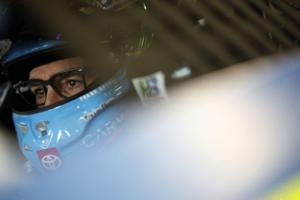
Jimmie Johnson seeks Daytona 500 glory as a last link to bygone era
DAYTONA BEACH, Fla. — NASCAR legend Jimmie Johnson’s contemporaries from his sport’s heyday are all but gone.
Pictures in a frame. Names on a trophy. Plaques in the Hall of Fame.
All remain faces of the sport, most just sans helmet and fire suit.
Dale Earnhardt Jr. and Kevin Harvick are on TV. Jeff Gordon is a big wig at Hendricks ...Read more
He's compared to Jeff Gordon, helped change NASCAR's postseason. Oh, and he's 19.
DAYTONA BEACH, Fla. — Survey the drivers ahead of the Daytona 500, and they’ll all have something new to say:
Ask Christopher Bell, and he’ll admit it would be “tough to relate” to the position Connor Zilisch finds himself in.
Ask Ross Chastain, and he’ll say that “it’s not fair” how mature Zilisch is.
Ask Jimmie Johnson, ...Read more
Smoke returns: Tony Stewart set for Daytona Trucks Series debut
DAYTONA BEACH, Fla. — Tony Stewart built a Hall of Fame career — and a fiercely loyal following — by racing anything, anytime, anywhere.
From midgets to Indy cars, from sprint cars to stock cars, Stewart was at home behind the wheel. But at 54, with three NASCAR Cup Series championships and 49 wins, he still had something on his racing ...Read more
Dale Earnhardt Jr.'s car makes Daytona 500 again; Kyle Busch is on the pole
DAYTONA BEACH, Fla. — Dale Earnhardt Jr. admits that it’s stressful.
Then again: The stress is the best part about it.
Earnhardt expressed all this after he learned that the car he owns — JR Motorsports’ 40 car, driven by Justin Allgaier — qualified for the Daytona 500 “on speed” at the conclusion of the festivities at Daytona ...Read more
The Earnhardt name never left NASCAR. Dale Jr.'s Daytona 500 quest proves it.
DAYTONA BEACH, Fla. — Justin Allgaier remembers last year’s catharsis.
Everyone does.
It was the Thursday before the 2025 Daytona 500. Allgaier, the driver of the No. 40 car, had just steered his car successfully through the Duels and had qualified for the Great American Race. There was figurative pandemonium. There were literal fireworks....Read more
Popular Stories
- Las Vegas native Kurt Busch: NASCAR still fits within city's growing sports landscape
- Smoke returns: Tony Stewart set for Daytona Trucks Series debut
- Jimmie Johnson seeks Daytona 500 glory as a last link to bygone era
- At home at Daytona, Ricky Stenhouse Jr. eyes another 500 win
- Sidestepping Congress, IndyCar to race around National Mall
Comics