
The Greener View: Black Spot Disease on Roses
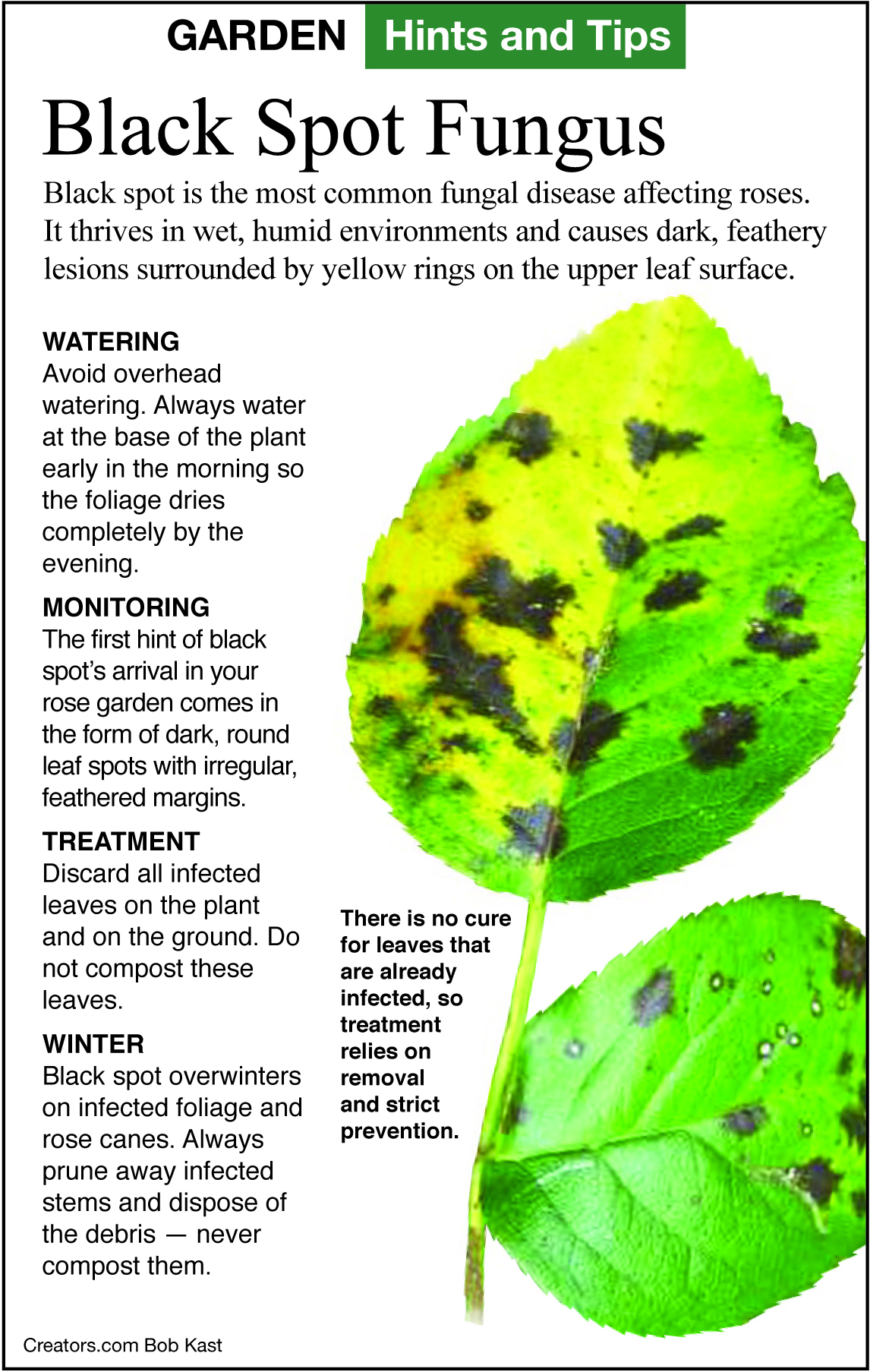
Q: I have some old rose bushes. They start out great each spring, but most summers, black spots develop on all my plants. By mid to late summer, most of the leaves are off the rose bushes, and they really look sad. I don't want to start over with new varieties as these smell nice when I bring them indoors.
A: Black spot is a fungus that causes black spots up to 3/4-inch in diameter on rose leaves and sometimes on the stems. The infected leaves then turn yellow around the spots and fall from the plant. If the plant is not resistant, black spot can cause all the leaves to fall off. The environmental conditions that promote black spot are wet leave and warm temperatures. Plants that lose their leaves produce less food and have a harder time surviving the winter.
Most methods of treatment aimed at preventing it also apply to preventing and treating another fungus problem common to roses, powdery mildew. First, as you know, pick a variety of rose resistant to black spot. The next thing is to plant roses in the proper microenvironment. This means a well-drained soil with lots of organic matter. Good air circulation within and around the bushes may mean moving or removing fences and other shrubs and removing the interior branches of the plant. Roses need at least six hours of direct sunlight, preferably starting in the morning, to quickly dry the leaves from the morning dew.
Third, roses can take a lot of heat if they are watered. Roses will grow deep roots if the soil is soaked to more than a foot deep. Use watering methods that don't get the leaves wet, especially late in the day, where the leaves could stay wet overnight. Use a soaker hose, or just soak the ground with a light stream from a garden hose.
When the plant is infected, remove every diseased leaf from the plant or ground immediately to prevent further spreading of the disease. Infected leaves do not get better; they just spread the disease.
Since black spot is easily transmitted by water splashes, remove all leaves close to the ground, which are more susceptible to getting water splashed on them. Mulch around the rose to minimize water splashing onto leaves. Remove all leaves in the fall. Remove the old mulch in early spring and replace it with new mulch.
Any plant that has good growing conditions also needs good culturing, so the next step is to feed the roses properly. If fed a high nitrogen fertilizer too early in the spring, they will send out lots of new growth that is susceptible to black spot. Instead, use about a 5-10-10 fertilizer ratio a couple of weeks after the new growth begins in the spring. Fertilize again when the rose is in full bloom and do a third fertilization no closer than two months before the first fall frost. Slow-release and organic fertilizers tend to work better than other types.
Since your roses regularly have this disease, you should try a preventative fungicide treatment. There are many fungicides available, but you have to look to see if it treats or prevents fungus. Use the preventative first and then the treatment types if the roses get the disease. More than one spray can be used at once, but try only a few plants with the double dose to see if it might cause too many leaves to fall off. Alternating sprays also seems to be more effective than using the same one repeatedly. Fungicide sprays with a combination of baking soda and horticultural oil seem to work well.
Remember, any growth that grows after a spray treatment is not protected, and so treatments must be repeated weekly. Many spray chemicals are designed to break down rapidly in sunlight or with water so they don't contaminate the soil. They do not stay at full strength if rained on or water from the hose gets on the leaves. Spraying too much at once is wasteful, ineffective, and can harm the leaves more than the disease.
========
Email questions to Jeff Rugg at info@greenerview.com. To find out more about Jeff Rugg and read features by other Creators Syndicate writers and cartoonists, visit the Creators Syndicate website at www.creators.com.
Copyright 2026 Jeff Rugg. Distributed By Creators.





Comments