
The Greener View: 2026 All-America Selections Winners
When I go shopping for vegetables at the garden center or look for seeds in the catalogs that have begun arriving, I look for the red, white and blue logo of All-America Selections. Even AAS winners from several years ago are more likely to produce more vegetables and grow more flowers than current nonwinners.
The AAS testing program is an independent nonprofit organization that tests new plants. They have about 80 test gardens from Alaska and Canada to California and Florida. They also have almost 200 display gardens all across the continent that are not used for judging, but are used to show gardeners how well the plants grow locally.
Today, we will cover all the 2026 vegetable trial winners. Next week, we will finish with the ornamental flowering plant winners.
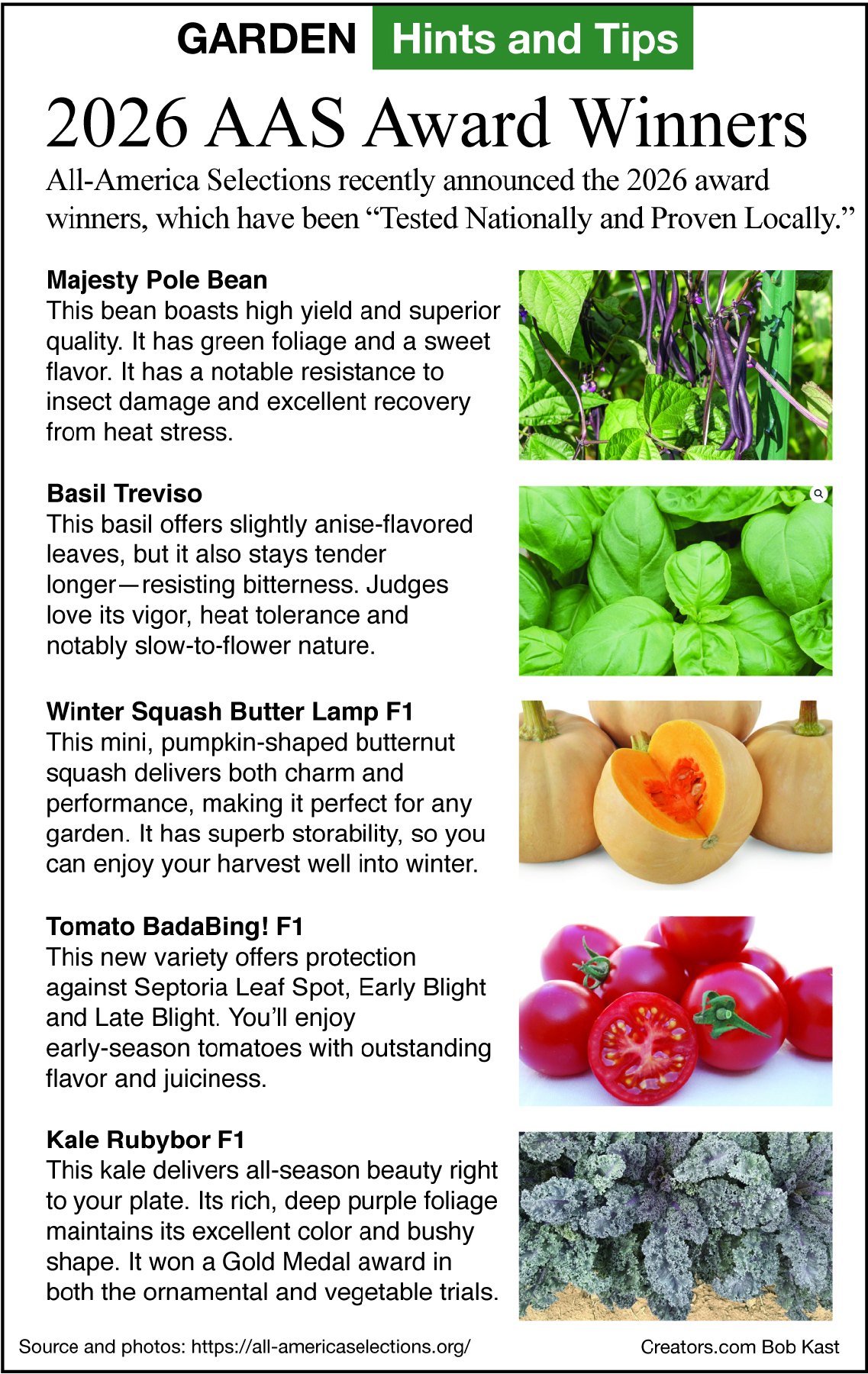
Basil Treviso is great for container growing because of its compact and highly branched habit. The AAS judges found that it kept its leaf quality and flavor longer into the season. One of the reasons for this is that it was much slower to begin flowering. It grows up to 18 inches high and about a foot across. If you want to grow it from seeds, the soil temperature needs to be between 65 and 70 degrees.
Just about everyone loves green beans, but what if they are purple? Majesty is a pole bean, which means it needs support for the vines, which can grow 6 feet long. The 6-inch-long pods are uniformly straight, and the purple color makes them easy to find and harvest among the dark green and insect-resistant leaves. Like other beans, they love full sun conditions. If you need to plant them in a container, that is fine, just keep them staked up. For greater yields on pole beans, cut off the top of the vine at 5 or 6 feet to create a fuller plant that will have more flowers.
Do you still want to be eating produce from your garden next winter? Try the winter squash Butter Lamp. It is a pumpkin-shaped butternut squash. The 4-pound fruit has a pale brown skin, but the flesh inside is bright yellow. It is early maturing with shorter vines, so it doesn't run rampant through the garden, but it can also be grown on a trellis. It is also very resistant to powdery mildew and insects.
Everyone loves tomatoes, right? They are the most planted garden crop and are easy to grow, except when they get leaf diseases. We might just have a game-changing tomato on our hands. BadaBing! (yes, there is an exclamation point in the name -- poor spell-check), is highly or intermediately resistant to just about every tomato disease there is. The fruit are 1.5 inches across and bright red. It is an indeterminate grower, which means it produces fruit all season long instead of all at once like a determinate grower. Indeterminate growers usually grow long vines, 6-10 feet long, but this tomato vine stops growing in length at less than 4 feet long. Grow it in garden conditions like you would any other tomato.
The last vegetable winner this year is also a flower garden winner this year. For the first time in AAS history, a plant has won a gold medal in both categories. Kale Rubybor is not just another pretty kale; it tastes good, too. The very ruffled leaves start out purple, turn a frosty light blue and eventually mature into a dark purple. The plants maintain a dense, bushy shape that makes it a great ornamental plant in a container, or several planted together can have a big impact in landscape beds. Most ornamental kale varieties are bitter, but Rubybor is tender and not bitter. Because it can take the heat, it can be planted in the spring and harvested from spring until fall.
========
Email questions to Jeff Rugg at info@greenerview.com. To find out more about Jeff Rugg and read features by other Creators Syndicate writers and cartoonists, visit the Creators Syndicate website at www.creators.com.
Copyright 2026 Jeff Rugg. Distributed By Creators.






Comments