FIFA Men's World Cup fulfills stadium promise Paul Allen made 30 years ago
Published in Soccer
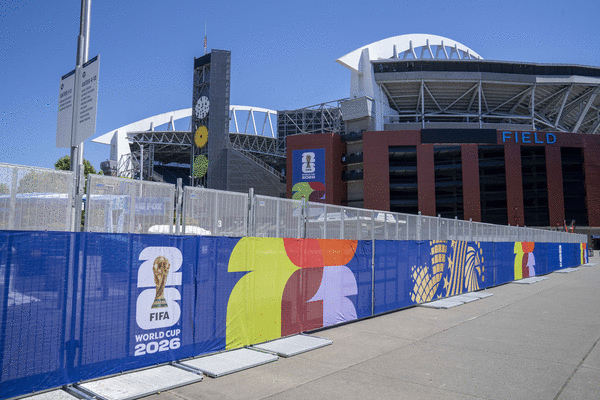
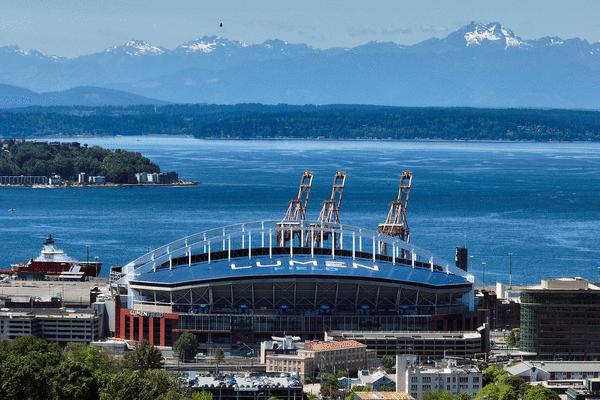
SEATTLE — The sale of the Seattle Seahawks — expected to happen over the next few months — will bring to an end the almost 30-year involvement of Paul and Jody Allen with major professional sports in this city.
It’s a three-decade run that could hardly be ending on a higher note with the Seahawks winning their second Super Bowl in February and Lumen Field — built after Paul Allen led a statewide referendum in 1997 to fund its construction — hosting the FIFA Men's World Cup beginning this month.
“If Paul were here today seeing the World Cup matches played at Lumen Field, I think he would feel a deep sense of pride and satisfaction, Bert Kolde, Allen’s longtime friend dating to their days at Washington State University in the 1970s and vice chair of the Seahawks, wrote in an email.
“The World Cup isn’t a new chapter — it’s the fulfillment of a promise that was part of the original vision almost 30 years ago and represents the final box being checked on what voters were promised this stadium could become."
Allen, whose first love was basketball and he bought the NBA’s Portland Trail Blazers in 1988, was encouraged in 1997 by local officials to buy the Seahawks from Ken Behring, who a year earlier had tried to move them to southern California, which didn't have an NFL franchise in Los Angeles at the time.
Allen eventually agreed but only on the condition that a referendum pass to provide up to $300 million of the $430 million cost of a new stadium to replace the outdated Kingdome.
Some questioned why someone of Allen’s worth — he'd made his fortune as a co-founder of Microsoft — would need public money.
But as a 2013 Seattle Times story detailing Allen’s purchase of the team summarized, there was a thought that Allen was leery “the politicians were going to saddle the rich guy with the bill" for the team (which he eventually purchased for $194 million) and the stadium and everything that came with it.
In a television commercial that went statewide a couple weeks before the June 1997 election, Allen explained his reasoning saying: “When I said yes to help save the Seahawks, I meant that I’d do my part in building something for the future, personally and financially. If you vote yes, I’ll do what it takes to make the new stadium and exhibition center a success. I stand by that commitment. But if you say no, that means no for me too, because I’m not going to do this without you. When I said that you’ll have the final say, I meant it. Together, we can leave something for future generations.”
To many observers, saving the Seahawks was the primary motivation behind getting the stadium built.
BuT from the start, Allen and backers of the referendum — for which Allen paid the $4.2 million expenses — also touted the building of the stadium as giving Seattle the ability to land a Major League Soccer franchise as well as potentially hosting World Cup games.
Seattle had been passed over for games when the United States hosted the 1994 World Cup mostly because it did not having an adequate grass field.
As reported in The Seattle Times in 1992, efforts to get World Cup games here at that time failed in part because of questions around finances and because there was no suitable grass field. As the Times reported, “(University of) Washington officials were concerned about the possible effects of placing a temporary grass field atop the field's artificial turf."
The lack of a grass field also prevented Seattle from hosting games in the 1999 Women’s World Cup.
At least some letter writers to The Seattle Times and elsewhere questioned in the run-up to the referendum vote if the mention of soccer by Allen and stadium supporters was merely a way to assure that the referendum got the needed final votes to pass and assure keeping the Seahawks in town.
Kolde said Allen from the start “wasn’t just thinking about football; he was thinking about the long-term role sports play in the community. From the beginning, the vision for the stadium was a multipurpose world-class venue that could support both football and soccer and throughout our campaign we pledged the stadium would be designed and built to meet international standards for hosting World Cup games."
The referendum passed with 51.15% yes votes.
“These soccer guys put it over the top," Bernie James, a former player and assistant coach for the Sounders was quoted as saying in The Seattle Times following the vote.
An MLS team was awarded to Seattle in 2007 and has consistently drawn more than 30,000 fans a game every season since. Seattle was named as a World Cup host in 2022.
Each fact, Kolde said, validates that building the stadium was about more than the Seahawks, as does the holding of numerous other events there, such as concerts the last few years by acts as diverse as the Rolling Stones, Taylor Swift, Kendrick Lamar and Morgan Wallen.
“What’s sometimes overlooked is that this wasn’t just about saving the football team," Kolde wrote. “It was about building a public asset that would endure, grow and continue to serve the community across generations and sports."
Kolde said soccer also played into Allen’s desire that the stadium — built to replace the outdated Kingdome — not have a roof.
Allen desired in part to replicate the atmosphere he remembered of attending football games at Husky Stadium with his father.
“He wanted an open-air stadium because football and soccer are quintessentially outdoor sports," Kolde wrote.
Allen also wanted a stadium, Kolde wrote, that would be located to “reflect sweeping views that showcase the beauty of the region" and to have a partial roof canopy that covers 70% of the seats “intentionally engineered not just for weather protection but also to capture and reflect crowd noise back onto the field."
The last of the $300 million in bonds issued in 1999 to build the stadium and retire the debt that remained from the Kingdome was paid off in January, 2021.
And wherever people may stand on the issue of using public funds for stadiums and/or sports arenas, the ensuing years give a lot of evidence that the stadium fulfilled Allen’s promises.
Not only did a soccer team and the World Cup arrive — and possibly the Women’s World Cup in 2031, with Lumen Field already selected as one of 14 U.S. host sites should it be awarded the tournament — but the Seahawks have had their most success since Allen took over the team in 1997 and specifically since moving into Lumen Field in 2002.
All four of Seattle’s Super Bowl appearances occurred after Allen bought the team — coming under three head coaches in Mike Holmgren, Pete Carroll and Mike Macdonald — and the Seahawks have sold out their last 190 games dating to the 2003 season and hold what is statistically one of the best home-field advantages in the NFL, going 86-44 at home since 2010, the sixth-best mark in the league in that span.
Jody Allen, Paul’s sister, took over as executor of his estate following his passing in October of 2018 and as chair of the Seahawks.
Her acceptance of the George Halas Trophy for winning the NFC title game against the Rams last January may serve to many as a final lasting on-field image of the Allen family’s legacy in Seattle sports.
She put the team up for sale on Feb. 18, 10 days after the Super Bowl win over the Patriots in accordance with Paul Allen’s directive that his assets eventually be sold and the proceeds donated to his favored philanthropies.
If the eventual sale means the Allen family exiting the Seattle sports stage, the World Cup serves as a fitting last act.
Wrote Kolde: “That kind of enduring impact is what Paul was hoping for when he made the decision to step in and keep the Seahawks — and invest in big‑league sports — in Seattle.
____
© 2026 The Seattle Times. Visit www.seattletimes.com. Distributed by Tribune Content Agency, LLC.





Comments