Firefighters face a higher risk of skin cancer – nano fabrics with tiny, rough fibers can help keep them safer
Published in Science & Technology News
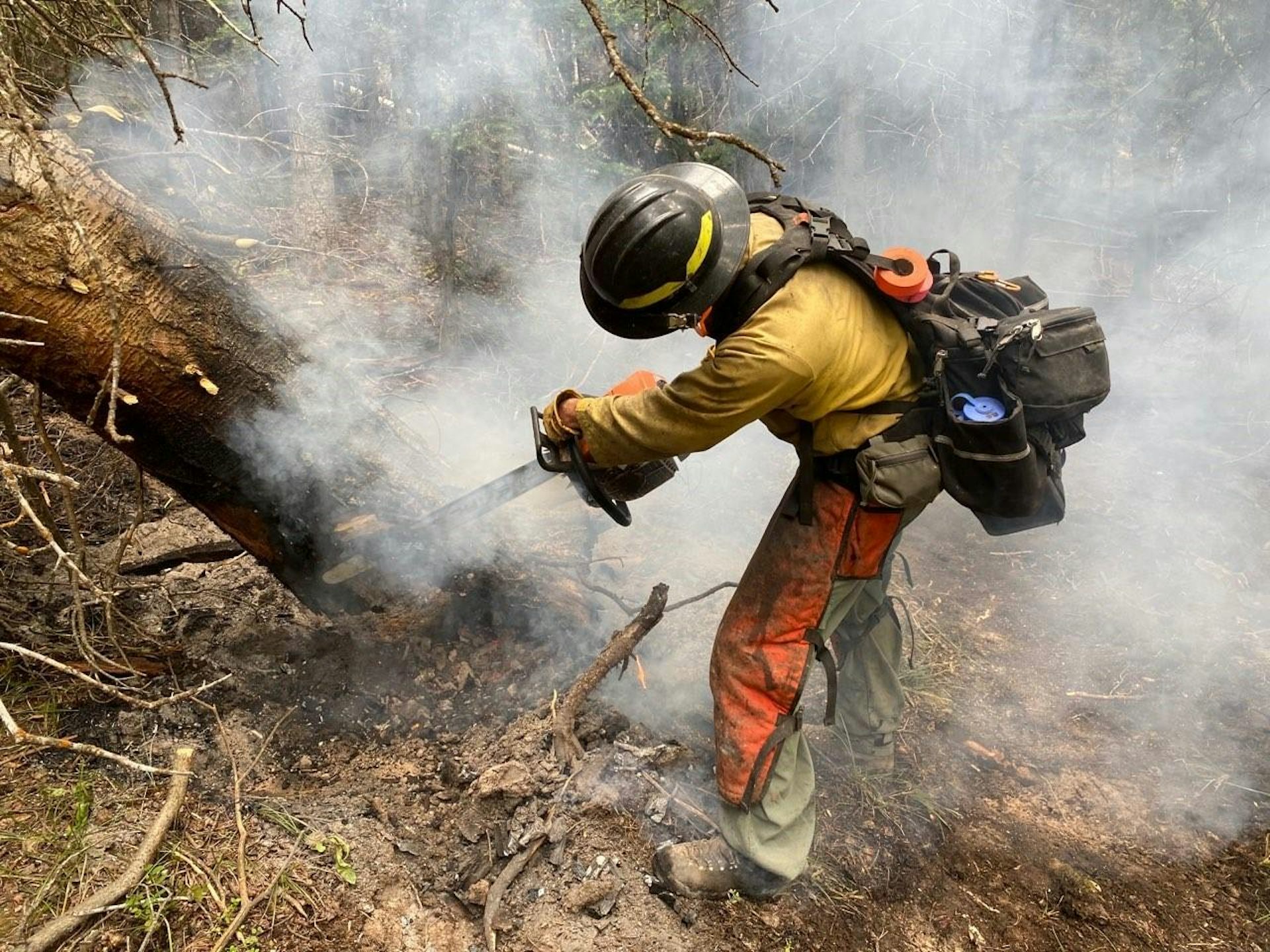
Wildland firefighters are exposed to a mix of harmful chemicals in the smoke they breathe and the ash and soot that gets on their clothing. Over long assignments fighting fires that can last for days to weeks, those chemicals can be absorbed by their skin.
Some of those chemicals are carcinogens. A 2025 study found that firefighters in general had a 58% higher risk of dying from skin cancer than non-firefighters and a 40% higher risk of dying from kidney cancer. Other research specifically on wildland firefighters also found elevated risks of dying from skin cancer.
To help wildland firefighters reduce some of these long-term health risks, researchers – including me and my colleagues at the Textile and Apparel Science Laboratory in the Department of Design and Merchandising at Oklahoma State University – are working on new ways to create better protective clothing, starting with the tiniest of fibers in the fabric.
The challenge is making protective textiles that prevent chemicals from reaching the skin and are also breathable to reduce the risk of the firefighter overheating and suffering from heat stress.
As hotter temperatures dry out the landscape and more people move into wildland areas, the risk of wildfires is rising.
Fighting these fires is physically demanding, and soot- and sweat-stained jackets and pants have long been symbols of the hard work.
However, the smoke, ash and soot contain compounds that can pass through most protective clothing. These compounds can mix with sweat and oils to reach deep layers of the skin and eventually the bloodstream. The human body removes them, but very slowly, so the compounds can build up in blood and organs over time, raising a person’s health risks.
To study the chemicals firefighters are exposed to and find ways to improve their protective clothing, my team visited several controlled-burn sites – fires intentionally set to clear flammable undergrowth to prevent future wildfires – and collected firefighters’ dirty protective clothing to examine the contaminants.
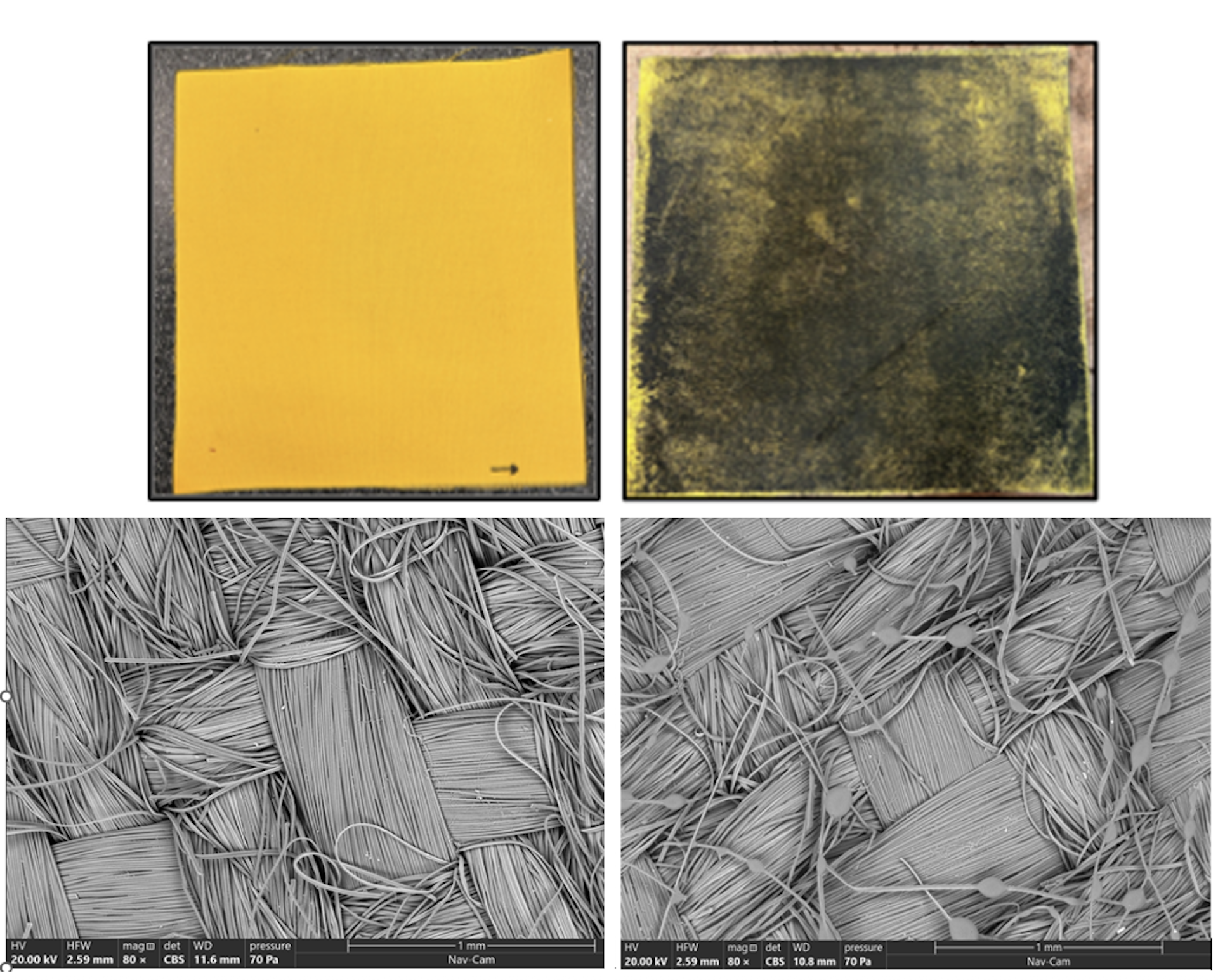
We found that ultrafine carcinogenic smoke particles could travel through many of the fabrics the firefighters were wearing, meaning it could reach their skin.
Highly breathable fabrics, which can reduce firefighters’ heat stress, are more likely than tighter weaves to allow particles to reach the skin.
However, researchers have found that rough fabrics, because of their irregular surfaces and higher friction, can trap and hold ash and smoke particles, preventing them from moving through the material.
Features such as surface roughness and protruding fibers create more sites where particles can stick to the outer surface rather than passing through. There are drawbacks: Contaminants can also accumulate on the rougher surface, meaning they may require better cleaning procedures to avoid continuing exposures.
There can also be a trade-off in comfort if increasing roughness and density reduces airflow, meaning heat can’t escape as easily.
Firefighter clothing is commonly made from heat-resistant fibers such as Kevlar, Nomex, PBI and flame-retardant cotton. Often, this combination of heat resistance and protection against liquid hazards, such as fuels used in drip torches, has been achieved through the use of PFAS – per- and polyfluoroalkyl substances, also known as “forever chemicals” because they linger in the environment. However, PFAS are a growing concern for human health.
While some manufacturers are working to both improve their designs and remove PFAS from the fabric, most still focus primarily on thermal protection rather than particle filtration when it comes to design.
My team is working on integrating filtration into the fabric through the material’s structure and through the use of advanced layers within the fabric, including smart fabrics and nanofabrics.
Smart fabrics and nanofabrics are textiles engineered at very small scales to interact with particles and chemicals. Nanofabrics, for example, have extremely thin fibers and very small pores that can capture fine and ultrafine particles more effectively than typical fabrics do.
They can prevent chemical transmission by physically blocking particles as well as capturing chemicals on high-surface-area materials, such as activated carbon or graphene. At the same time, they remain breathable because their porous structures allow air and moisture vapor to pass through while stopping harmful particles.
We have been experimenting with multilayer systems with nanofiber filters, nanocoatings or nanocomposites that can combine filtration, the ability to capture particles and comfort.
Using techniques such as electrospinning, which uses an electric charge to create extremely thin fibers and control their diameter and the fabric structure, we can essentially tune the fabric for ideal levels of protection and breathability.
The goal is to create fabrics that not only block particles but also capture and neutralize them, while still maintaining airflow and usability in real wildfire conditions.
Wildland firefighters risk their lives to keep communities safe. They deserve gear that can keep them safe, as well.
This article is republished from The Conversation, a nonprofit, independent news organization bringing you facts and trustworthy analysis to help you make sense of our complex world. It was written by: Sumit Mandal, Oklahoma State University
Read more:
Yellow jerseys of the fireline: A day fighting wildfires can require as much endurance as riding the Tour de France
Breathing wildfire smoke can affect the brain and sperm, as well as the lungs
Wildfire smoke is linked to thousands of premature deaths every year – here’s why and how to protect yourself
Sumit Mandal receives funding from the Oklahoma Agriculture Experiment Station and College of Education and Human Science at Oklahoma State University for research on this topic.







Comments