Sports
/ArcaMax
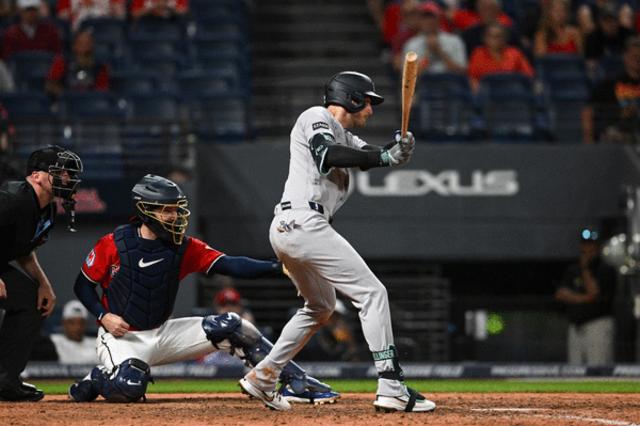
Yankees' Cody Bellinger investment was already paying dividends before Aaron Judge's injury
Aaron Boone was working out of his office at Yankee Stadium when pitching coach Matt Blake relayed the biggest news of the... Read More
Featured Stories
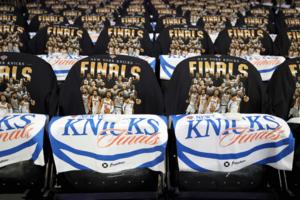
Here's what Knicks fans spent to attend NBA Finals Game 3 – and why
NEW YORK — For many of the New York Knicks fans who attended Game 3 of the NBA Finals on Monday night, buying tickets was a waiting game.
The first Finals game at Madison Square Garden in 27 years commanded historic ...Read more
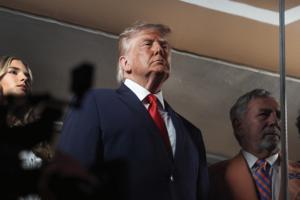
Trump booed by NYC fans during Knicks NBA Finals Game 3 at MSG
NEW YORK — President Donald Trump, the first sitting president to attend an NBA Finals game, got a chilly reception from the home crowd in Monday’s Game 3 matchup between the New York Knicks and San Antonio Spurs.
...Read more
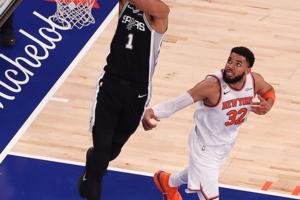
Victor Wembanyama bounces back with huge Game 3, leads Spurs to win over Knicks
NEW YORK — Victor Wembanyama knew his misses and miscues cost the San Antonio Spurs in Game 2 of the NBA Finals.
He was uncharacteristically passive for much of that game, while his back-breaking bad pass and foul of ...Read more
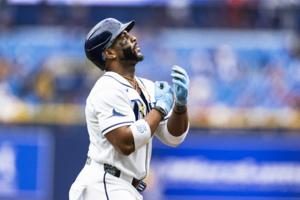
Rays pitch well in team effort, combine muscle and hustle, beat Red Sox
TAMPA, Fla. — The Tampa Bay Rays got back Monday to some of what worked earlier this season, piecing together a well-pitched game (by six relievers) and scoring just enough runs in different ways to also get back to ...Read more

Marcus Hayes: Trump crashes the NBA Finals and creates chaos at Madison Square Garden
NEW YORK — There were 66 New York Police Department vehicles and two garbage trucks acting as barriers parked around the corner of 33rd Street and 8th Avenue. Forty-three of the vehicles, including 35 motorcycles, were ...Read more
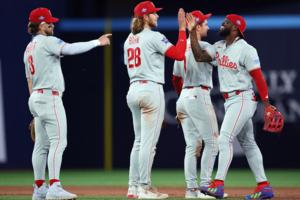
Cristopher Sánchez strikes out 10 as the Phillies top Blue Jays
TORONTO — Cristopher Sánchez glanced at the Phillies dugout and signaled, one more.
He was already at 101 pitches in the seventh inning, and Orion Kerkering had already warmed up in the bullpen. The Toronto Blue Jays ...Read more
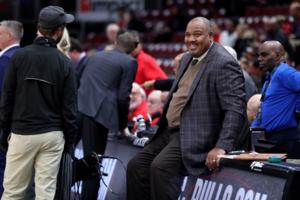
Additional testing required to confirm Bulls broadcaster Stacey King's cause of death
CHICAGO — As condolences pour in for Stacey King, officials say it could take weeks to confirm the Chicago Bulls broadcaster and former player’s cause of death.
King was pronounced dead just after 8:30 a.m. Sunday in ...Read more

Ed Graney: You want crazy? Keep watching this Stanley Cup Final.
LAS VEGAS — Crazy. Go ahead. Use the word. It best describes what this Stanley Cup Final has been.
How it has played out. All that has occurred.
The swings back and forth. The ups and downs. The blown leads and ...Read more

Justin Pelletier: Faced with Stanley Cup Final deficit, Hurricanes must now embody Southern resilience
LAS VEGAS — There’s more Southern charm in Las Vegas than ever these days. There’s a new Bojangles on the Strip, offering all the same biscuits and sandwiches and chicken we’re used to in North Carolina.
Around ...Read more
Josh Naylor's go-ahead grand slam propels Mariners past Orioles
BALTIMORE — Another new city, another new fanbase for Josh Naylor to aggravate.
This time, Naylor’s antics all happened with a single swing when he launched a go-ahead grand slam in the fifth inning to lift the ...Read more
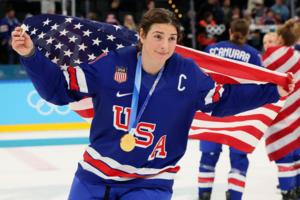
Source: Las Vegas PWHL team lands 1st-round pick from Detroit for Hilary Knight
LAS VEGAS — PWHL Las Vegas has executed its first significant trade as a franchise, and it involves one of the best players in the world.
The team is acquiring a first-round pick in next week’s draft from expansion ...Read more
Chiefs set to bring back cornerback L'Jarius Sneed, source says
KANSAS CITY, Mo. — The Kansas City Chiefs are signing cornerback L’Jarius Sneed, a source told The Kansas City Star.
Sneed, 29, originally entered the league as a fourth-round pick by the Chiefs in the 2020 NFL draft....Read more
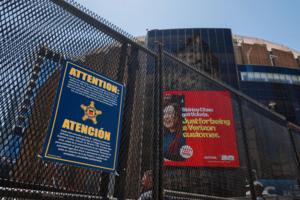
Greg Cote: Trump at NBA Finals Game 3 intrudes on New York fans' epic night
President Donald Trump’s national approval ratings are historically low for any number of reasons we won’t detail here. I try very hard to “stick to sports” in this space, though Trump himself makes it difficult by...Read more

Midtown around Madison Square Garden goes on lockdown for Trump visit to Knicks' NBA Finals game
NEW YORK — The area around Madison Square Garden was locked down starting at 4 p.m. Monday to thwart any threats as President Donald Trump watches the Knicks play the NBA Finals Game 3 — laying the groundwork for ...Read more
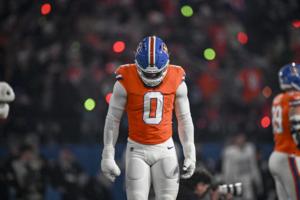
Broncos' Jonathon Cooper pleads not guilty in domestic violence case, intends to go to trial
DENVER — Denver Broncos outside linebacker Jonathon Cooper pleaded not guilty to domestic violence charges in Douglas County court on Monday, setting plans for a July jury trial.
Cooper, 28, and his girlfriend were ...Read more

NYC Mayor Mamdani paid $1,000 for standing-room-only ticket to Knicks Game 3
NEW YORK — Mayor Zohran Mamdani revealed that he paid $1,000 for a standing-room-only ticket to see the New York Knicks play their first Finals home game on Monday night.
Madison Square Garden sells off a limited number...Read more

Midtown around Madison Square Garden goes on lockdown 4 pm Monday for Trump visit to Knicks' NBA Finals game
NEW YORK — The area around Madison Square Garden will be locked down starting 4 p.m. Monday to thwart any threats as President Donald Trump watches the Knicks play the NBA Finals Game 3 — creating the possibility of ...Read more

Reimagined Tavern in Denver has a big stake in Rockies' success
DENVER — From their loft in LoDo, diehard Rockies fans Jeff and Ashley Moerke can peek into Coors Field. They often assess the size of the crowd.
Jeff, a Colorado native, began attending Rockies games as a kid growing ...Read more
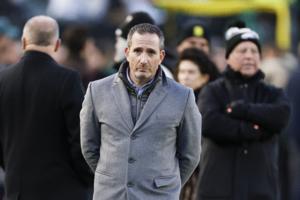
Marcus Hayes: Don't get it twisted: A.J. Brown, like Carson Wentz, betrayed Philadelphia and his Eagles teammates
PHILADELPHIA — A.J. Brown now is a Patriot, an ironic misnomer since he’s such an obvious traitor.
Philadelphians generally seem relieved that Brown’s diva act no longer will be a distraction for a perennial title ...Read more
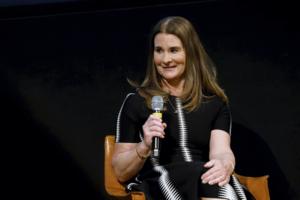
Matt Calkins: Melinda French Gates strengthens One Roof Sports' bid to revive Sonics
SEATTLE — As Penny Lane from "Almost Famous" would say — it's all happening.
One of the country's great financial whales now swims at Seattle Center.
Earlier in the week, it was announced that billionaire ...Read more
Inside Sports
Popular Stories
- Marcus Hayes: Don't get it twisted: A.J. Brown, like Carson Wentz, betrayed Philadelphia and his Eagles teammates
- Kristian Winfield: Victor Wembanyama bailed the Knicks out once, but he won't do it again
- Matt Calkins: Melinda French Gates strengthens One Roof Sports' bid to revive Sonics
- Midtown around Madison Square Garden goes on lockdown 4 pm Monday for Trump visit to Knicks' NBA Finals game
- Ed Graney: Brayden McNabb is ultra tough, as are the Golden Knights
Comics