Frankfurt -- No Longer Bankfurt
Published in Rick Steves' Europe
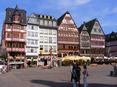
Cosmopolitan Frankfurt, while low on Old World charm, offers a good look at today's no-nonsense, modern Germany. If you're a budget traveler, you'll likely fly into or out of this major hub for discount airlines.
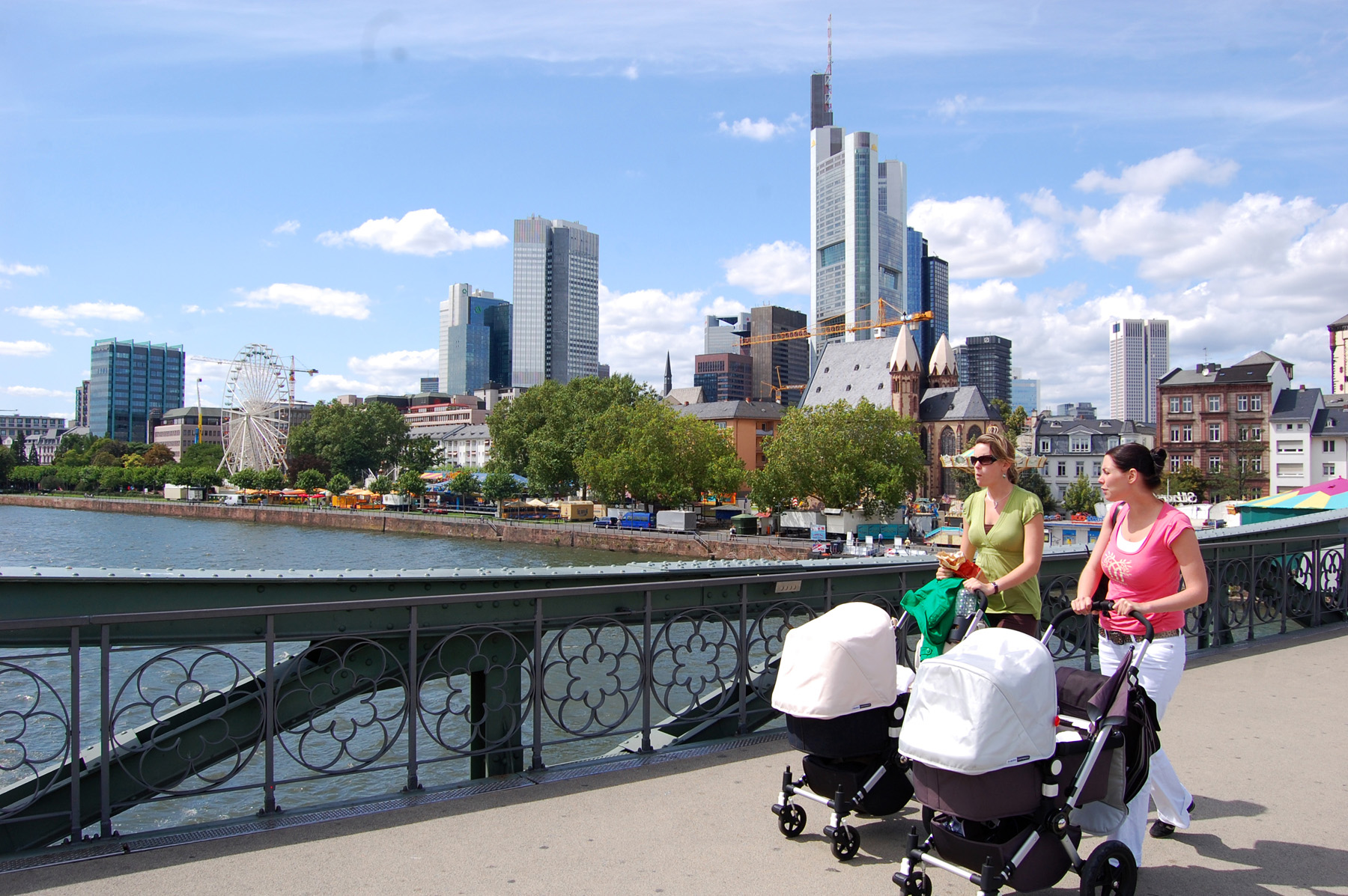
With its forest of skyscrapers perched on the banks of the Main River, Frankfurt has been dubbed Germany's "Mainhattan." Its banking district includes the twin towers of Deutsche Bank, the Euro Tower (home of the European Central Bank), and the headquarters of Commerzbank, designed by Norman Foster (of Berlin Reichstag fame). This 985-foot skyscraper has nine winter gardens spiraling up its core and windows that actually open. It's considered the first ecological skyscraper -- radically "green" when it opened in 1997.
If you arrive in Frankfurt by train, you won't be impressed. The area near the station is seedy. But the Metro quickly whisks you to top museums and charming squares.
In the 1980s, Frankfurt decided that it wanted to buck its "Bankfurt" image. It went on a culture kick and devoted 11 percent of the city budget to the arts and culture. The result: Frankfurt has become a city of art. Nine museums in striking buildings line the Main River -- including museums on architecture, film, world cultures, and the great European masters.
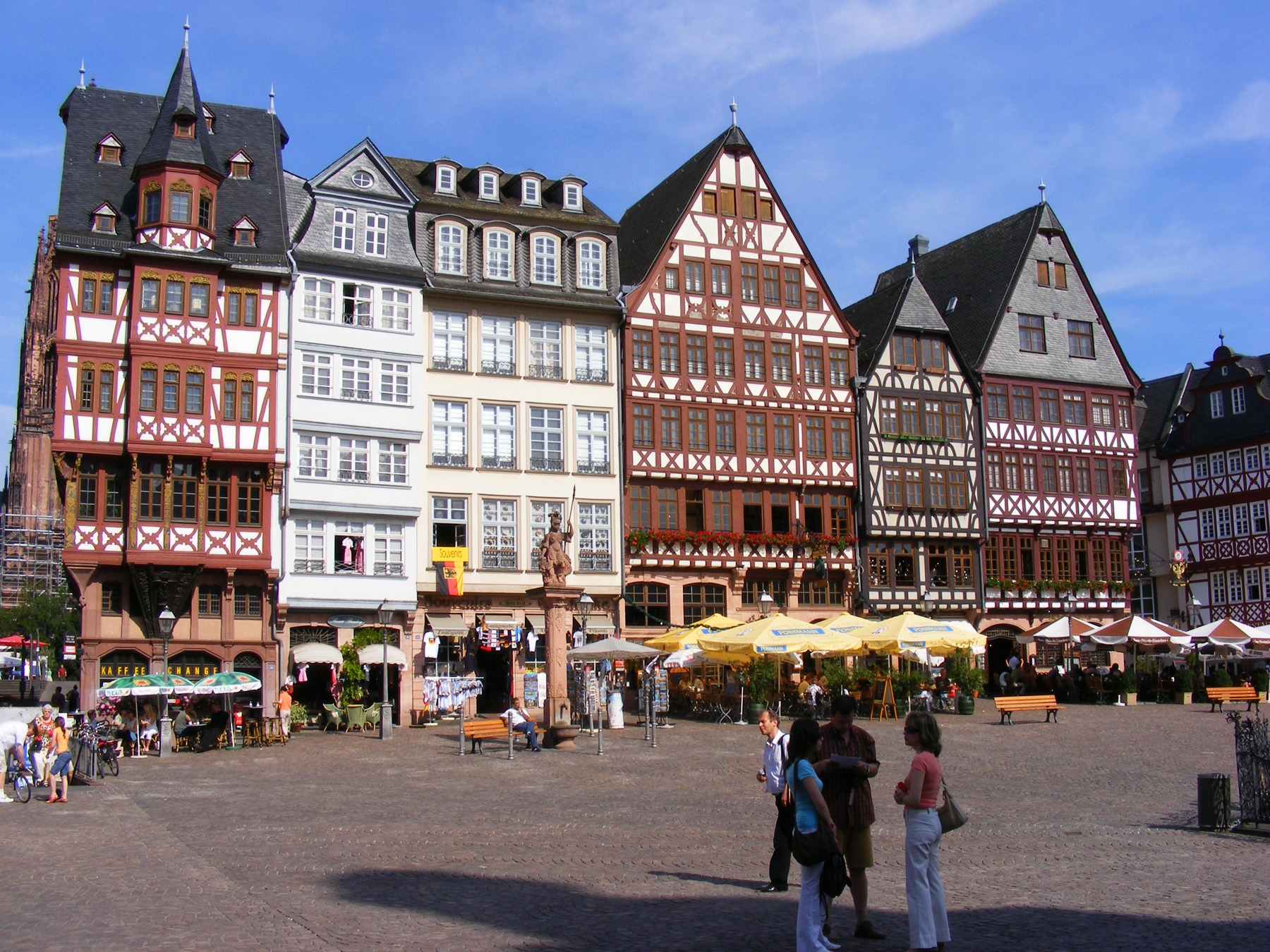
Many of the city's historic sights are clustered around Romerberg, the main square. The City Hall houses the Imperial Hall, where Holy Roman emperors celebrated their coronations. The cute row of half-timbered houses (rebuilt in 1983) opposite City Hall is typical of Frankfurt's quaint old center before the square was destroyed in World War II. From Christmas markets to violent demonstrations, this square is the heart of Frankfurt.
Saalgasse, literally "long hall street," just off the main square, offers a perspective on pre-WWII Frankfurt. In the 1990s, famous architects from around the world were each given a ruined house on this street and asked to design a new building to reflect the structure that stood there before the war. The result is a lane of postmodern buildings that echo their higgledy-piggledy predecessors.
For another before-and-after experience, visit St. Bartholomew's Cathedral, the coronation site for 10 Holy Roman emperors from 1562 to 1792. Before the bombs came, everything of value was moved to safety. But the delightful, 15th-century, red-sandstone Chapel of Sleeping Mary was too big to move, so it was fortified with sandbags. The altarpiece and the fine stained glass survived. The rest of the cathedral was destroyed in the war, rebuilt, and reopened in 1955.
Frankfurt makes an easy half-day stop for travelers. Planning to sleep here is a gamble, since the city's numerous trade fairs send hotel prices skyrocketing -- a $100 double can suddenly shoot up to $400 (to avoid the fairs, visit www.messefrankfurt.com, select "The Company," "Publications," then "Calendar of Trade Fairs").
If you stay in Frankfurt, you won't be the only notable the city has hosted. At Goethe House, the birthplace of Johann Wolfgang von Goethe -- scientist, minister, poet, lawyer, politician and playwright. The house is furnished as it was in the mid-18th century, when the boy destined to become "the German Shakespeare" grew up here.
Frankfurt, the birthplace of Anne Frank, had a thriving Jewish population until the rise of the Nazis in the 1930s. The city is also the hometown of the wealthy Rothschild family. Born in the Frankfurt ghetto in 1744, Mayer Rothschild went from being a pauper to the richest banker in the world. His five sons set up business in Rome, London, Paris and Vienna, and in two generations the Rothschild banking dynasty was established. For more on Frankfurt's Jewish population, visit the city's fascinating Jewish Museum, housed in the former Rothschild Palace.
When you're done sightseeing and ready to unwind, go to Frankfurt's apple-wine pub district. The cobbled, cozy Sachsenhausen neighborhood is both a well-heeled residential area and an eating-and-drinking zone, enjoyed by tourists and Frankfurters alike. More than a hundred characteristic apple-wine pubs have taken root here (alongside plenty of other options).
Apfelwein, drunk around here since Charlemagne's time 1,200 years ago, became more popular in the 16th century, when local grapes suffered from disease. Apple wine is about the strength of beer (5.5 percent alcohol), and is served spiced and warm in winter, cold in summer. To complement your traditional drink with a traditional meal, order Frankfurt sausage or pork chops and kraut.
From the seedy to the sublime, from Goethe to apple wine, even two or three hours in Frankfurt leaves you with some powerful impressions. You'll have seen 21st-century Germany, beyond the country's cliches of old castles and cute, cobbled squares. For years, Frankfurt was a city to avoid ... but today, its energy makes it worth a look.
========
Rick Steves (www.ricksteves.com) writes European travel guidebooks and hosts travel shows on public television and public radio. E-mail him at rick@ricksteves.com, or write to him c/o P.O. Box 2009, Edmonds, Wash. 98020.
(c)2008 RICK STEVES DISTRIBUTED BY TRIBUNE MEDIA SERVICES, INC.





Comments