In Denmark Even The Gravestones Are Content
Published in Rick Steves' Europe
While Copenhagen is a thriving metropolis, when you travel out into the Danish countryside, you find yourself saying "cute" more than you know you should. When I'm in the Netherlands, I have a running joke with my guide friends. We say, "Everything's so ... Dutch." Now, in Denmark, I'm saying, "Everything's so ... Danish."
Denmark is, simply, cute. Travelers find the society itself is the focus of their "sightseeing." The place feels like a pitch-'n-putt course sparsely inhabited by happy, blonde Vulcans. Poll after poll lists the Danes as the most contented and happiest people on the planet.
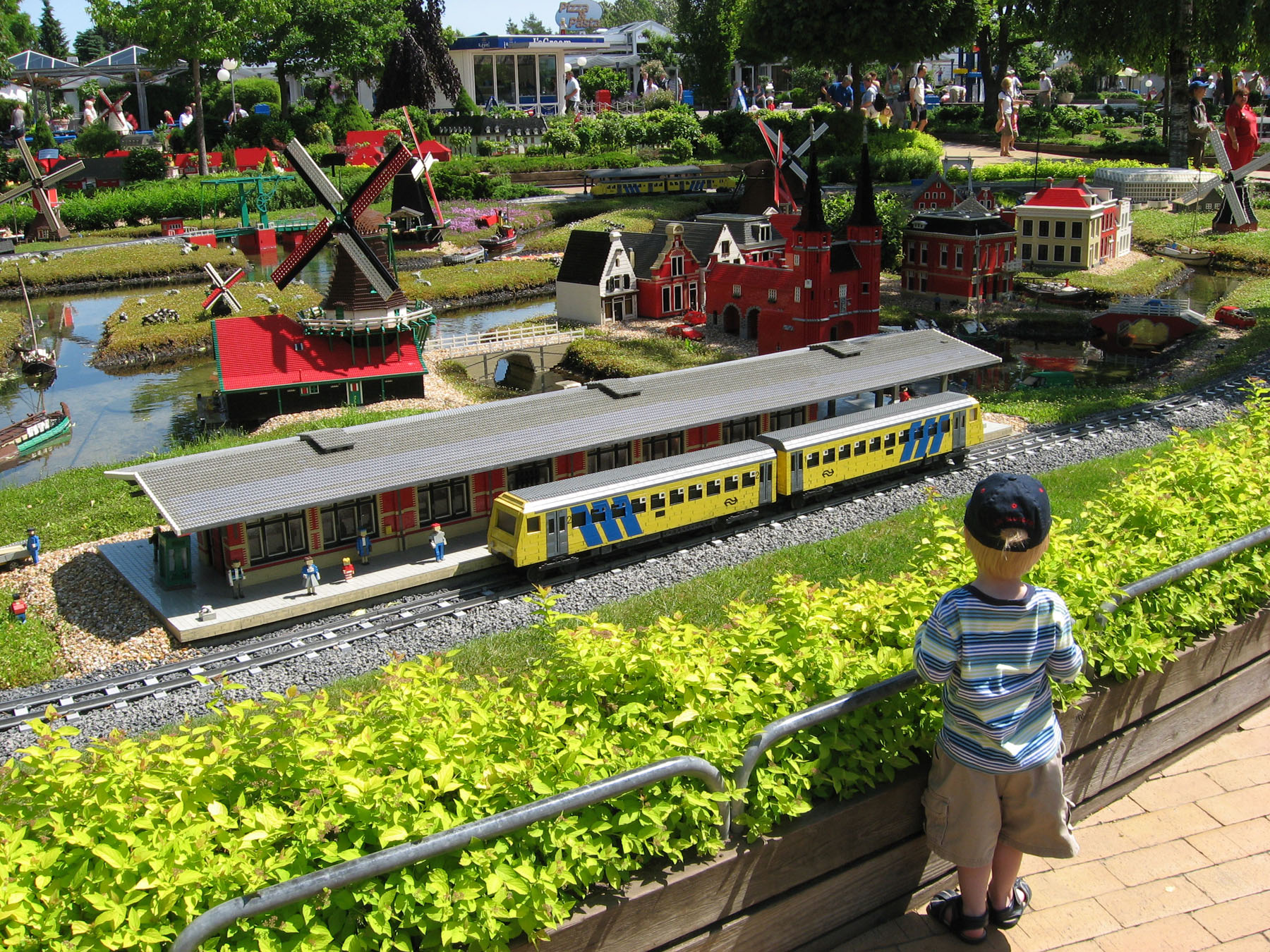
The local Disneyland -- Legoland -- is a wildly popular place featuring 58 million Lego bricks built into famous landmarks from around the world. (They claim if you lined them all up, the bricks would stretch from here to Italy.) The place is crawling with adorably cute, ice cream-licking, fair-haired children, but even with the children full of sugar, Legoland is so mellow. Kids hold their mothers hands, as they learn about the Lego buildings or smile contentedly as they whip around on the carousel.
In the middle of the countryside the newly paved roads are lined with perfectly smooth bike lanes -- one for each direction. Even out here, there are more bikes than cars. No one's uptight. If we get into a little traffic jam -- everyone takes it in stride. Damn those Danes.
I've been wondering how the Danes pull it off. I think their success relates to handling the "free rider" problem through their social contract. Danes seem to keep in mind the consequences of free riders. (Basically: if I do it, I can get away with it, but if everyone does it, the system will collapse.) They do things considering what would happen to their society if everyone cheated on this, sued someone for that, took advantage of that technicality, freeloaded here, or ignored a rule there.
Europeans trade off "individual-ism" for "social-ism." The Danes seem to take it to an extreme. To be honest, I don't know how well I'd fit in here. But I am intrigued. Danes are famous for not jaywalking. At 3 a.m. they still stop for a red light, even if there's no traffic. When I jaywalk anywhere, I do so thinking people will appreciate my lead and follow me. When I jaywalk in Denmark, Danes look at me like I'm a bad influence on the children.
People laugh politely when I ask if they speak English, responding, "Of course I do." Conversation flows easy. Here are a few comments I've heard:
-- "In Denmark you have to work quite hard to find a crack to fall through. A few people with alcohol problems manage to be homeless. Yes, we are the most contented people."
-- "We pay on average 50 percent taxes -- yes, worker or big shot, we pay about 50 percent. Of course, we get lots for that. We've had national health care since the 1930s. We know nothing else. If I don't like the shape of my nose, I pay to fix that. But all else is taken care of."
-- "All education is free. And university students get $800 a month for living expenses for up to six years. When there is a student demonstration, it's generally for more pocket money."
-- "We Dane's believe a family's economic status should have nothing to do with the quality of the health care or the education their children receive. I believe in the United States you pay triple per person what we pay for health care. Your system may be better for business, but not better for service."
In Denmark, things are so costly that it seems people consume more sparingly. The society is designed in a way that encourages people to use less, chew slower, and just sip things. A glass of beer costs $10. A cup of coffee can cost $7 -- and free refills are unheard of. I think Danes know they could make more money if they embraced the "big gulp" track and started super-sizing things. But the collective decision is not based just on what's good for the economy. A Costco economy is just not Danish.
When I saw a tombstone store with "Tak for Alt" ("thanks for everything") pre-carved into the stones, I figured it was a message from the dead person after living a very blessed life in Denmark. But I asked a Dane and learned that it means something else. It is a message from the living bidding their loved one farewell (like "rest in peace"). Still, I think when a Dane dies, they (more than their loved ones) should say, "Tak for Alt."
========
Rick Steves (www.ricksteves.com) writes European travel guidebooks and hosts travel shows on public television and public radio. E-mail him at rick@ricksteves.com, or write to him c/o P.O. Box 2009, Edmonds, Wash. 98020.
(c)2008 RICK STEVES DISTRIBUTED BY TRIBUNE MEDIA SERVICES, INC.






Comments