Religion
/Health
Pope urges justice for clergy abuse victims during Spain visit
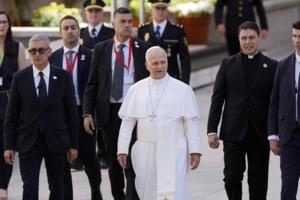
Pope Leo XIV called for justice for victims of sexual abuse by Catholic clergy during a trip to Spain, where he plans to meet with those who have suffered.
“Faced with this scourge, the ecclesial community is called to respond with listening, truth, justice, reparation and an ever-more determined commitment to prevention and a culture of ...Read more
Pope Leo isn't backing down from criticism of the war in Iran
On the papal plane to Spain, Leo XIV was peppered with questions from his latest views on global conflicts to which team he’s rooting for in the World Cup football tournament.
His tone was playful when drawn into sporting competition, but serious when asked about his disagreement with the U.S. administration about its war on Iran.
He was ...Read more
Rebuilding underway at Michigan's Temple Israel after attack, but impact lingers
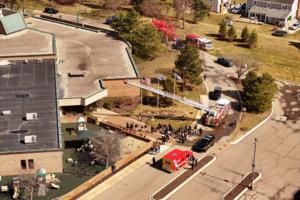
WEST BLOOMFIELD TOWNSHIP, Mich. — Except for the stained-glass windows, much of the inside of Temple Israel is now unrecognizable.
Flooring that was once inside the large West Bloomfield synagogue has been removed, revealing the building's concrete foundation. The seats inside the sanctuary are gone, too. And pipes usually hidden in the ...Read more
Commentary: Pope Leo XIV's apology for slavery is a start. Now the church must seek atonement
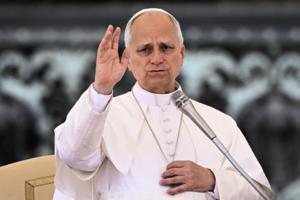
Pope Leo XIV’s apology for the Roman Catholic Church’s sins of slavery is long overdue. With that apology must come atonement.
Last week, Leo apologized for the Holy See’s role in legitimizing slavery and for having failed to condemn it for centuries, calling the Vatican’s record “a wound in Christian memory, one from which we cannot ...Read more
More megachurches want to be your alma mater
In the heart of the Bible Belt, a small Methodist college graduated its final class in May 2024, shutting its doors after 168 years.
Birmingham-Southern College in Birmingham, Alabama, was a Christian private liberal arts school that counted among its graduates members of Congress, famous musicians, Pulitzer Prize winners and the former ...Read more
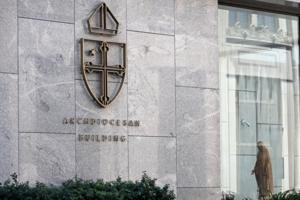
Plaintiffs hope state lawsuits spur Baltimore's Catholic church to agree to larger settlement
BALTIMORE — The Survivors Committee wants some of its more prominent sexual abuse claims against the Archdiocese of Baltimore moved from federal bankruptcy court to Maryland civil court — a move that, if approved, would increase the church’s liability exposure by millions of dollars.
Testimony began Tuesday on the committee’s request to...Read more
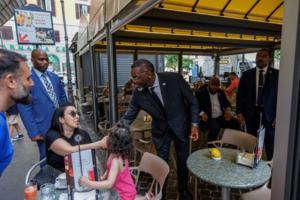
Mayor Brandon Johnson predicts revival of faith in Chicago following Vatican trip
ROME — Before Brandon Johnson was mayor of Chicago, he was a pastor’s kid.
That was a label he once again applied following his much-hyped meeting with Pope Leo XIV last week, one that he has played up to fortify how constituents connect his spiritual roots with his progressive politics.
“Who would have thought that a middle school ...Read more
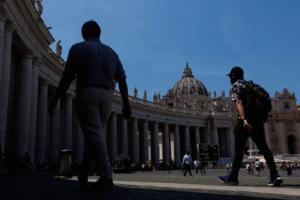
Mayor Brandon Johnson floats Chicago landmark named for Pope Leo XIV
ROME — Fresh off the glow of his summit with Pope Leo XIV at the Vatican, Mayor Brandon Johnson signaled Friday that Chicago could be due for another street or landmark christened after a pontiff.
In a sit-down interview with the Tribune, Johnson said the first American pope deserves to be formally recognized in his hometown, though he said ...Read more
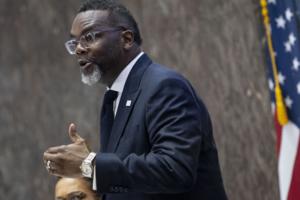
What Chicago Mayor Brandon Johnson brought Pope Leo XIV, including a White Sox hat and sanctuary city pin
Chicago Mayor Brandon Johnson called his meeting with Pope Leo XIV “a tremendous honor,” referring to himself as “someone who has relied upon my faith to guide me in decisions that I make, and even when those decisions are not always as well received.”
In May 2025, Robert Francis Prevost — born in Bronzeville and raised in south ...Read more
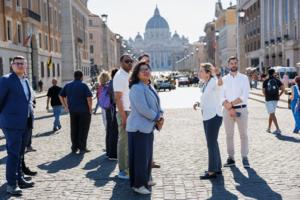
Chicago Mayor Brandon Johnson invites Pope Leo XIV to officiate mass in Grant Park
ROME — Mayor Brandon Johnson invited Pope Leo XIV to celebrate Mass in Grant Park next year during a much-awaited meeting Thursday afternoon in Vatican City, where the son of a pastor and chief executive of the pope’s hometown said the two bonded over their advocacy for migrants, descendants of slavery and the city of Chicago — intracity ...Read more
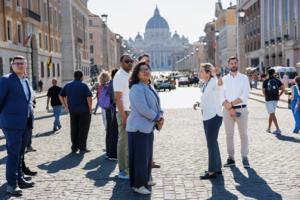
Chicago Mayor Brandon Johnson invites Pope Leo XIV to officiate mass in Grant Park
ROME — Mayor Brandon Johnson invited Pope Leo XIV to Grant Park next year and delivered him a key to the city during their much-awaited meeting Thursday afternoon in Vatican City, where the son of a pastor and chief executive of the pope’s hometown was surely eager to play up their shared roots.
After emerging from the historic Vatican ...Read more
Mayor Brandon Johnson heads to meet Pope Leo XIV with Chicago political allies
ROME — The Chicago delegation traveling with Mayor Brandon Johnson to meet Pope Leo XIV includes some of his closest allies, as well as business owners who are perhaps looking to get closer to both leaders during the splashy odyssey to Vatican City this week.
Johnson’s team revealed the 46-member delegation including progressive political, ...Read more
White Sox merch, giardiniera among Chicago-themed gifts delegation to present Pope Leo XIV
ROME — A White Sox-emblazoned kippah. A Chicago sanctuary city pin. Bottled giardiniera. But not a Cubs hat.
Those are some of the several personal items Chicago leaders have said they will hand-deliver to Pope Leo XIV on Thursday, when Mayor Brandon Johnson will lead a delegation to the Vatican in his biggest international trip so far.
The ...Read more
Pope says AI should be disarmed to avoid dominating humanity
Pope Leo XIV said artificial intelligence should be “disarmed” to protect humanity from its dangers, adding his voice to a heated debate over the extent to which governments should regulate a technology that is reshaping the world.
In a landmark address to the Catholic Church, which included a video presentation with images of the ...Read more
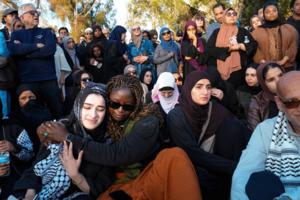
It was a beacon of hope and faith in San Diego. Attack leaves a community seeking answers
The San Diego Islamic Center is typically a bustling crossroads, with kids in school, the faithful coming to pray and others simply taking part in cultural activity.
But these days, the site is busy for another, much darker reason. The community is mourning. An ever-growing pile of bouquets of lilies, daisies and sunflowers and notes sits at ...Read more
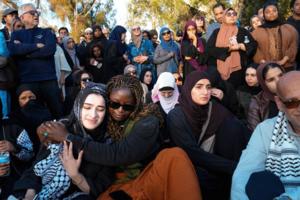
Social media, manifesto of San Diego mosque shooters rooted in white nationalism
The gunmen who killed three people at the San Diego Islamic Center left behind a 75-page document that preached hate, anti-Islam and antisemitism and promoted violence and chaos, law enforcement sources familiar with the investigation told the Los Angeles Times.
The manifesto was titled “The New Crusade: Sons of Tarrant” and made reference ...Read more
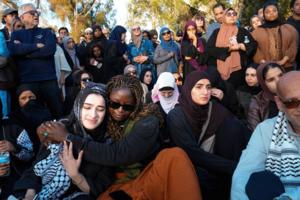
San Diego attackers' hate manifesto targeted many groups, sought 'destruction of political system,' sources say
The gunman who killed three people at the San Diego Islamic Center left behind a 75-page document that preached hate, anti-Islam and antisemitism and promoted violence and chaos, law enforcement sources familiar with the investigation told the Los Angeles Times.
The manifesto was titled “The New Crusade: Sons of Tarrant” and made reference ...Read more
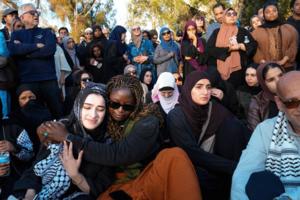
San Diego attackers' hate manifesto targeted many groups, sought 'destruction of political system,' sources say
The gunman who killed three people at the San Diego Islamic Center left behind a 75-page document that preached hate, anti-Islam and antisemitism and promoted violence and chaos, law enforcement sources familiar with the investigation told the Los Angeles Times.
The manifesto was titled “The New Crusade: Sons of Tarrant” and made reference ...Read more
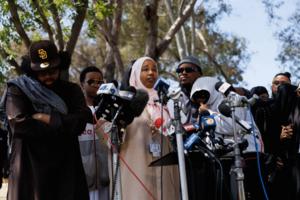
'He was my protector': Daughter of San Diego mosque attack victim recalls his selfless heroism
SAN DIEGO — To San Diego and the world, Amin Abdullah, 51, is the heroic San Diego Islamic Center security guard who stood between children, teachers and death. He alerted the school of the threat just before he was fatally shot by two San Diego teenagers in what is being investigated as a hate crime.
But to Hawaa Abdullah, Amin Abdullah was ...Read more
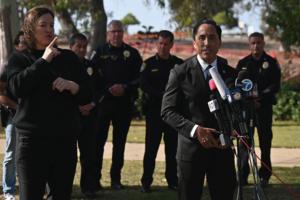
San Diego Islamic Center suspects were self-radicalized, left manifesto behind, officials say
SAN DIEGO — The two gunmen who opened fire at a San Diego mosque on Monday, killing three people, had met online, where they were radicalized and left behind a hate-filled manifesto, authorities revealed Tuesday.
According to a witness, the pair were “fully armored” and rushed toward the entrance with handguns and rifles before a ...Read more
Popular Stories
- Pope urges justice for clergy abuse victims during Spain visit
- Pope Leo isn't backing down from criticism of the war in Iran
- Commentary: Pope Leo XIV's apology for slavery is a start. Now the church must seek atonement
- Rebuilding underway at Michigan's Temple Israel after attack, but impact lingers
- NYPD bulking up patrols around NYC mosques after San Diego mass shooting
Comics