Recipes
/Home & Leisure
Dessert -- Apple Apricot Pie
1 9-inch pie crust
4 fresh apricots, cored and sliced
3 Granny Smith apples, cored and sliced
Three quarters cup sugar
1 tsp. cinnamon
3 Tbsp. flour
2 Tbsp. lemon juice
One half tsp. nutmeg
Crumb topping
Two thirds cup flour
1 tsp. cinnamon
One quarter cup brown sugar
2 Tbsp. ...Read more
Main Course -- Shrimp Stir-Fry
One quarter cup olive oil
6 cloves garlic, minced
1 tsp. paprika
1 tsp. ground cumin
Juice from 1 orange
1 Tbsp. orange zest
1 Tbsp. lemon zest
3 pounds shrimp, peeled
Juice of 1 lemon
One third cup cilantro, finely chopped
Heat oil in a skillet, add garlic and stir-fry until garlic begins ...Read more
Salad -- Watercress and Endive Salad with Orange Vinaigrette
3 cups watercress, washed with large stems removed
3 cups Endive, washed and sliced
1 cucumber, sliced
1 tomato, chopped
1 red onion, sliced
One quarter cup white wine vinegar
One third cup fresh orange juice
Two thirds cup olive oil
One half tsp. dry mustard
1 tsp. dried tarragon
Salt ...Read more
Appetizer -- Chicken Sate
2 pounds boneless chicken cut into 1 inch pieces
One third cup orange juice
3 Tbsp. soy sauce
2 cloves garlic, minced
1 Tbsp. Sesame oil
2 Tbsp. extra virgin olive oil
One half tsp. ground ginger
Combine all ingredients and allow chicken to marinate for several hours or overnight. Place chicken on skewers ...Read more
Dessert -- Oatmeal Raisin Cookies
2 cup rolled oats
1 cup all-purpose flour
Two thirds cup whole-wheat flour
1 Tsp. ground nutmeg
1 Tsp. ground cinnamon
One half tsp. salt
One half tsp. baking soda
1 cup brown sugar
4 oz. cream cheese, softened
One quarter cup molasses
One quarter cup canola oil
One half cup ...Read more
Main Course -- Ginger Chicken
One half cup chicken broth
One quarter cup soy sauce
2 Tbsp. sugar
One half cup water
2 tsp. vegetable oil
1 Tbsp fresh ginger, grated
6 boneless chicken breasts
In a saucepan, heat chicken broth, soy sauce, sugar, and water until boiling. Reduce heat to low and simmer. Meanwhile, in a skillet heat oil and ...Read more
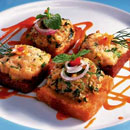
Appetizer -- Bruschetta with Tomatoes and Kalamata Olives
1 large loaf Italian Bread
1 clove garlic, minced
8 ripe plum tomatoes, chopped
One third cup Kalamata olives, pitted and chopped
One quarter cup fresh parsley, chopped
One quarter cup olive oil
2 tsp. ground oregano
Salt and pepper to taste
Slice bread loaf in half lengthwise. Place bread on a baking ...Read more
Dessert -- Streusel Pie
Filling:
1 prepared 9-inch pie crust
2 29-oz. cans of sliced peaches, drained
One third cup all-purpose flour
One half cup powdered sugar
1 tsp. cinnamon
Topping:
Three quarters cup all-purpose flour
1 tsp. cinnamon
One half cup brown sugar
One third cup butter
Combine filling ingredients ...Read more
Main Course -- Schnitzel Paniert
4 very thinly sliced pork steaks
2 eggs
One half cup milk
1 cup flour
1 tsp. black pepper
One half tsp. paprika
Peanut oil for deep-frying
Preheat oil in deep fryer to medium heat. Make a wash by blending well the eggs and milk. Mix flour, pepper and paprika and place this on a sheet of waxed paper. Dip the...Read more
Appetizer -- Beef Stuffed With Cream Cheese
One half pound thin sliced roast beef
8 oz. cream cheese, softened
1 clove garlic, minced
1 Tbsp. lemon juice
One half tsp. seasoned salt
1 Tbsp. prepared horseradish
Combine all ingredients except roast beef in a small bowl and mix well. Spread mixture over each slice of roast beef and roll up. Place seam side ...Read more
Dessert -- Peach and Macaroon Cobbler
3 cups fresh peaches, sliced
1 Tbsp. lemon juice
20 almond macaroons, crumbled
One quarter cup flour
1 cup sugar
1 tsp. cinnamon
1 egg
One quarter cup butter, melted
Place peaches in a greased 10 x 6 baking dish. Sprinkle with lemon juice followed by macaroons. Combine flour, sugar and cinnamon ...Read more
Main Course -- Crab Cakes
2 pounds backfin crabmeat
2 eggs, beaten
2 Tbsp. mayonnaise
2 Saltine crackers, crushed.
1 Tbsp. dry mustard
1 Tbsp. lemon juice
1 Tbsp. Worcestershire sauce
2 tsp. Old Bay seasoning
Salt and pepper to taste
2 Tbsp. olive oil
2 Tbsp. butter
Carefully pick through crab meat to ...Read more
Appetizer -- Oyster Spinach Bisque
1 10-oz. package frozen chopped spinach, cooked and drained
One half cup butter
1 sweet onion, chopped
2 garlic cloves, minced
1 pint select oysters, drained
2 chicken bouillon cubes dissolved in 1/3-cup hot water
2 cups light cream
One third cup flour
1 Tbsp. dry sherry
Salt and ...Read more
Dessert -- Chocolate Fudge Oatmeal Drops
2 cups sugar
One half cup milk
One half cup cocoa
One half cup butter
1 tsp. vanilla
One half cup peanut butter *
3 cups uncooked oatmeal
Combine sugar, milk, cocoa and butter in a saucepan and bring to a boil, heat for 1 minute. Remove from heat and add vanilla, peanut butter and oatmeal. Mix well and drop ...Read more
Main Course -- Sweet and Sour Salad
6 oz. pasta noodles, cooked and drained
2 stalks celery, diced
2 cucumbers, peeled, seeded and diced
2 Tbsp. fresh parsley, minced
2 carrots, peeled and julienne sliced
3 - 4 boneless chicken breasts, cooked and diced
1 and one half cups cooked ham, diced
One third cup soy sauce
One third cup ...Read more
Appetizer -- Spinach Dip
One half cup mayonnaise
One half cup milk
8 oz. sour cream
2 10-oz. packages chopped spinach, thawed and drained
1 tsp. seasoned salt
8 oz. water chestnuts, chopped
1 Tbsp. fresh dill, chopped
1 clove garlic, minced
1 tsp. fresh lemon juice
Pepper to taste
Combine all ingredients in a bowl ...Read more
Dessert -- Creamy Fruit Tart
1 9-inch graham cracker or chocolate pie crust
2 cups vanilla yogurt
1 cup whipped topping
2 ripe kiwi fruits, peeled and sliced
1 pint strawberries, hulled and sliced
2 fresh peaches, peeled, pitted and sliced
In a large bowl, combine yogurt and whipped topping. Spread evenly over piecrust and top with sliced ...Read more
Main Course -- Stuffed Rockfish
2 whole rockfish fillets with skin still intact totaling about 4 pounds
One quarter cup butter
1 small onion, chopped
3 stalks celery, chopped
2 eggs, beaten
One half tsp. dried sage
One half tsp. dry mustard
One half cup fresh parsley, chopped
2 cups plain bread crumbs
Salt and pepper to ...Read more
Appetizer -- Chilled Tomato and Dill Soup
3 cups fresh tomatoes, peeled, seeded and coarsely chopped
1 cup sour cream
One quarter cup green onions, chopped
2 Tbsp. fresh dill, chopped
Several drops of hot sauce
Salt and pepper to taste
Combine all ingredients in a food processor and process until smooth. Chill before serving. To peel tomatoes quickly and ...Read more
Dessert -- Peach and Strawberry Cobbler
1 cup fresh strawberries, sliced
1 and one half pound fresh peaches, sliced
2 Tbsp. lemon juice
1 and one half cups biscuit mix
One half cup milk
3 Tbsp. butter, melted
One quarter cup sugar
1 tsp. cinnamon
One half tsp. nutmeg
Place peaches and strawberries in a 2 quart baking dish. Drizzle ...Read more

Comics