Parents
/Home & Leisure
/ArcaMax

Lori Borgman: Someday is the most overbooked day on the calendar
Years ago, we had a financial adviser who was so young I often wondered if I should bake cookies before he came to the house — peanut butter or chocolate chip?
He once said something that I found semi-appalling. He asked if we knew the three phases of retirement. We confessed we did not. With a grin, he said, “Well, there’s go-go, slow-go...Read more

Ex-etiquette: Blending families
Q. My co-parent left and remarried soon after. His wife has three children. We have two. When it is time to pick up our children, he comes to the door with his whole new family. It throws us off. The kids are really turned off by all the expected togetherness. It hasn’t even been two years since we split. What’s good ex-etiquette?
A. ...Read more

The people who shape us: Finding meaning, healing and connection in other people
What if the story of your life isn’t really about you?
In "Other People: A Memoir and Reflections on Trauma, Connection, Meaning, and the Neuroscience of Healing," Michael S. Piraino makes a quiet but persistent case that who we become is shaped, piece by piece, by those around us. It’s a compelling premise, one he explores with emotional ...Read more
How true is your family history?
Every family has stories — the ones they tell over holiday dinners and on road trips, the ones grandparents passed down to their littles, the ones couples who are getting serious reveal to each other. And yes, certainly, some of those stories are true. But families repeat the stories they want repeated, don’t they? It’s a way of creating ...Read more
Take Control Of Social Media Usage
Q: My wife and I both actively use (and enjoy) various social media platforms. But it seems like the tech is starting to dominate our lives -- and even negatively impact our marriage. Do you have any insights?
Jim: It might sound cliche, but as in so many areas of life, the simplest solution makes the most sense: You just need to take control. ...Read more
Beyond Phones: What's Driving Kids Nuts
"Lenore, did you say you don't CARE about kids and phones?"
That's what a child psychologist just emailed me.
My response: It's NOT that I don't care about phones. It's that this is how kids are growing up (from an article I just read):
"Last week, my grandson asked permission to walk to the store 3 blocks away. His mother checked the GPS ...Read more

Family guide to new movie releases
'MASTERS OF THE UNIVERSE'
Rated PG-13 for sequences of violence/action, some suggestive material, and language.
What it’s about: A reboot of the iconic '80s cartoon made with bigger spectacle and more self-awareness.
The kid attractor factor: The fantasy/adventure setting and spectacle.
Good lessons/bad lessons: The power is within you, ...Read more

Ex-etiquette: Back in court
Q. My ex takes me back to court about three times a year. Rarely does anything change, and it costs thousands, which just frustrates me further. The court just ordered us into co-parenting classes. I don't think it will help and it will be a waste of time, but we have to do it because it is court-ordered. What's good ex-etiquette?
A. Courts ...Read more
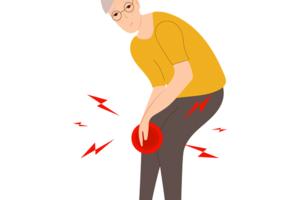
Lori Borgman: You might knee-d this column one day
Paul is my new physical therapist. He’s a British guy on YouTube. The great thing about YouTube medical care is that there’s no paperwork to fill out and your insurance is never questioned. Plus, your health care professional doesn’t know if you leave the workout to answer text messages.
PT Paul has been helping me with my trick knee. It ...Read more
Active bystandership: The small acts of courage that make a big difference
Why do some people step in when something is wrong, while others stay quiet?
It’s a question without an easy answer, but it sits at the heart of Ervin Staub’s "Evil, Goodness, and Creating Active Bystandership." And for Staub, it’s not just theoretical. It’s personal.
As a Jewish child in Hungary during World War II, Staub survived the...Read more

How far would you go for humanity?
What would you give to be a part of history? What would you trade for the good of humanity? In a contemplative journey across space and time, "Celestial Lights" poses these questions and offers a reminder that some things aren’t worth sacrificing. Author Cecile Pin crafts a story that is both touching and tragic and that examines the personal ...Read more
Teen Years Bring New Dynamics To Adoptive Family
Q: We adopted our teenage son at his birth and we've never hidden that fact from him. But recently he's become almost obsessed with the topic -- and especially his birth parents (who unfortunately did not maintain contact). If he gets upset he shouts that we aren't his "real" mom and dad. This is devastating to us; we love him so much and want ...Read more

Family guide to new movie releases
'PRESSURE'
Rated PG-13 for war violence, bloody images, some strong language, and smoking.
What it’s about: Details the tense days before D-Day when General Dwight D. Eisenhower and Scottish meteorologist James Stagg tried to accurately forecast the weather in order to ensure the invasion's success.
The kid attractor factor: This is more of...Read more

Commentary: Consider reconnecting with family. Here's how
Americans were forecast to spend a record $38 billion on Mother’s Day and $24 billion on Father’s Day gifts this year, but they can be difficult holidays for adult children given the estrangement epidemic. Just ask Britney Spears, Prince Harry, Shiloh Jolie or any number of average folks: A YouGov poll showed 38% of U.S. adults refused ...Read more
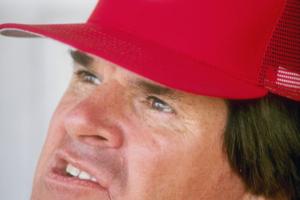
Lori Borgman: A good day to talk baseball
There’s a good chance the husband has his Cincinnati Reds ball cap surgically attached to his head. It’s that time of year.
We were in the quaint historic river town of St. Charles, Missouri, leaving a sidewalk café, when a voice yells, “PETE ROSE, JOE MORGAN, JOHNNY BENCH!”
It came from an older man, wearing a red St. Louis Cardinals...Read more

Ex-etiquette: Slow down
Q. My kid’s mom and I share our children’s time equally. My partner wants us to live together, but we’ve only been dating for six months, and I have two kids who love their mom. I’m afraid it will be confusing to live with two different women in the same role. What’s good ex-etiquette?
Answer: Slow down.
Not because your relationship...Read more

The greatest art heist in history — and the secret it may still be hiding
Among the many treasures of Saint Bavo’s Cathedral in Ghent, Belgium, is a massive altarpiece painted by the Renaissance artist Jan van Eyck. Its many panels depict an array of biblical figures, saints, martyrs, soldiers, prophets, clergy, angels and other figures attending a pastoral scene at the center, where the Lamb of God bleeds from a ...Read more

Dark magic and inner demons collide in spellbinding 'Only Spell Deep'
Supernatural themes underscore many of the current wave of popular novels. The idea that there are forces beyond our control is enticing to many readers. The new novel from Ava Morgyn, "Only Spell Deep," finds a place in the world of the supernatural that will entice readers to follow along with Jude, a witch who has left a coven, as she ...Read more
Strategies For Prioritizing Family Meals
Q: How can we make family meals a priority when we're all so busy? Our schedules are nuts. Whether I'm working from home or go to the office, I often don't finish until at least 6 p.m. Then I have to fix dinner while the hungry crew waits impatiently -- or just does their own thing.
Jim: Let's start by acknowledging that as a working mom with a...Read more
Taps for the Tap?
'Tis the season for reminders to hydrate. As if nature had never invented a way to keep us from shriveling into human raisins -- and not even the plump, juicy ones. Hard, dry, olive-pit-like raisins that insert themselves into your molars and make themselves so at home, no water flosser dares dislodge them.
A teacher once told me that parents ...Read more
Inside Parents
Popular Stories
Related Channels

America's Test Kitchen
By America's Test Kitchen

ArcaMax Chef
By ArcaMax Chef
Ask The Builder
By Tim Carter
Ask The Vet
By Dr. Lee Pickett

Celebrity Travel
By Jae-Ha Kim

Dear Monty
By Richard Montgomery
Do It Yourself Or Not
By Gene and Katie Hamilton

Eric's Autos
By Eric Peters

Everyday Cheapskate
By Mary Hunt

Focus on the Family
By Jim Daly
Georgia Garvey
By Georgia Garvey

Here's How
By

Jeff Rugg
By Jeff Rugg

Lenore Skenazy
By Lenore Skenazy

Living Space
By Kathryn Weber

My Pet World
By Cathy M. Rosenthal
Real Estate Matters
By Ilyce R. Glink and Samuel J. Tamkin

Recipes by Zola
By Zola Gorgon

Rick Steves' Europe
By Rick Steves' Europe

Taking The Kids
By Eileen Ogintz

Travel & Adventure
By Various authors

Travel Troubleshooter
By Christopher Elliott
Comics