Games
/Entertainment

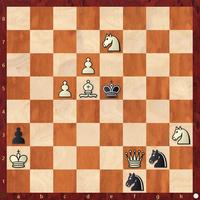
White to Play
This is a mate in two from the 1870s. Theop key first move becomes the precursor for a good many other problems. To solve it, you have to look at the Black king position. Look at where he can and can’t go. When you look at where he can go, then look at the reason the bishop and knights are where they are and what squares they’re attacking. ...
View solution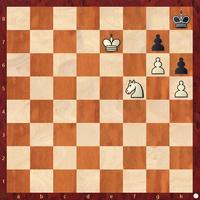
White to Play
Black wants to hide in the corner and hope that White will stalemate him by Kf7 or Kf8, so White has to come up with a different approach.
View solution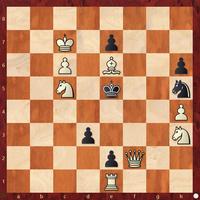
White to Play
See the threats for your opponent and you and decide on the best course.
View solution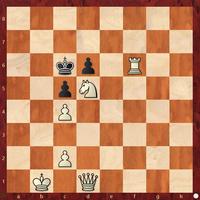
White to Play
An ingenious mate in three. One editor a long time ago wrote, “We do not remember to have ever met with a more pleasing, accurate or difficult conception. The problem contains a number of tries, and the key is obscure and surprising.” --Alain C. White
View solution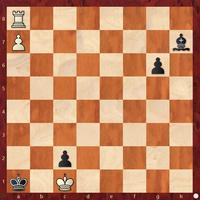
White to Play
Obviously, a rook move wins, but only one square gets a mate in three.
View solution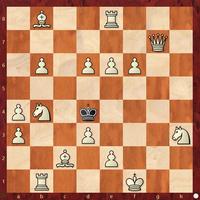
White to Play
You can’t use the excuse that you don’t have enough material! It’s a mate in two. This is an old favorite of mine, especially for kids.
View solution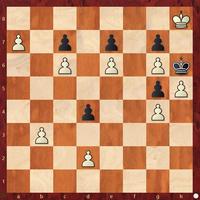
White to Play
It’s a mate in ten! Before you despair about solving such a long problem, take a good look at White’s first move because it’s the key to the whole thing. Lots of fun!
View solution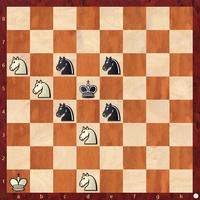
White to Play
A little light-hearted fun. White can mate, but in how many moves?
View solution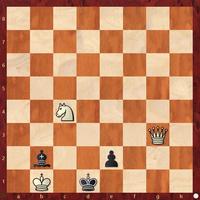
White to Play
To start off the week, here’s a two-move miniature by legendary American composer, Bob Lincoln. The right first move allows Black four legal moves as choices, but they all lead to mate on move two.
View solution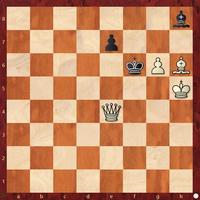
White to Play
We haven’t done a two-mover in a while. Here’s a miniature.
View solution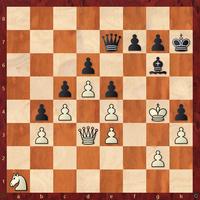
Black to Play
Here’s a position from the 2026 FIDE Men’s Candidates Tournament. Giri, as Black stuns Caruana with a mating attack.
View solution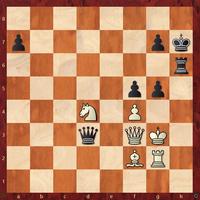
Black to Play
Here’s another position from the 2026 FIDE Women’s Candidates Tournament. At first glance Black is definitely on the ropes and waiting for a knockout, but Black has a game saving jab.
View solution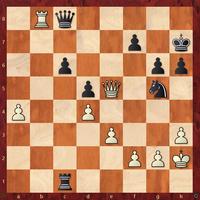
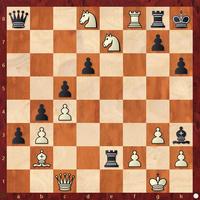
Black to Play
Hope you enjoyed the 21 instructional games which should have given you insights to all the amazing things that can happen on a chessboard. Today’s position is a case in point. Black is in dire straits here, yet she finds a way out.
View solution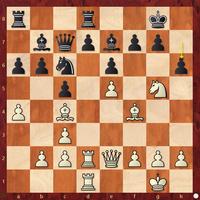
White to Play
Number 21 in our series of instructional games. Seidman - Santasiere B29 New York, 1939 1.e4 c5 2.Nf3 Nf6? (Best is 2...Nc6) 3.e5 Nd5 4.Nc3 Nxc3 5.dxc3 (White is already more mobile.) 5...b6 6.Bc4 (Also fun is 6.e6 dxe6 7.Qxd8+ Kxd8 8.Ne5 Ke8 9.Bb5+ Nd7 10.Bc6 Rb8 11.Bf4) 6...e6 7.Bf4 (Zeroing in on Black's hole on d6.)7...Qc7 8.0–0 Bb7 9....
View solution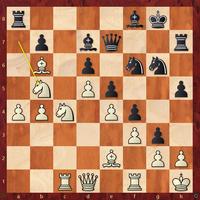
Black to Play
Number 20 in our series of instructional games. Shamkovich - Nezhmetdinov (E97)Baku, 1961
This is a wild game. The King's Indian Defense is very difficult for both sides. This game demonstrates the war between Black's pawn storm on the kingside vs. White's pawn storm on the queenside. If you play either side, it's worth looking at the notes to ...
View solution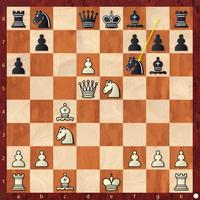
White to Play
Number 19 in our series of instructional games. This is a good one for beginners to learn from the early notes. Shilov - Razdobarin B28 1959
1.e4 c5 2.Nf3 a6 3.c3 d5! (A good idea against c3 with the Sicilian Defense.) 4.exd5 Qxd5 (The knight can't come to c3 to attack the queen, so this is good for Black. An equal game,but...) 5.d4! (White has...
View solution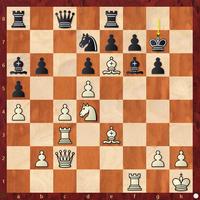
White to Play
Number 18 in our series of instructional games. Kholmov - Bannik B93 Minsk, 1962 A wonderful game to play through. Get that chess set out! 1.e4 c5 2.Nf3 d6 3.d4 cxd4 4.Nxd4 Nf6 5.Nc3 a6 6.Be2 g6? (General Sicilian rule--play a6 or g6, but not both together in the early opening.)7.0–0 Bg7 8.f4 Nbd7 9.Kh1 0–0 10.Be3 Qc7 11.a4! (To restrict b5 ...
View solution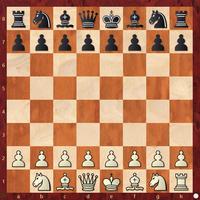
White to Play
Number 17 in our series of instructional games. Steiinitz - Rock Remove White's R on a1 London, 1863 In our last instructional game, number 16 (see archive below), we saw how necessary getting d5 in was. Today, we see how important it was to NOT play d5. It's part of what makes chess interesting. The other lesson today is how the world champion ...
View solution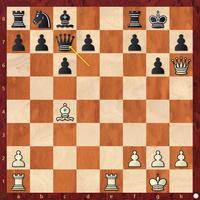
White to Play
Number 16 in our series of instructional games. Janowsky, Soldatenkopf - Lasker, Taubenhaus C21 Consulatation Game Paris, 1909
1.e4 e5 2.d4 exd4 3.c3 (Ah, the Danish Gambit. This is an informal game, so I guess they thought it would be fun.)3...dxc3 4.Bc4 cxb2 5.Bxb2 (Black has taken every offering, but look at those white bishops! Black needs ...
View solutionRelated Channels
Comics