Seeing History Unfold
Published in Rick Steves' Europe
Travelers get a wonderful chance to witness European history in the making. Years ago, when I got my history degree, I said to myself, "I'd better get a business degree, too, so I have something useful." I've learned over the years that if more people knew more about history, our world would be better off.
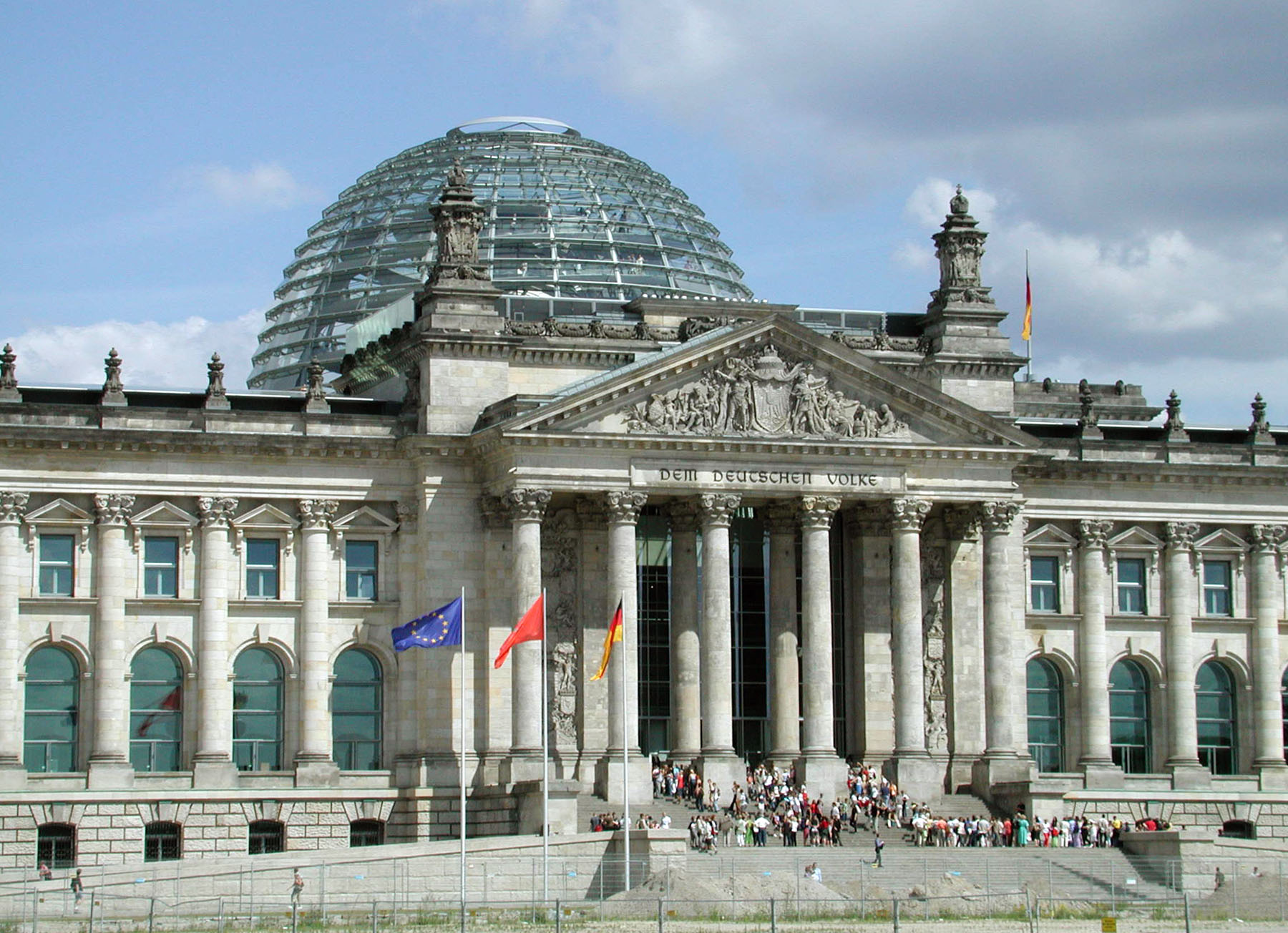
Whenever I see the restored Reichstag building in Berlin, I'm reminded of my visit in 1999, when it opened to the public. For travelers unaware of history, it was just a new dome to climb, offering another vantage point to see the city. But a knowledge of its past gives it a far deeper meaning. It was in this building that the German Republic was proclaimed in 1918. In 1933, this symbol of democracy nearly burned down. While the Nazis blamed a communist plot, some believe that Hitler himself planned the fire, using it as an excuse to frame the communists and grab power.
After 1945, this historic home of the German parliament -- which saw some of the last fighting of World War II on its rooftop -- stood as an unused hulk next to the no-man's land between East and West Berlin. After unification, Germany's government returned from Bonn to Berlin and, the Germans, recognizing the building's cultural roots, renovated it.
They capped it with a glorious glass dome, incorporating modern architectural design into a late-19th-century icon, and opened it up to the people. The dome rises 155 feet above the ground. Inside, a cone of 360 mirrors reflects natural light into the legislative chamber below. Lit from inside at night, it gives Berlin a memorable nightlight.
It's a powerful architectural symbol -- German citizens climb its long spiral ramp to the very top and literally look over the shoulders of their legislators to see what's on their desks. Manipulated far too often by their politicians in the past, Germans are determined to keep a closer eye on them from now on.
When the Reichstag opened nearly a decade ago, I climbed to the top of that dome, and found myself surrounded by teary-eyed Germans. It occurred to me then that most of these people were old enough to remember the difficult times (either during or after World War II) when their city was reduced to rubble. What an exciting moment for them. The opening of this grand building was the symbolic closing of a terrible chapter in the history of a great nation. No more division. No more communism. No more fascism. They had a united government entering a new century with a new capitol, looking into a promising future.
It was a thrill to be there. I was caught up in it. As I looked around at the other American tourists up there, I realized, sadly, that most of them didn't have a clue about what was going on. They were so preoccupied with trivialities -- camera batteries, their Cokes, the air-conditioning -- that they missed a once-in-a-lifetime opportunity to celebrate this great moment with the German people.
In mainstream tourism, we're often encouraged to be lighthearted and avoid the serious. Sure, fun in the sun, duty-free shopping, and bingo can be a big part of your vacation. I enjoy it, too. But all this can distract us from another reason to travel -- something Americans vitally need these days.
In my own realm as a travel teacher, if I have the opportunity to lead a tour, write a guidebook, or make a public TV or radio show, it's going to come with the expectation that my viewers and my travelers are engaged, not dumbed down.
Today's news is a result of recent -- and ancient -- history. Consider the current conflict between Christendom and Islam. It's nothing new and nothing we can't overcome. But we need to understand its roots and its complexity rather than see it just as "us versus them."
Travel broadens our perspective, enabling us to rise above the 6 p.m. news -- and see things as citizens of the world. By plugging directly into the present and getting the world's take on things, a traveler goes beyond traditional sightseeing.
When we travel today we have the opportunity to see history as it's unfolding. With knowledge of the past, we can better appreciate the significance of what's happening today. And that's something a lot of travelers don't give themselves an opportunity to do.
========
Rick Steves (www.ricksteves.com) writes European travel guidebooks and hosts travel shows on public television and public radio. E-mail him at rick@ricksteves.com, or write to him c/o P.O. Box 2009, Edmonds, Wash. 98020.
(c)2008 RICK STEVES DISTRIBUTED BY TRIBUNE MEDIA SERVICES, INC.







Comments