Automotive
/Home & Leisure

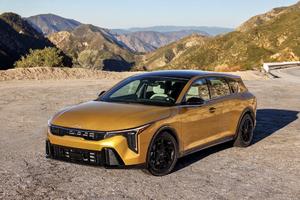
Eric's Autos: 2026 Kia K4
The least expensive new car you can still buy is also probably one of the least well-known small cars. It is not the Honda Civic. It is not the Toyota Corolla. It is not the Hyundai Elantra.
It is the Elantra's Kia cousin, the K4.
What It Is
The K4 sedan is Kia's least expensive car and also the least expensive new car you can buy, period. It...Read more
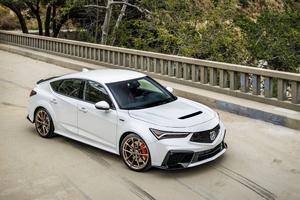
Eric's Autos: 2026 Acura Integra
What is the difference between an Acura Integra and a Honda Civic? More finely, is there any difference between an Acura Integra and a Honda Civic -- other than the price?
What It Is
The Integra is a sporty small sedan sold under the Acura label that is closely related to the less expensive Honda Civic. There are numerous differences that go ...Read more
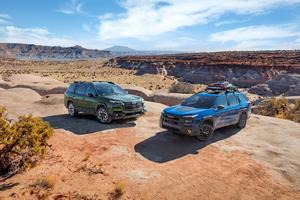
Eric's Autos: 2026 Subaru Outback
Subaru has really rolled the dice with the 2026 Outback. For one, it no longer looks like an Outback -- because it no longer looks like a wagon. It has been restyled to look more like a crossover SUV.
It's also a lot more expensive.
The Outback used to be one of Subaru's more affordable models, with a base price under $30,000.
...Read more
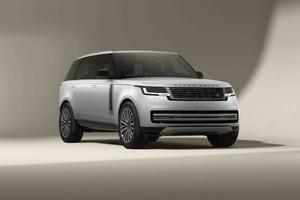
Eric's Autos: 2026 Land Rover Defender
There are several things that are unusual about the 2026 Land Rover Defender. The first is that it's available in different wheelbase lengths and two- and four-door body styles -- with seats for as few as five and as many as seven. The second is that it's available with four different engines, including two different V8s (as well as a ...Read more
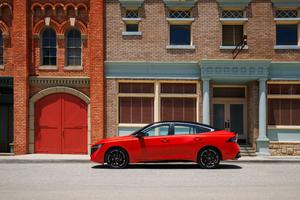
Eric's Autos- 2026 Nissan Sentra
There are only a few new vehicles you can still buy for less than $23,000 -- and even fewer of them are cars. The Hyundai Venue and the Chevy Trax, currently the least expensive new vehicles at around $21,000 to start, are both crossovers. If you're interested in a new vehicle that isn't a crossover -- and doesn't cost more ...Read more
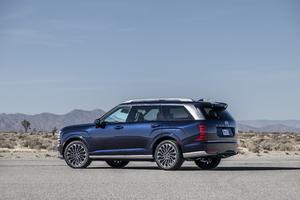
Eric's Autos: 2026 Hyundai Palisade
The Hyundai Palisade and its Kia-badged sibling, the Telluride, have each been hot sellers. Part of the reason why is probably because they're both refreshingly inexpensive -- under $40,000 to start for a full-size, seven-to-eight-passenger crossover being just that these days -- and even more so because for that you get a standard V6 engine, a ...Read more
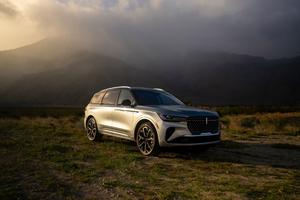
Eric's Autos: 2026 Lincoln Navigator
Lincoln has always been a luxury brand.
Meaning it isn't a luxury-sport brand, which is what pretty much every other luxury brand has turned into over the past 25 years or so. There was a brief dabbling with the luxury-sport thing back in the mid-to-late '80s and into the '90s, with models like the Mark VII LSC sport coupe and the LS ...Read more
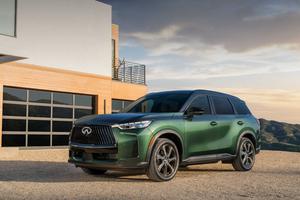
Eric's Autos: 2026 Infiniti QX60
Now that every "car" company sells mostly crossovers, how do you get the crossover you're hoping to sell to stand out from the crowd? One of the ways Infiniti has come up with is to offer a crossover that has an engine that's different than the engine you'll find in any other crossover.
What It is
The QX60 is a midsize, three-row luxury ...Read more
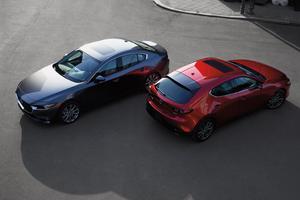
Eric's Autos: 2026 Mazda3
In case you didn't know, Mazda only sells two cars now -- and one of them (the Miata) isn't exactly what you'd call a family car.
Everything else Mazda currently sells is a crossover.
Except for one other.
It's the 3 -- still available as a sedan or a five-door hatchback. Both are alternatives to a crossover, which for some of us is ...Read more
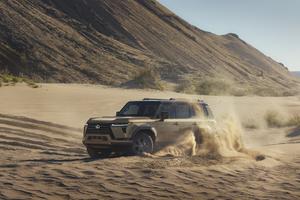
Eric's Autos: 2026 Lexus GX550
How much difference does two years make? About $3,385 is how much. That is how much more Lexus is asking for the 2026 GX550 -- which is otherwise identical to the 2024 GX550.
This isn't Toyota's fault, by the way. It is a consequence of the tariffs (that is to say, the taxes) Toyota is having to pay -- which means you'll be paying for ...Read more
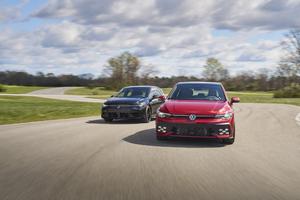
Eric's Autos: 2026 Volkswagen GTI
Once upon a time, Volkswagen's GTI was a hopped-up Golf.
The Golf (also called the Rabbit for a while) was the mass-market model; the GTI the performance model -- similar to the way there's a Mustang and also a Mustang GT.
Both the Golf and the GTI were once pretty inexpensive too.
Now there's just the GTI, VW having canceled the Golf (in the...Read more
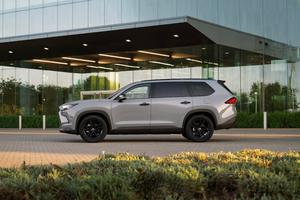
Eric's Autos: 2026 Toyota Grand Highlander
You may have heard the news that the 2027 Toyota Highlander is going to be electric only. That may not be welcome news if you're wanting a Highlander that isn't an electric vehicle.
The good news is that the Grand Highlander still comes standard with an engine rather than a battery pack. It also has something else the regular Highlander hasn't ...Read more
Related Channels
Comics